
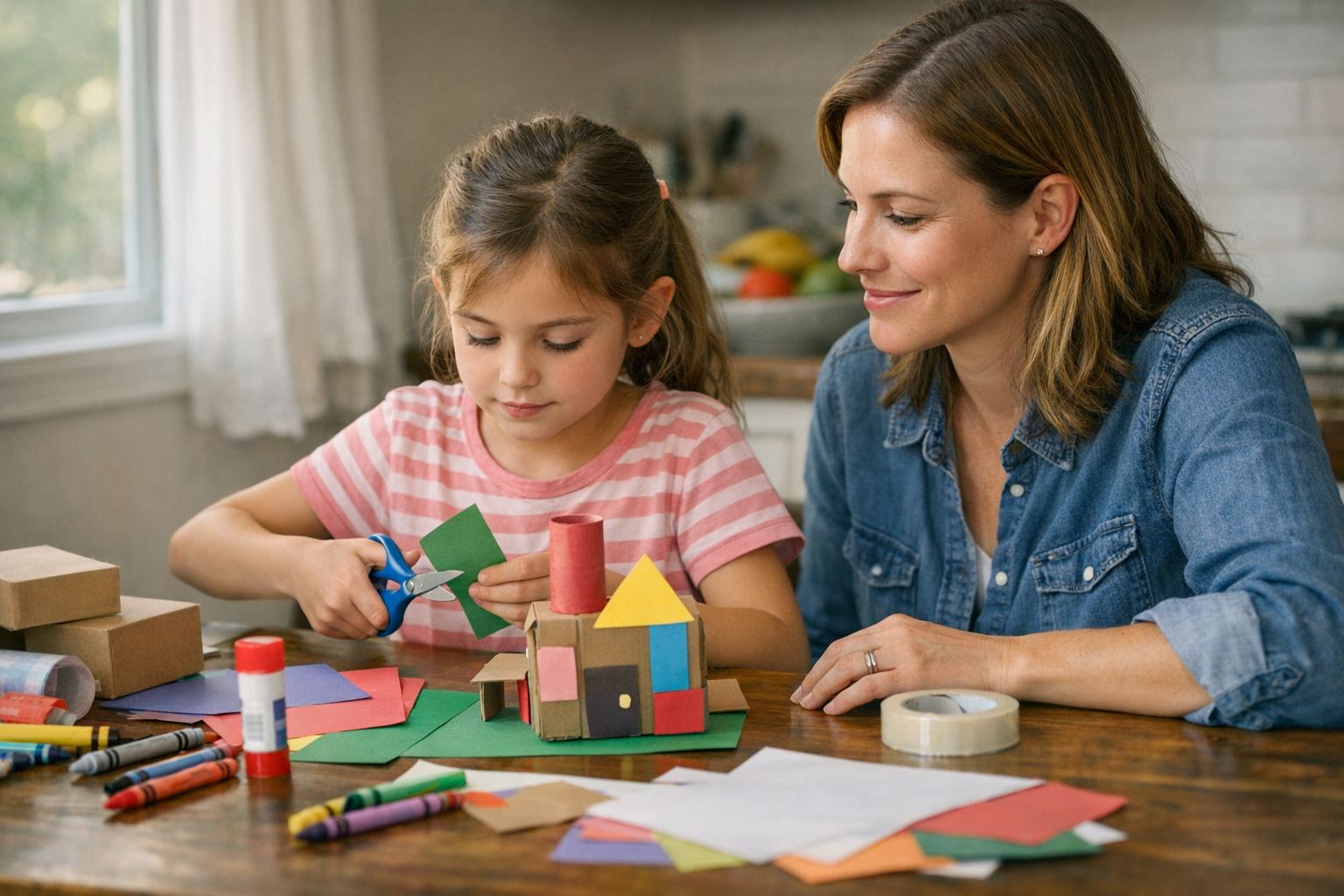
Some kids can turn a cardboard box into a spaceship before you finish unloading groceries. Other kids stare at a blank page and say, “I don’t know what to make.” Both are normal. Creativity at home rarely looks like a magical Pinterest afternoon. More often, it looks like crayons without caps, tape stuck to the table, and a child who needs a little nudge before their ideas start moving.
If you want to encourage creativity at home, the goal is not to raise a tiny artist or have a bin full of perfect crafts. The real goal is to help your child practice wondering, experimenting, and trying ideas without being afraid of getting it wrong. That kind of creativity helps with writing, problem-solving, confidence, and even everyday independence.
It also helps to remember that creativity is bigger than art. It shows up when a child invents a game in the backyard, retells a story with a different ending, builds a blanket fort, or finds three new ways to organize toy animals. If your child already enjoys open-ended play, our guide to learning through play pairs well with the ideas below.
Why This Happens
Parents often assume creativity is something kids either have or do not have. In real life, most children need the right mix of time, materials, and emotional safety before creative thinking shows up consistently.
Some kids are naturally quick to imagine. Others are more cautious. They want to know the “right” answer first. That is especially common in children who are used to worksheets, step-by-step instructions, or praise for neat results. They are not uncreative. They are just watching carefully and trying not to fail.
Creativity also tends to shrink when kids are overstimulated, overscheduled, or always entertained. If every quiet moment gets filled with a screen or a structured activity, there is less room for boredom, and boredom is often where original ideas begin. That is one reason screen-light stretches can help; if you need ideas for those in-between hours, this list of screen-free learning activities can give you a strong starting point.
Finally, some children need a spark. They do better when creativity begins with a prompt, a question, or a challenge instead of a vague “go make something.” That is not cheating. It is support.
What Parents Can Do
Make creativity easy to start
The biggest obstacle is often setup. If art paper is on a high shelf, markers are dried out, and the table needs a full cleanup first, creativity loses to easier options.
Try building a simple “yes space” for making things:
- a small bin with paper, crayons, tape, safety scissors, glue sticks, and stickers
- a basket of cardboard, paper towel rolls, and clean recycling
- a tray with play dough, cookie cutters, and plastic tools
Nothing has to be fancy. In fact, everyday materials often work better because kids feel freer to experiment with them.
If your child likes to build or tinker, the same principle behind building problem-solving skills applies here too: simple materials plus a manageable challenge can go a long way.
Give prompts instead of instructions
Many children freeze when they hear, “Make whatever you want.” That sounds open-ended, but it can feel too big.
Instead, offer a playful prompt:
- “Can you build a house for a toy mouse?”
- “What could we make from this box before recycling day?”
- “Can you draw a park for dragons?”
- “Can you invent a snack restaurant menu for stuffed animals?”
Prompts reduce pressure while still leaving plenty of room for imagination. A child who says, “I don’t know,” may suddenly have five ideas once there is a starting line.
Notice the process, not just the result
When kids hear only “That’s so pretty,” they may start working for approval instead of exploration. Try commenting on what you notice instead:
- “You kept changing your design until it worked.”
- “You used the big box as the roof. That was clever.”
- “I can tell you had a full story in your head while you made this.”
This kind of feedback teaches children that ideas, effort, and experimentation matter. It also helps perfectionistic kids loosen up.
Protect a little boredom
Not every quiet afternoon needs rescuing. If your child says, “I’m bored,” pause before solving it too fast.
You might say, “I believe you. Let’s give your brain five minutes to come up with an idea. Then I’ll help if you still feel stuck.”
That tiny pause matters. It teaches children to look inward for ideas instead of immediately relying on outside entertainment.
Let creativity show up in different forms
Some kids do not love drawing, but they adore making up stories, choreographing dances, designing obstacle courses, or building tiny worlds with blocks. Creativity counts in all of those forms.
Pay attention to where your child naturally lights up:
- storytelling
- music and rhythm
- pretend play
- construction and design
- movement
- inventing games
If you follow that interest instead of pushing one specific activity, your child is more likely to stay engaged.
Join sometimes, but do not take over
Kids usually enjoy a parent who participates. They do not enjoy a parent who quietly turns their paper bag puppet into a professional craft project.
A good middle ground is to be a helper or co-player:
- hold the tape
- write down the story they dictate
- act as the customer in their pretend bakery
- ask what the next part of their invention does
Your role is to expand the moment, not perfect it.
Common Mistakes to Avoid
Over-directing the activity
When every project has an example to copy, exact steps to follow, and a correct final result, kids learn compliance more than creativity. Structured projects are fine sometimes, but they should not be the only kind your child gets.
Buying too much stuff
Too many supplies can be overwhelming. A child does not need a craft store’s worth of materials to be creative. A few reliable basics and some open-ended odds and ends are usually enough.
Correcting while they create
It is tempting to say, “Trees aren’t purple,” or “That wheel should go here.” But frequent corrections can shut down risk-taking fast. Save practical help for when your child asks for it or becomes frustrated.
Expecting long attention spans every time
Some creative sessions last forty minutes. Others last six. That does not mean the short one failed. Children build creative stamina over time, just like they build reading stamina or homework habits.
Turning every activity into a lesson
It is okay if the cardboard city does not become a math lesson, a handwriting lesson, and a science lesson too. Creativity needs room to exist for its own sake.
Simple Plan to Try This Week
If you want a realistic reset, try this for the next seven days.
Day 1: Build a creativity bin
Gather simple materials you already have: paper, crayons, tape, glue, cardboard, stickers, and safe recyclables. Put them somewhere your child can access without asking every five minutes.
Day 2: Use one prompt
Offer a small challenge such as, “Can you invent a machine that helps with bedtime?” or “Can you build a bridge for toy cars?” Then step back.
Day 3: Make room for boredom
Protect fifteen to twenty minutes without screens or planned activities. Let your child wander a little before you jump in.
Day 4: Follow their favorite format
If your child likes stories, invite storytelling. If they like movement, help them invent a game. If they like building, bring out boxes and tape. Meet them where they are.
Day 5: Praise the process
Focus your comments on effort, experimenting, and persistence. Skip the urge to evaluate everything as good, pretty, or impressive.
Day 6: Create together for ten minutes
Join without leading. Let your child be the idea person while you play a supporting role.
Day 7: Keep what worked
Ask yourself:
- What activity pulled them in fastest?
- What time of day worked best?
- Did they do better with prompts or full freedom?
That small reflection helps you build a routine that fits your real child, not an imaginary one.
FAQ
1. What if my child says they are not creative?
That usually means they feel unsure, not incapable. Start with low-pressure prompts and open-ended materials. Avoid comparing them with siblings or classmates who create differently.
2. How much time should kids spend on creative activities each day?
There is no perfect number. Even ten to twenty minutes of unstructured making, building, pretending, or storytelling can be valuable when it happens regularly.
3. Does creativity always have to involve art supplies?
No. Creativity can show up in pretend play, music, storytelling, cooking, outdoor play, obstacle courses, building forts, or inventing games.
4. My child only wants screens. Can creativity still grow?
Yes, but it helps to create screen-light windows and make hands-on options easy to begin. Children often need a little adjustment time before they start generating their own ideas again.
5. What if my child gets frustrated when things do not turn out how they imagined?
That is part of the process. Stay calm and help them problem-solve: “Do you want to change the plan, get a different material, or save it for later?” Over time, they learn that creative work includes trial and error.
Encouraging creativity at home does not require elaborate projects or constant parent energy. It mostly requires permission: permission to make a mess, try odd ideas, get bored, change course, and start again. That kind of home environment helps children trust their own thinking. If you want one more way to keep that momentum going, building curiosity at home is a natural next step.