
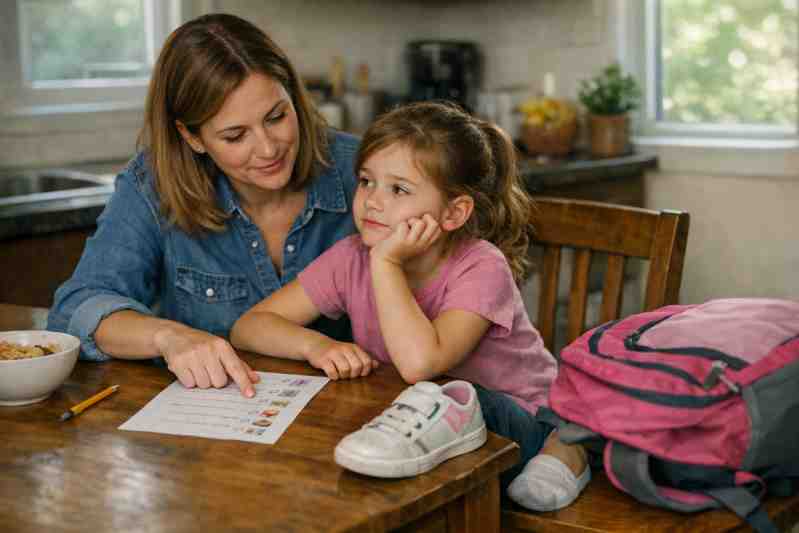
Some kids can spend 45 minutes building a Lego city, then somehow take 20 minutes to put on socks. Time management usually shows up like that at home—less like a school skill and more like a thousand tiny slowdowns that turn mornings, homework, and bedtime into a scramble.
If you feel like you are always saying, “We need to go,” “Hurry up,” or “You said you were almost done ten minutes ago,” you are not the only one. A lot of kids do not naturally feel time passing the way adults do. They may get distracted, underestimate how long tasks take, or struggle to shift from one activity to another. That does not mean they are lazy or careless. It usually means they need more practice with an invisible skill.
The good news is that time management can be taught in everyday moments. It does not have to start with a planner and a perfect routine. It can start with helping your child notice what ten minutes feels like, what comes first, and how to break one big job into smaller steps. If your child also struggles to stay on task, this guide on how to help kids focus better can support the same goal.
Why This Happens
Time management sounds simple to adults because we have been practicing it for years. Kids are still building the skills behind it.
To manage time well, a child has to estimate how long something will take, remember the next step, ignore distractions, switch gears when needed, and tolerate the frustration of stopping something fun. That is a lot.
Some children move slowly because they are deeply absorbed. Some get stuck because a task feels too big. Some rush the first part, then stall when they hit something boring. Others genuinely do not connect the words “five more minutes” to a real feeling in their body or a clock they can understand.
This is why lectures usually do not help much. A child who keeps losing track of time is not thinking, “I should ignore my parent right now.” More often, they are thinking about the one toy on the floor, the pencil that needs sharpening, or the fact that brushing teeth feels endless.
It also helps to remember that time management looks different by age. A six-year-old may need visual cues and one-step directions. A nine-year-old can start estimating task length and packing a school bag with a checklist. An older child can learn backward planning, like counting from soccer practice or bedtime to figure out when homework needs to begin.
If your child tends to drift without structure, routines matter too. A predictable flow reduces the number of decisions they have to make and makes time feel less slippery. That is one reason articles like creating healthy daily routines and the power of routine pair so well with time-management practice.
What Parents Can Do
Make time visible
“Get ready soon” is vague. “Shoes on before the kitchen timer rings” is easier to understand. Young kids do better when time has a shape they can see or hear. Use a timer, a short playlist, or a simple before-and-after sequence.
You might say, “You have ten minutes to get dressed. When the timer beeps, we head downstairs.” The goal is not to create pressure. It is to connect time to something concrete.
Teach one routine at a time
When parents try to fix mornings, homework, chores, and bedtime all at once, everyone burns out. Pick one trouble spot first. Usually the best place to start is the routine that causes the most daily stress.
For example, if mornings are chaotic, work only on mornings for one or two weeks. Keep the steps simple: get dressed, eat breakfast, brush teeth, grab backpack, shoes on. Once that routine feels easier, move to another part of the day.
Break big jobs into smaller jobs
“Clean your room” can feel endless. “Put dirty clothes in the hamper, then books on the shelf, then stuffed animals on the bed” feels doable. Kids manage time better when they are not staring at one giant task.
This works for schoolwork too. Instead of saying, “Finish your homework,” try: “Do the first three math problems, then show me,” or “Read for ten minutes, then take a stretch break.” If school routines are a struggle, improving study habits can help you build more consistency around homework time.
Practice estimating time
A lot of kids honestly think putting away laundry will take two minutes and a school project will take fifteen. They need practice comparing guess versus reality.
Try asking, “How long do you think this will take?” Then set a timer and check afterward. Keep the tone light. You are not proving them wrong. You are helping them build a more accurate inner clock.
Over time, children start noticing patterns: getting ready usually takes longer than they think, packing a lunchbox is quicker than they expect, and homework goes faster when they start without arguing for ten minutes first.
Use prep time instead of rush time
Many time-management problems are really transition problems. Kids are not failing at time. They are getting stuck between one thing and the next.
Prep the next step earlier than you think you need to. Lay out clothes the night before. Put library books by the door. Pack sports gear before dinner. When the environment does part of the work, your child has fewer chances to derail.
This also teaches planning, which is the next layer of time management. If your child is ready for that step, helping kids set goals can give you more ways to connect daily habits with longer-term thinking.
Give calm reminders, not a running commentary
It is tempting to narrate every delay: “Why are you spinning around? Why is your backpack still open? We are late again.” But constant commentary can make kids tune out or get defensive.
Try shorter prompts instead. “What is next?” “Backpack, then shoes.” “Two more minutes.” These cues help a child reorient without feeling flooded by your stress.
Let natural feedback teach the lesson
When it is safe and reasonable, let your child feel the result of poor timing in a small way. Maybe there is less time for a second story at bedtime because the whole routine dragged. Maybe they have to use recess to finish packing up something they forgot. Small, calm consequences teach more than a lecture after the fact.
The key is staying matter-of-fact. Not, “See what happens when you never listen?” More like, “We used our reading time getting ready tonight. Let’s try starting earlier tomorrow.”
Common Mistakes to Avoid
One common mistake is expecting kids to manage time the way adults do. If your child still needs help getting from one step to the next, that is not a character flaw. It is a sign they need more scaffolding.
Another mistake is only talking about time when things are already going badly. If every mention of time happens during a rushed morning or a late bedtime, your child starts to hear it as criticism. Practice during calm moments too. Time a cleanup game on a weekend. Guess how long it takes to set the table. Make it low pressure.
Parents also sometimes rescue too fast. If you always finish the job for your child, they do not get enough chances to practice. Support them, yes. But try not to automatically step in at the first sign of delay.
And finally, avoid turning every routine into a battle of speed. The goal is not to raise a child who rushes through life. The goal is to help them move with more awareness, planning, and follow-through.
Simple Plan to Try This Week
If you want to make this feel manageable, try this one-week reset.
Day 1: Pick one problem routine
Choose the part of the day that causes the most friction. Keep it specific: morning dressing, after-school homework start, or bedtime cleanup.
Day 2: Write the steps
List the routine in 3 to 5 steps. Make them simple and visible. For example: snack, homework, backpack check, free time.
Day 3: Add a time cue
Use one timer or one checkpoint for the whole routine. You do not need a complicated system. One visual or audible cue is enough to start.
Day 4: Practice when nobody is upset
Do a calm trial run. Ask, “What comes first? What comes next?” If your child gets off track, guide them back without making it dramatic.
Day 5: Notice what slows things down
Is the backpack never packed? Are there too many toys in the homework space? Does your child stall at the first boring step? Fix the obstacle, not just the behavior.
Day 6: Reduce one parent reminder
Instead of repeating the same instruction five times, pause and ask your child to tell you the next step. This builds independence.
Day 7: Review and adjust
Ask, “What made this easier? What should we change?” Even young kids can notice when a routine feels smoother. The point is progress, not perfection.
FAQ
At what age can kids start learning time management?
Very young children can begin with simple routines and visual cues. By elementary school, many kids can practice estimating time, following checklists, and preparing for the next part of the day with support.
What if my child ignores timers?
That usually means the timer alone is not enough yet. Pair it with a short routine, a clear next step, and parent follow-through. A timer works best as a cue, not as the entire system.
How can I help without nagging all day?
Use shorter prompts, fewer words, and more structure. Checklists, prep the night before, and consistent routines reduce the need for constant reminders.
Should I use rewards for better time management?
Sometimes a small short-term incentive can help a child get started with a new routine, but the long-term goal is competence, not constant prizes. Focus on making success feel possible and noticeable.
What if my child is fine with fun activities but slow with everything else?
That is very common. Fun activities hold attention more easily. Less preferred tasks usually need more structure, smaller steps, and a clearer finish line.
Time management usually gets better in small, almost boring ways. A backpack gets packed earlier. A child starts homework with one reminder instead of six. Bedtime stops stretching into a nightly marathon. Those changes matter.
Your child does not need to become perfectly efficient. They just need enough support to start noticing time, planning a little ahead, and trusting that they can handle what comes next. And when you want to build even more independence around daily learning habits, helping kids become independent learners is a strong next step.