
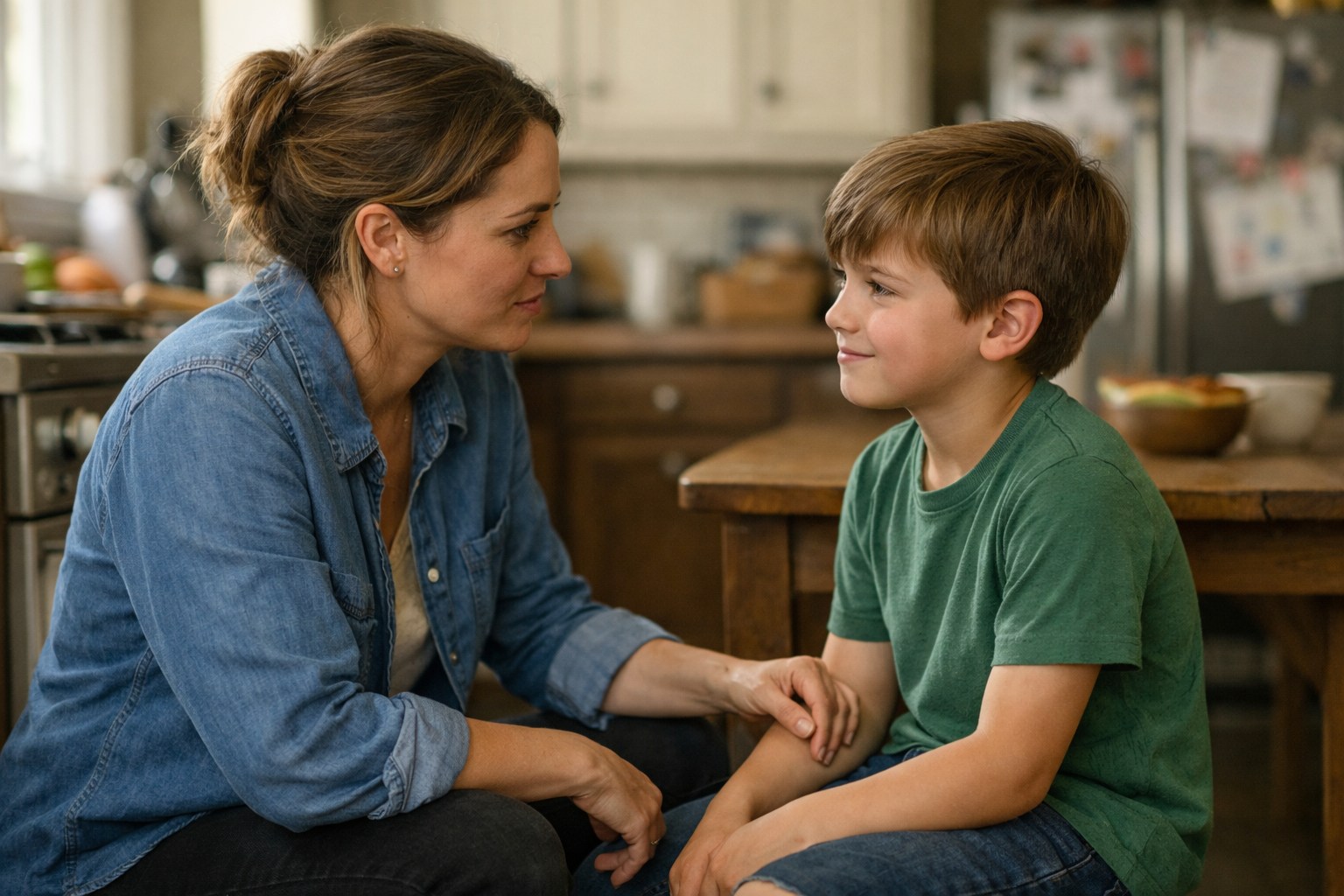
The disrespect usually does not start with a dramatic movie scene. It starts with a muttered “No,” an eye roll from the back seat, a toy shoved at a sibling, or a child speaking to you in the exact tone you have asked them not to use five times already. In that moment, it is easy to feel two things at once: irritated and worried. You want to stop the behavior, but you also do not want your home to turn into a place where kids obey only because they are scared of your reaction.
Most parents are not trying to be harsh. They are trying to get through a hard moment fast. But when disrespect shows up over and over, quick reactions like snapping, shaming, or escalating often make the whole problem bigger. Kids may go quiet for the moment, yet they do not always learn how to speak more respectfully next time.
Teaching respect works better when children learn that respect is not just “talking nicely to adults.” It is a family skill. It includes how we speak, how we listen, how we handle frustration, and how we repair things after a rough moment. If you are already working on calmer correction, this guide to disciplining without yelling can help support the same approach.
Why This Happens
Kids are not born knowing how to be respectful under pressure. They learn it gradually, and they usually learn it in messy, uneven stages.
A preschooler may sound rude when they are really overwhelmed and do not yet have the words for “I am frustrated.” A school-age child may copy the sharp tone they hear from siblings, classmates, shows, or even tired adults at home. An older child may test limits by speaking more boldly just to see what happens. That does not make disrespect okay, but it does explain why punishment alone often misses the real issue.
Sometimes what looks like disrespect is also a regulation problem. A hungry, embarrassed, rushed, or overstimulated child is much less likely to speak carefully. Kids who feel powerless may also grab for control with tone, arguing, or dismissive words. That is one reason punishment alone rarely works as a long-term strategy. It may stop the surface behavior for a minute without teaching the skill underneath it.
Respect also grows more slowly than many parents expect. Children may understand the rule before they can consistently follow it. They may know not to yell, but still yell when upset. They may know not to interrupt, but still blurt when emotions run high. That gap between knowing and doing is where teaching has to happen.
What Parents Can Do
Set the standard when everyone is calm
Trying to define respectful behavior in the middle of a blowup usually goes badly. It helps much more to talk about it during a neutral moment. Keep it simple and concrete.
You might say, “In our family, respect means we speak without insults, we do not yell in someone’s face, and we can be upset without being mean.”
That matters because “Be respectful” is vague. “No name-calling. No mocking. No throwing things. You can disagree in a calm voice” gives a child something they can actually picture. If your house needs clearer family expectations overall, consistent household rules make this much easier.
Correct the behavior without attacking the child
There is a big difference between saying, “You are being so rude” and saying, “That tone is not okay. Try that again respectfully.” One labels the child. The other targets the behavior.
Kids listen better when they feel corrected, not humiliated. That does not mean being soft or pretending the behavior is fine. It means staying specific.
Try phrases like:
- “I am happy to listen when you speak respectfully.”
- “You can be mad, but you cannot call names.”
- “Let’s rewind and try that again.”
- “I hear that you are frustrated. Say it in a way I can help with.”
This is the same basic idea behind correcting bad behavior without shame. The goal is to teach the better way, not just win the moment.
Teach a replacement, not just a stop sign
Many children hear “Don’t talk like that” over and over without ever being shown what to say instead. If you want respectful language, give them scripts.
For younger kids:
- “I don’t like that.”
- “Can you help me?”
- “I’m mad.”
- “Can I have a turn when you’re done?”
For older kids:
- “I disagree.”
- “I need a minute before I answer.”
- “I don’t like being spoken to that way either.”
- “Can we talk about this after I calm down?”
Practicing these lines during calm moments can feel corny, but it works. Under stress, kids tend to reach for the phrases they have heard and rehearsed before.
Use calm consequences that connect to the problem
Consequences can still be part of teaching respect. They just work better when they are calm, predictable, and tied to the behavior instead of delivered in anger.
If a child insults a sibling during a game, the game may pause. If they speak rudely while asking for help, help may wait until they try again respectfully. If they damage trust with repeated meanness, they may need to repair the relationship before moving on.
That is different from unloading a long lecture or adding extra punishments just because you are hurt. If you want consequences that feel firm without becoming personal, natural consequences that actually work is a useful next read.
Model the tone you want to hear
This part is annoying because it is true. Kids notice how adults talk when they are stressed. They notice whether parents interrupt, bark commands from another room, use sarcasm, or apologize after rough moments.
That does not mean you have to sound perfect all day. It does mean your own repairs matter. If you snap, try: “I did not like your tone, but I did not handle that well either. Let me try again.”
That kind of repair teaches two powerful lessons at once: respectful speech matters, and people can fix mistakes.
Watch for patterns, not just incidents
If disrespect flares at the same times every day, the root issue may be predictable. Maybe it happens in the morning rush. Maybe homework time turns every request into an argument. Maybe siblings are kind until one child is tired and hungry.
When you notice patterns, you can prevent more than you punish. Some families see huge improvement when they reduce daily friction, build in transition warnings, or stop asking big emotional things from tired kids. If your home keeps sliding into standoffs, reducing daily power struggles can help.
Common Mistakes to Avoid
Mistake 1: Demanding respect while speaking disrespectfully.
Saying “Don’t you dare use that tone with me” in a harsh, mocking tone usually teaches fear or imitation, not respect.
Mistake 2: Turning every rude moment into a character judgment.
A child who says something rude is not automatically a rude child. The more specific you stay, the easier it is for them to improve.
Mistake 3: Lecturing too long.
Most children tune out after the first few sentences. A short correction, a reset, and a repair usually work better than a five-minute speech.
Mistake 4: Expecting instant maturity.
Kids need repetition. They may need the same reminder many times before it becomes a habit. That is frustrating, but it is normal.
Mistake 5: Ignoring repairs.
Apologies, retries, and do-overs matter. If a child finally uses a better tone, notice it. That reinforces the skill you actually want.
Simple Plan to Try This Week
Day 1: Pick your family definition of respect
Write down two or three non-negotiables, like no name-calling, no yelling in someone’s face, and no mocking.
Day 2: Teach the replacement phrases
Choose three sentences your child can use when upset. Practice them quickly at dinner or in the car.
Day 3: Use one calm correction line every time
Pick one line and repeat it consistently, such as “Try that again respectfully.” Repetition helps kids know what to expect.
Day 4: Add one predictable consequence
Decide ahead of time what happens if respectful language does not happen after one reminder. Keep it simple and connected.
Day 5: Notice one success out loud
Say, “You were upset, but you fixed your tone. That helped.” Kids need to hear what progress looks like.
Day 6: Watch the trigger times
Notice when disrespect shows up most. Tired after school? During chores? Around siblings? Prevention gets easier when patterns are obvious.
Day 7: Practice one repair routine
Teach that after a disrespectful moment, the next step is not shame. It is repair. That might mean trying the sentence again, helping fix what happened, or apologizing clearly.
FAQ
Is it okay to expect respectful behavior from very young children?
Yes, but keep your expectations age-appropriate. Young children need short rules, modeling, and lots of repetition. They are learning, not mastering.
What if my child only speaks disrespectfully when upset?
That is common. It usually means they need help with emotional regulation and replacement phrases, not just punishment after the fact.
Should kids apologize every time?
Apologies can help, but only if they are part of real repair. A forced, mumbled “sorry” without any change usually does not teach much.
What if respectful reminders seem to make my child more sarcastic?
Stay calm and avoid taking the bait. Use a short boundary, pause the interaction if needed, and come back when your child is more regulated.
How long does it take to see improvement?
Usually longer than parents want. But with consistent language, calm consequences, and repair practice, many families start noticing a better pattern within a few weeks.
Respect grows best in homes where children are held accountable without being crushed. You do not have to choose between being permissive and being harsh. You can be steady, clear, and hard to rattle. Over time, that teaches kids something bigger than obedience: it teaches them how to handle other people with dignity, even when they are frustrated. And if your family is also working on everyday tone and listening, better parent-child communication can strengthen everything you are building here.