
How to Help Struggling Readers
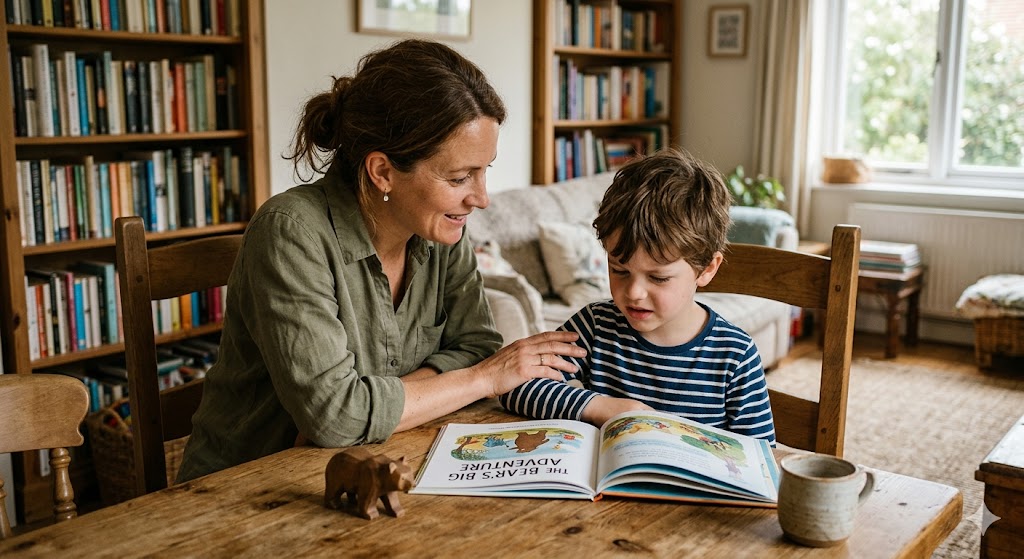
The book is open, your child is already slumped over the table, and somehow the word “because” has turned into a full-body crisis. You are trying to sound cheerful, they are trying not to cry, and a ten-minute reading session suddenly feels longer than the whole afternoon.
When a child struggles with reading, the hard part is not only the skill gap. It is the feeling that settles over the room. Parents start bracing themselves before reading time even begins. Kids start guessing, rushing, avoiding, or saying they hate books when what they really hate is feeling stuck in front of someone they love.
That is why helping a struggling reader usually works best when you lower the pressure and build success at the same time. The goal is not to pretend reading is easy. The goal is to make practice feel safe enough that your child can keep trying. With a few small changes, you can support real progress without turning every book into a battle.
Why This Happens
Reading is not one single skill. A child may be trying to match letters to sounds, remember sight words, track across the page, hold meaning in mind, and manage frustration all at once. If one part feels shaky, the whole task can look bigger than it really is.
Some children also hide reading difficulty in clever ways. They memorize predictable books, talk their way around a page, or ask for a snack right when it is time to read. That does not mean they are being manipulative. It often means they have learned that avoiding the task hurts less than feeling unsuccessful again.
It also helps to remember that reading struggles can look different from child to child. One child reads slowly and carefully. Another blurts out random words to get it over with. Another melts down before you even begin. Parents usually get farther when they respond to the frustration underneath the behavior instead of treating the whole thing like a motivation problem. If you want a broader look at early reading development, this guide to learning to read can help put the bigger picture into words.
What Parents Can Do
Make reading time shorter, not bigger
When a child is already discouraged, longer sessions usually create more resistance. Try ten focused minutes instead of thirty dragging minutes. You can say, “We are just going to read for ten minutes, then we are done.” A short finish line helps kids stay with the work and makes it easier for you to end on a decent note.
Choose books that let your child win sometimes
Not every reading session should be spent on the hardest book in the house. Mix in easier texts, patterned books, nonfiction on favorite topics, comic-style readers, or books your child can partly read with confidence. A child who feels successful is much more likely to come back tomorrow. Struggling readers still need challenge, but they also need proof that they can do this.
Take turns instead of making your child carry the whole page
Shared reading lowers the emotional load. You read one paragraph, your child reads one sentence. Or you read most of the page and let your child read only the lines with simpler words. This keeps the story moving and gives your child practice without making every missed word feel huge. If a page is too hard, support is not cheating. It is scaffolding.
Coach the next step, not the whole problem
When your child gets stuck, try not to pile on five strategies at once. Pick one helpful cue: “Look at the first sound,” “Does that word make sense there?” or “Try breaking that part apart.” Too much talking can make a frustrated reader feel even more lost. Calm, simple prompts work better than a long lesson in the middle of the story.
Notice effort out loud
A struggling reader hears correction all the time. They need to hear what is going right too. Try lines like, “You slowed down and fixed that word,” “You kept going even when that page was tricky,” or “I noticed you looked at the picture and then tried the word again.” Specific praise helps children connect progress to actions they can repeat.
It also helps to keep the reading setup boring in the best possible way: same spot, fewer distractions, and a predictable start. A small snack, a glass of water, and one familiar routine can do more than a dramatic pep talk. If your child seems far more frustrated at home than the teacher reports at school, it is worth asking what is different about the setting, the materials, or the time of day. A calmer setup also matters, so if reading practice falls apart the minute everyone sits down, creating a home environment that supports focused learning is worth a look.
Common Mistakes to Avoid
- Turning every mistake into a correction session. If you stop for every missed word, your child may stop caring about the story and start waiting to be told what they did wrong. Protect the flow when you can.
- Using books that are too hard too often. Challenge matters, but constant struggle teaches children to dread reading. Easier books are not a step backward when they build confidence and fluency.
- Pushing when your child is clearly fried. A tired, hungry, or overstimulated child is not showing you their true reading ability. Timing matters more than many parents expect.
- Assuming resistance means laziness. A child who complains, jokes, or avoids may be protecting themselves from embarrassment. Responding with curiosity usually works better than pushing harder.
Parents also sometimes wait too long to reach out because they hope the problem will quietly disappear. You do not need to panic, but you also do not need to figure it out alone. If your child regularly dreads reading, is falling behind classroom expectations, or seems much more confused than peers, a calm conversation with the teacher can be very useful. You are gathering information, not putting a label on your child. Keeping the tone encouraging helps, and building a growth mindset makes a real difference for kids who already think they are “bad at reading.”
Simple Plan to Try This Week
If reading time has been tense lately, try this simple reset for one week:
- Pick one short reading window each day, ideally when your child is fed and not rushing to something else.
- Choose one easier book and one slightly harder book so the session includes at least one clear success.
- Read together for ten minutes using a take-turns format instead of making your child do all the work alone.
- Use just one coaching prompt when your child gets stuck, then move on before the moment turns into a fight.
- End by naming one thing that went well, even if it was small, like staying calm, retrying a word, or finishing the page.
- At the end of the week, notice patterns and send a quick message to the teacher if you want a clearer picture of what is happening at school.
This kind of consistency is what usually moves the needle. Most struggling readers do not need a miracle week. They need many low-drama practice sessions where the work is real, the support is steady, and the shame stays out of the room. And if you want low-pressure ways to strengthen learning muscles outside reading time, try these everyday activities that boost cognitive development.
Related:
Helpful Tools
You do not need special products to help a child become a stronger reader, but a couple of simple tools can make practice feel less heavy.
- Bob Books Set 1 can work well for kids who need short, confidence-building reading practice with predictable patterns.
- National Geographic Kids Books can help when your child resists reading drills but happily reads about animals, weather, or weird facts they already care about.
FAQ
How do I know if my child is struggling or just learning at a normal pace?
Some bumps are normal, especially when children are first learning sound patterns and sight words. The bigger signs are ongoing dread, very slow progress, frequent guessing, or frustration that shows up again and again. If you are unsure, ask the teacher what they are seeing in class and what would be helpful to practice at home.
Should I make my child read out loud every day?
Reading out loud can help, but it does not have to mean a long forced performance. Short shared reading, echo reading, or taking turns often works better for a child who feels exposed when reading alone.
What if my child says they hate reading?
Often they hate the feeling of struggling, not reading itself. Pull back on pressure, use shorter sessions, and choose texts that connect to their actual interests. A child who loves sharks, trucks, jokes, or space facts may engage very differently with the right material.
When should I talk to the teacher?
Talk sooner rather than later if reading practice is tense at home, progress feels stalled, or your child seems much more frustrated than expected. The conversation can be simple: ask what skills are being worked on, what books are a good fit, and what kind of home practice would be most useful.
Do rewards help?
They can help with getting started, but they usually do not fix the deeper problem if a child feels confused or ashamed. Small routines, manageable books, shared reading, and specific encouragement tend to build longer-lasting progress.
Helping a struggling reader is usually less about finding the perfect trick and more about changing the daily experience of reading. When the pressure comes down and the support gets clearer, many kids show more persistence than parents expected. Keep sessions short, keep your tone steady, and keep looking for small signs of growth. Reading progress is often uneven, but it is still progress. If you want one good next step after this, start with learning to read and keep the goal simple: less pressure, more consistency, and one small win at a time.