
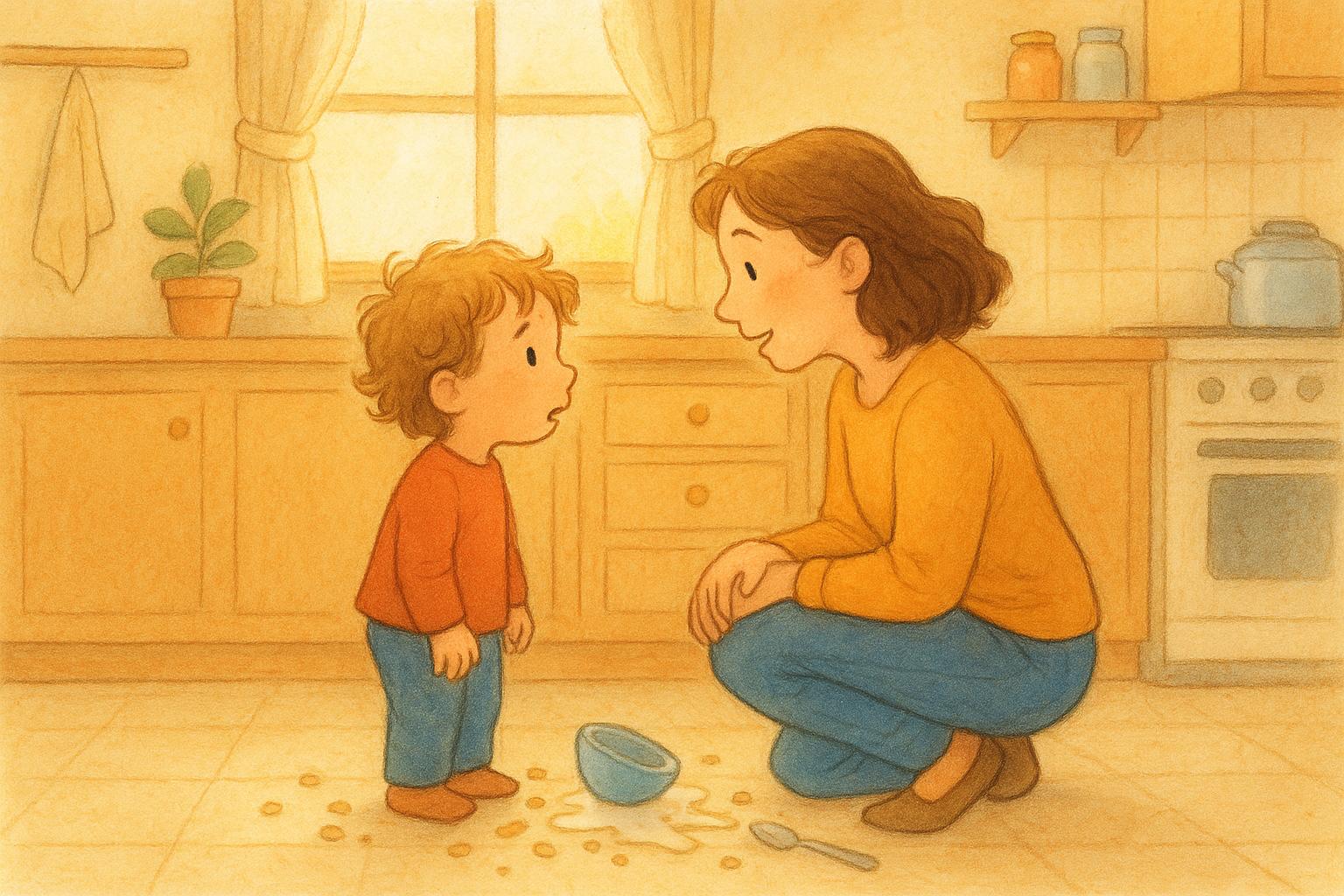
You’ve already said it twice. The cup was thrown anyway. Now everyone in the kitchen is frozen, waiting to see what happens next. In moments like that, punishment can feel like the fastest way to take control. The problem is that quick control and real learning are not always the same thing.
Most parents do not reach for punishment because they enjoy being harsh. They reach for it because they are tired, embarrassed, behind schedule, or trying to stop a behavior that keeps happening. When a child lies, hits, screams, or flat-out refuses, it makes sense to want a consequence that sends a clear message.
But punishment by itself often misses the deeper reason a behavior keeps showing up. A child might know they will lose screen time and still melt down every afternoon. They might get sent to their room and still shove their sibling tomorrow. That does not always mean they are stubborn or manipulative. Often it means they do not yet have the skill, support, or regulation they need to handle the moment differently.
That is why calm limit-setting matters so much. Parents can stay firm without turning every hard moment into a battle. If you are trying to move away from reaction-based discipline, this guide on disciplining without yelling is a useful place to start.
Why This Happens
Children do better when they know what to do instead of only hearing what not to do. Punishment can stop a behavior for the moment, especially if a child feels shocked, afraid, or disappointed. But it does not automatically teach the missing skill underneath the behavior.
Think about a few common examples:
- A child grabs a toy because waiting feels impossible.
- A child talks back because they are flooded and do not know how to disagree respectfully.
- A child lies because telling the truth feels scary.
- A child keeps stalling at bedtime because transitions are hard and they are overtired.
In each case, the visible behavior is real and needs a response. But the child also needs coaching in patience, emotional regulation, honesty, problem-solving, or coping with frustration. Without that piece, punishment can turn into a loop: child misbehaves, parent punishes, everyone cools off, and then the same thing happens again.
Kids also tend to learn most from what happens right before and right after behavior. If the pattern in your house becomes tension, threat, and fallout, some children stop listening and start defending themselves. Others become sneaky. Others fall apart faster because shame makes it even harder to recover. That is one reason parents often notice that strong punishments do not create strong long-term change.
When children push back constantly, it can help to look beyond the surface and ask whether the issue is skill, stress, routine, or connection. This article on defiant behavior explains that dynamic well.
What Parents Can Do
1. Keep the limit, but change the goal
You do not have to become permissive. If your child throws a toy, you can still remove the toy. If they hit, you can still end the activity. The difference is that the goal shifts from “make them feel bad enough not to do it again” to “stop the behavior and teach what comes next.”
You might say:
- “I won’t let you hit. We’re taking a break and then we’ll try again with safe hands.”
- “You threw the truck, so the truck is done for now. When you’re calm, we’ll practice what to do when you’re mad.”
- “You do need to tell the truth. I care more about honesty than perfection, so let’s start over.”
That approach is still firm. It just leaves room for learning.
2. Look for the skill gap
Ask yourself one useful question: What can my child not do well yet in this moment? The answer is often more helpful than asking, How do I make this stop forever?
Maybe your child needs help with:
- waiting
- using words when upset
- handling disappointment
- moving from one activity to another
- following through after the first reminder
Once you spot the missing skill, discipline gets more practical. Instead of repeating punishment, you can teach, practice, and support the exact thing they struggle with.
3. Use consequences that connect to the behavior
Children usually learn better from consequences that make sense. If your child dumps markers all over the floor, the next step is helping clean them up. If they keep delaying bedtime by popping out of the room, the next step might be a shorter, simpler bedtime routine the following night with fewer extras. If they misuse a privilege, that privilege may need to pause.
That is different from random punishment. Natural or logical consequences help the lesson feel clear instead of personal. These examples of natural consequences that actually work can help if that idea still feels fuzzy.
4. Teach replacement behavior when everyone is calm
Most kids cannot learn a new skill in the hottest part of the moment. After things settle, that is when the teaching matters.
Try short practice, not long lectures:
- Practice what to say instead of yelling: “Can I have a turn when you’re done?”
- Practice what to do instead of hitting: stomp feet, squeeze a pillow, ask for space.
- Practice what honesty sounds like: “I broke it and I was nervous to tell you.”
Five calm minutes of rehearsal usually works better than a ten-minute speech delivered while everyone is upset.
5. Notice progress out loud
Parents sometimes worry that noticing good behavior means praising every breath. It does not. It just means paying attention when your child uses a skill you have been working on.
You might say:
- “You were frustrated, but you used words.”
- “You told me the truth even though it was hard.”
- “You stopped yourself and asked for help. That was a big deal.”
This helps children connect effort with identity. They start seeing themselves as someone who can recover, repair, and do better.
Common Mistakes to Avoid
Making the punishment bigger every time
When a consequence does not work, parents often feel pressure to go harder. Longer grounding. Bigger threats. Louder reactions. Usually that just raises the emotional temperature without building the missing skill.
Lecturing too much
When a child is dysregulated, a long explanation rarely lands. Short, calm, and clear works better. Save the deeper conversation for later.
Using shame as a teaching tool
There is a big difference between “That choice was not okay” and “What is wrong with you?” Children need accountability, but they also need to believe they are capable of doing better next time.
Expecting one consequence to fix a pattern
Repeated behavior usually needs repeated teaching. If your child struggles with morning cooperation, sibling conflict, or bedtime battles, that is usually a routine-and-skill issue, not a one-time discipline issue. Positive discipline strategies often work better for patterns because they focus on teaching and consistency, not just reaction.
Correcting without connecting
Connection does not mean letting behavior slide. It means your child is more likely to hear the correction if they feel safe enough to stay engaged. A calm tone, eye contact, and a short reset can do more than a dramatic punishment ever will.
Simple Plan to Try This Week
If you want to shift away from punishment-only discipline, try this for one week:
Day 1: Pick one repeat problem
Choose one behavior that keeps happening. Not five. Just one. Maybe it is hitting, ignoring directions, whining, lying, or rough transitions.
Day 2: Identify the likely skill gap
Ask what is hardest for your child in that moment. Waiting? Flexibility? Truth-telling? Calming down? Following a routine?
Day 3: Decide on one clear limit
Keep it simple. “If you throw the toy, the toy is put away.” “If you hit, play stops.” “If you scream at me, we pause and try again when voices are calm.”
Day 4: Teach the replacement
Practice the exact words or action you want instead. Keep it brief and repeatable. Kids need usable scripts.
Day 5: Prepare before the hard moment
Remind your child right before the tricky time. “Remember, if your brother has the game, you can say, ‘Can I have it next?’” Pre-correction works better than waiting for the crash.
Day 6: Stay boring and consistent
When the behavior happens, respond without a big performance. Hold the limit. Follow through. Coach later. Consistency is more powerful than intensity.
Day 7: Review what improved
Look for even small progress. Fewer explosions. Faster recovery. More honest words. One better choice still counts.
Helpful Tools
Optional tools can support this work, especially when the real problem is not defiance but transitions, waiting, or emotional overload.
- Time Timer Original – A visual timer can help some kids handle waiting, cleanup, or transitions without needing as many repeated warnings.
- Feelings Chart for Kids – A simple feelings chart can make it easier for children to name what is happening before it spills into hitting, yelling, or shutting down.
FAQ
Is punishment always bad?
No. Consequences and limits matter. The issue is relying on punishment alone and expecting it to teach skills by itself.
What is the difference between consequences and punishment?
Consequences are meant to connect behavior with learning and responsibility. Punishment is often more about making a child feel a penalty. Sometimes the same action can function as either one depending on how it is used.
What if my child only responds when I get strict?
Some children respond to intensity in the short term, but that does not always mean they are learning. Firm, calm, predictable follow-through usually works better over time than escalating reactions.
How long does it take to see change?
Usually longer than parents want. If a pattern has been happening for months, it may take repeated practice before the new skill starts to stick. Look for gradual progress, not instant transformation.
What if the behavior is serious?
Safety comes first. Stop unsafe behavior immediately and keep clear limits. After that, teach the missing skill and get extra support if the pattern feels bigger than what you can manage alone.
Punishment can make a point, but teaching is what makes a difference. When parents stay firm, clear, and calm, children are more likely to learn what to do next time instead of just feeling bad about what already happened. And if you are trying to reduce the daily friction around discipline, this no-yelling discipline guide fits naturally with the same approach.