
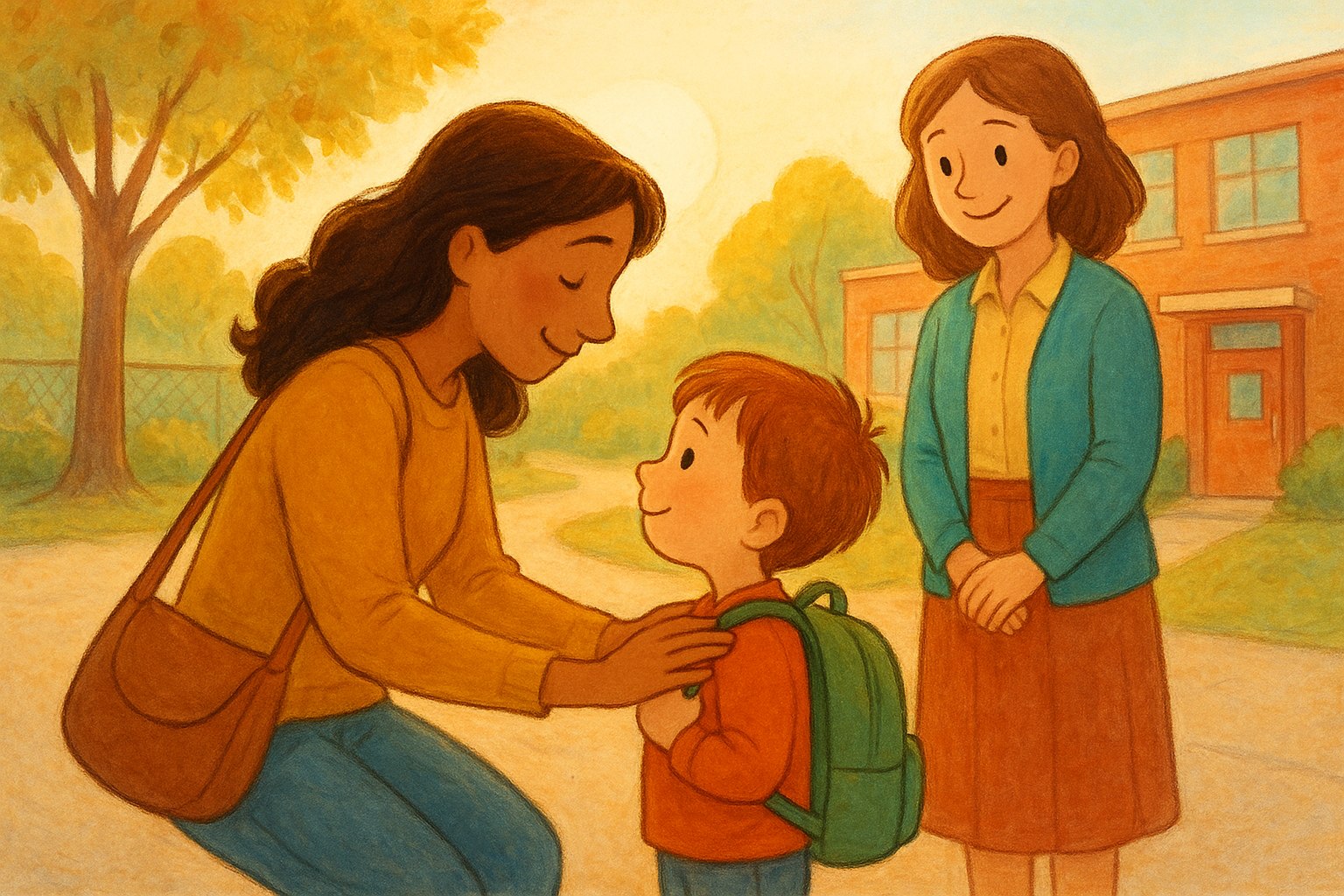
The shoes are on, the backpack is packed, and then suddenly your child is wrapped around your leg like you are about to disappear forever. The daycare drop-off, classroom line, or even a sleepover at Grandma’s can turn into tears, begging, and a knot in your own stomach. Separation anxiety is hard, but there are practical ways to make goodbyes gentler and help your child feel safer over time.
One of the hardest parts of separation anxiety is how fast it can take over an ordinary moment. You might be doing fine right up until the final hug, and then your child starts crying, clinging, or panicking. Parents often wonder if they are making it worse, if they should stay longer, or if they should cancel the plan altogether.
You are not the only parent who has walked away from a classroom door feeling awful. Separation anxiety is common, especially during big transitions, after illness, after a break from school, or when family stress is running high. It can also show up in older kids in quieter ways, like repeated stomachaches before school, constant checking in, or refusing activities they used to enjoy.
The good news is that most children can build more confidence with steady routines, calm responses, and a lot of practice. If your child also struggles when life feels uncertain, this article on helping kids through big changes can support the bigger picture too.
Why This Happens
Separation anxiety usually is not about a child being dramatic or manipulative. It is about their nervous system sounding an alarm. Young children do not always have a clear sense of time, so “I’ll be back after lunch” can feel vague and endless. Older kids may understand the schedule, but still worry that something bad will happen while they are apart from you.
Sometimes the anxiety shows up after a clear trigger. A move, a new school, a new sibling, a stressful family season, or even a long holiday together can make separation feel harder. Other times, it builds quietly. A child may become more sensitive when tired, overwhelmed, or stretched by new expectations.
It also helps to remember that anxiety often grows when avoidance works. If a child cries, then gets to stay home every time, their brain learns, “Panic kept me safe.” That does not mean parents should force a cold, harsh goodbye. It means children usually need warm support plus small chances to practice separating successfully.
If your child’s worries spill into other parts of the day, some of the ideas in helping kids overcome fear can fit here too, especially for building confidence step by step.
What Parents Can Do
Create a goodbye routine your child can count on
Children handle separation better when the process is predictable. A simple routine might be: hang up backpack, one hug, one silly handshake, one sentence, then goodbye. Keeping it the same each time matters more than making it perfect.
You might say, “I’ll help you hang up your bag, give you two hugs, and then I’m going to work. Ms. Ana will help you with the next part.” That kind of wording tells your child what will happen and who will help after you leave.
Long, uncertain exits usually make things harder. When parents leave, come back, linger at the door, and then leave again, children often get the message that maybe this really is unsafe. Short and loving works better than long and wobbly.
Practice separation when the stakes are low
Do not save separation practice only for rushed school mornings. Build it into normal life. Let your child stay with a trusted grandparent while you take a short walk. Have them play in another room while you fold laundry. Arrange a brief visit with a familiar babysitter instead of starting with a full evening out.
Think of it like stretching a muscle. A child who cannot yet handle a full-day camp may be able to handle ten minutes with a neighbor, then thirty minutes with a cousin, then a short class they know well.
If your family has been working on emotional transitions already, this piece on supporting emotional growth during change pairs well with separation practice.
Name the feeling without handing it the steering wheel
Children feel calmer when adults understand what is happening, but they also need confidence from us. Try to be validating without sounding unsure.
You can say:
- “You wish I could stay. It is hard to say goodbye.”
- “Your body feels worried right now, and you still can do this.”
- “I know drop-off feels big. I will be back after snack and story time.”
What usually does not help is too much convincing. When kids are flooded, long speeches about why everything is fine tend to bounce right off. Short, calm, and steady is usually better.
Give your child a job for the first five minutes
The first minutes after separation are often the roughest. It helps to hand your child directly into something concrete. Ask the teacher if your child can be the line leader, book helper, plant waterer, or puzzle starter. At home with a sitter, it might be feeding the dog, choosing a story, or setting up crayons at the table.
A job gives anxious energy somewhere to go. It also shifts the child from “I am losing my parent” to “I know what I am doing next.”
Use visual reminders and connection objects
Some children relax when they can see the shape of the day. A simple picture schedule or short routine card can help them know what comes before pickup. A small family photo in a backpack, a paper heart in a pocket, or a matching bracelet can also be reassuring without becoming a major ritual.
An optional tool that can help some families is a set of feelings and emotions cards. They can make it easier for children to point to “worried,” “sad,” or “nervous” when they do not have the words yet.
Work closely with the other caring adult
Separation anxiety improves faster when the parent and receiving adult use the same plan. Tell the teacher, sitter, or grandparent exactly what you are trying: one short goodbye, one transition job, no sneaking out, and a quick update later if needed.
Many children calm down within minutes after a parent leaves, even when the goodbye looked dramatic. A simple message like “He stopped crying after two minutes and is painting now” can keep parents from spiraling all morning.
Common Mistakes to Avoid
Sneaking out. It may seem kinder in the moment, but it can make children more watchful and less trusting next time.
Turning goodbye into a negotiation. Extra hugs, extra promises, and repeated “just one more minute” often teach kids to keep the scene going.
Talking about the fear all morning long. A quick check-in helps. An hour of “Are you worried? Are you sure? What if this happens?” usually feeds the anxiety.
Being harsher because you feel guilty. Parents sometimes swing from over-soothing to frustration. Calm firmness works better than either extreme.
Expecting overnight progress. Separation anxiety usually gets better through repetition, not one magical drop-off.
If daily battles pop up around more than just goodbye, the strategies in parenting through difficult phases can help you stay consistent without feeling stuck.
Simple Plan to Try This Week
Day 1: Pick your exact goodbye script
Choose one routine and keep it short. Example: “Backpack, hug, high five, goodbye. I’ll be back after rest time.”
Day 2: Practice during a calm moment
Role-play with stuffed animals. Let your child be the parent, the child, and the teacher. Kids often process fears better through play than through direct questions.
Day 3: Build one tiny separation success
Leave your child with a trusted adult for a short, predictable amount of time. End while things are still going okay.
Day 4: Add a transition job
Before the next separation, decide what your child will do immediately after goodbye. Keep it concrete and simple.
Day 5: Notice what helped
Did mornings go better with less talking? Did the teacher handoff help? Did your child do better when they slept well? Pay attention to patterns, not just tears.
Day 6 and 7: Repeat, do not redesign
If the plan is decent, keep using it. Many parents change strategies too fast because the first day was messy. Consistency is what teaches safety.
Helpful Tools
Optional tools can support the process, but they are not magic fixes.
- Feelings and Emotions Cards can help children name what they feel before or after a hard goodbye.
- How to Talk So Kids Will Listen is a useful parent guide if you want more calm, practical language for anxious and emotional moments.
FAQ
Is separation anxiety normal?
Yes. It is very common in young children, and it can flare up again during stress, transitions, illness, or routine changes.
Should I stay longer if my child is crying?
Usually a short, predictable goodbye works better than a long one. Staying longer often keeps the child emotionally stuck in the moment.
What if my child is older and still panics at separation?
Older kids can still struggle, especially after a hard season or major change. The same basics help: predictability, practice, calm language, and support from other adults.
Is it better to sneak out so my child does not get upset?
Usually no. Sneaking out can make future separations harder because your child may start watching you more closely.
When should I get extra support?
If the anxiety is intense, lasts a long time, affects school or sleep heavily, or seems to be getting worse instead of better, it is worth talking with your child’s pediatrician or a qualified child mental health professional.
Conclusion
Separation anxiety can make ordinary goodbyes feel huge, but children often grow through it with more practice than parents expect. Your job is not to erase every hard feeling. It is to stay calm, be predictable, and show your child that they can be safe with another caring adult and still come back to you. If mornings are especially rough, you may also find ideas in this guide to helping kids adjust after vacation, because the same reset-and-routine strategies often help after breaks too.