
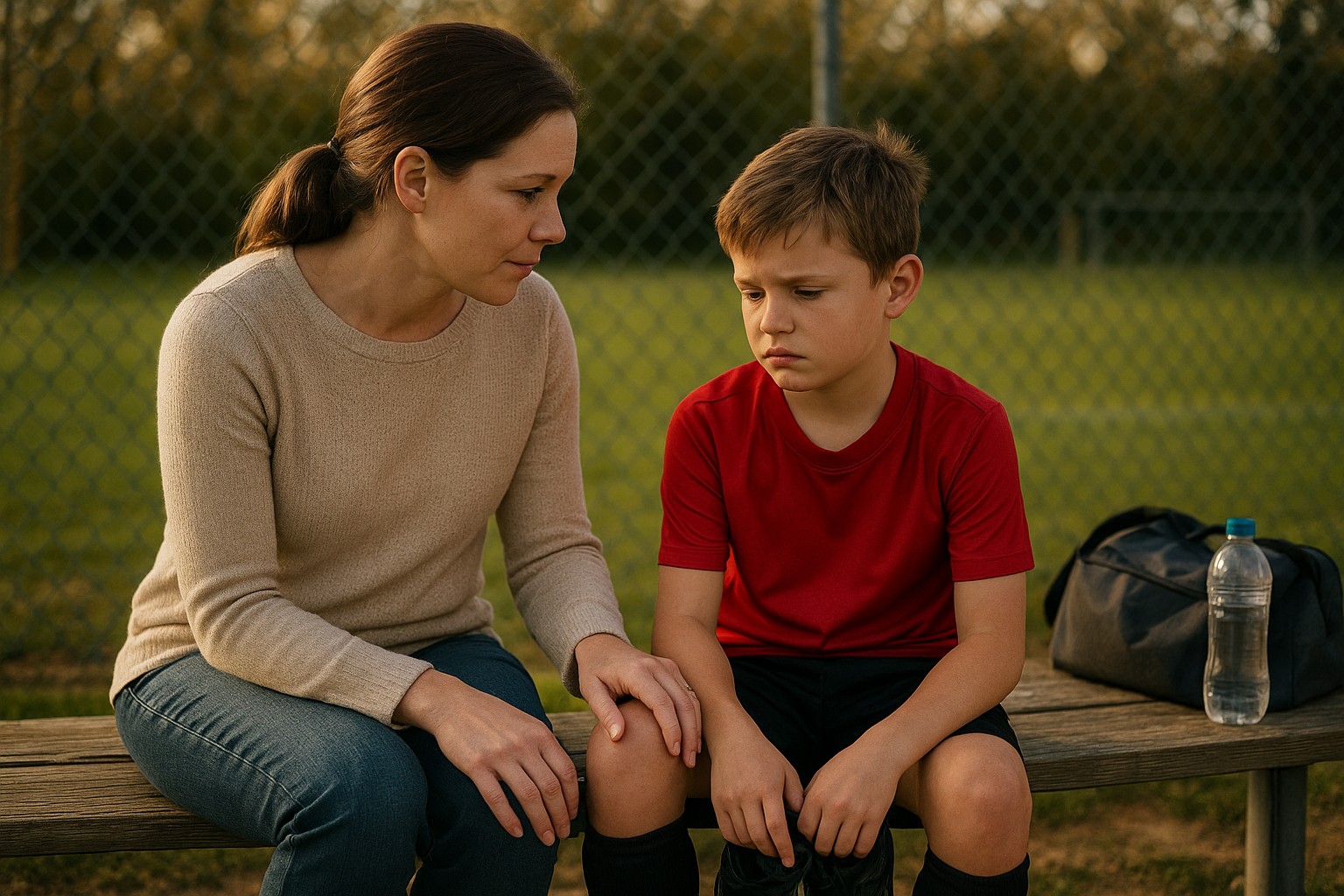
It usually comes out in the car, halfway through untying cleats or peeling off a dance bun: “I’m not going back.”
Maybe your child says soccer is boring now. Maybe piano suddenly feels too hard. Maybe they loved gymnastics for six weeks and now cry every Tuesday afternoon. For parents, that moment raises a hard question: do you push them to stick with it, or let them stop?
The hard part is that there is no one-size-fits-all answer. Some kids want to quit because an activity is no longer a good fit. Others are overwhelmed, embarrassed that they are not instantly good at it, or stretched thin by a schedule that has quietly become too much, as happens in families dealing with Managing Overscheduled Kids.
The goal is to figure out what your child is really communicating, then respond calmly.
Why This Happens
Children do not usually say, “I am experiencing a mismatch between my skill level, social comfort, and energy.” They say, “I hate it.”
They expected fun and found effort
Kids often sign up for the picture in their head, not the full reality. They imagine scoring goals, wearing the costume, or making cool art. They do not imagine repetition, waiting turns, correction, practice, or being one of the beginners.
Once the novelty wears off, they run into the less glamorous middle: being average, making mistakes, and having to keep trying anyway.
They feel incompetent
Many kids can tolerate hard things when they feel capable. They struggle much more when they feel behind. A child who happily kicks a ball in the yard may shut down when other kids seem faster or more coordinated. A child who likes singing at home may freeze in a group.
That does not always mean the activity is wrong. Sometimes it means they need reassurance, more beginner support, or time to build confidence. If your child tends to avoid hard things in general, the same patterns often show up in schoolwork too, which is why practical guides like Improving Study Habits can feel surprisingly related.
Something social feels off
Kids may want to quit because the coach is sharp, the class feels cliquey, or one child keeps making comments. Sometimes the activity itself is fine, but the social environment is what hurts.
This is easy to miss if you only ask, “Did you have fun?” A child may say no without having the words to explain that they felt left out, embarrassed, or ignored.
They are simply worn out
Sometimes quitting talk is really a nervous system message. A child who is carrying a full school day, homework, a late practice, and not enough downtime may hit a wall. Even a normally enjoyable activity can start feeling impossible when a child is short on sleep, transition time, or emotional breathing room.
What Parents Can Do
Before deciding whether your child should stay or quit, slow the moment down. The best conversations rarely happen while everyone is rushing out the door or already annoyed.
Step 1: Get curious before you get firm
Start with questions that are small and specific. “What makes you not want to go back?” is better than “Why are you quitting?” The second one sounds like a courtroom. The first sounds like you actually want to know.
You can also try:
- “Was it boring, hard, awkward, or something else?”
- “Is there a part you still like?”
- “If one thing could change, what would help most?”
If your child struggles to answer directly, use concrete observations. That can help children name feelings they have not sorted out yet.
Step 2: Separate a bad day from a real pattern
One rough class does not always mean the activity is wrong. A child might have had a conflict, felt tired, or gotten corrected in front of peers. Before making a big decision, look for patterns over two to three weeks.
Ask yourself:
- Has this come up once, or several times?
- Does my child dread the activity before it starts, or only complain after?
- Do they recover quickly, or stay distressed for hours?
- Is the problem the activity, the teacher, the timing, or the group?
That kind of pattern-spotting matters. Parents often have to look beneath the surface when handling big changes or shifts in routine.
Step 3: Teach commitment in a realistic way
Children do need to learn that trying something new includes an awkward middle. But commitment does not have to mean “you must stay forever.”
A very workable family rule is: you do not have to sign up again, but you do need to finish the current short session if it is safe and reasonably manageable.
That teaches follow-through without trapping a child in a year-long misery march.
You might say:
“You don’t have to love every class. But we signed up for this six-week session, and unless something serious is going on, we’re going to finish it. Then we can decide what comes next.”
For very young children, the commitment window should be shorter. For older kids, it can be longer. The point is fairness, not rigidity.
Step 4: Solve the actual problem when possible
Sometimes kids do not need to quit. They need a better setup.
- If the class is too advanced, ask about a beginner group.
- If transitions are the problem, build in a calmer pre-activity routine.
- If a friendship issue is souring the whole experience, talk through social strategies first.
- If the schedule is draining, consider whether another activity should pause.
This is where communication matters more than lectures. A parent who can stay steady and listen tends to get more useful information, which is why guidance like Effective Communication with Kids helps well beyond discipline situations.
Step 5: Let them quit sometimes
Yes, really.
There are times when quitting is the wise choice. If an activity is causing sustained dread, repeated stomachaches tied to stress, social humiliation, or a clear mismatch with your child’s temperament and needs, staying in it may teach the wrong lesson.
Kids do not need to be molded into loving every structured activity. Sometimes the right lesson is, “We gave this a real try, learned from it, and now we can choose differently.”
That is clarity.
Common Mistakes to Avoid
Turning it into a character test
When parents panic, it is easy to make quitting mean too much. “If I let this go, my child will never learn perseverance.” Usually that is not true. One decision about swim lessons is not a full personality forecast.
Making the decision in the heat of the moment
The backseat after a rough practice is not the best boardroom. Let feelings settle before announcing the family policy.
Pushing because you already invested money or effort
Maybe you bought the gear, moved your schedule around, and sat through every practice. That investment is real. But it should not be the only reason a child stays in something that is clearly not working.
Rescuing too fast from normal discomfort
There is a difference between a child being uncomfortable and a child being harmed. Normal beginner frustration, mild nerves, and imperfect performance are part of learning. If we pull kids out every time something feels hard, they miss the chance to grow through tolerable struggle.
Simple Plan to Try This Week
If you are in the middle of this right now, try this simple reset:
Day 1: Have a calm, neutral conversation
Pick a low-pressure moment. Ask what feels hardest, what still feels okay, and what your child wishes were different.
Day 2: Look for the real category of the problem
Is this about skill frustration, social stress, schedule overload, fear, boredom, or lack of interest? Write down your best guess in one sentence.
Day 3: Decide on a fair commitment point
If the issue is manageable, decide what “finishing” looks like. That might be the end of the month, the season, or just two more classes. Keep it concrete.
Day 4: Add one support
Choose one thing that could help: extra practice at home, a chat with the coach, a snack before class, more transition time, or permission to sit and watch the first five minutes before joining.
Day 5: Revisit without pressure
After the next activity, ask, “Did anything feel easier today?” not “See, wasn’t that fine?” The first question gathers information. The second invites a fight.
Day 6 or 7: Make the next-step decision
If your child seems more settled, finish the commitment window and reassess later. If the same distress keeps showing up, it may be time to stop and choose a better fit.
Helpful Tools
- How to Talk So Kids Will Listen can be useful if you want better ways to talk through resistance, frustration, and big feelings without escalating the moment.
- Conversation Cards for Kids can help children open up when “How was practice?” keeps getting you a shrug.
FAQ
Should kids always finish the season if they want to quit?
Not always. Finishing a short, manageable commitment can teach follow-through, but there should be exceptions for situations that feel emotionally unsafe, chronically overwhelming, or clearly wrong for the child.
What if my child wants to quit every activity they try?
Look for the shared pattern. Are they afraid of being bad at something? Struggling with transitions? Overbooked? Sensitive to group settings? The repeated quitting matters less than the reason behind it.
How long should I encourage them before letting them stop?
That depends on age and the size of the commitment. For younger children, a few more classes may be enough. For older kids, finishing a short session can be reasonable. The key is having a clear, fair endpoint.
What if I think they are quitting just because it got hard?
Support them through the hard part before making a final decision. Offer encouragement, practical help, and a limited commitment window rather than an endless “too bad, you’re stuck.”
Can letting them quit hurt resilience?
It can if quitting becomes the automatic answer to every uncomfortable feeling. But thoughtful quitting after reflection is different. Resilience includes learning when to push through and when to pivot.
Your child does not need to love every team, class, or lesson to become a committed person. What matters more is helping them learn how to tell the difference between “this is hard,” “this is not working,” and “I need support before I decide.” If this season has brought a lot of emotional ups and downs, Supporting Your Child Through Big Emotions is a good next read.