
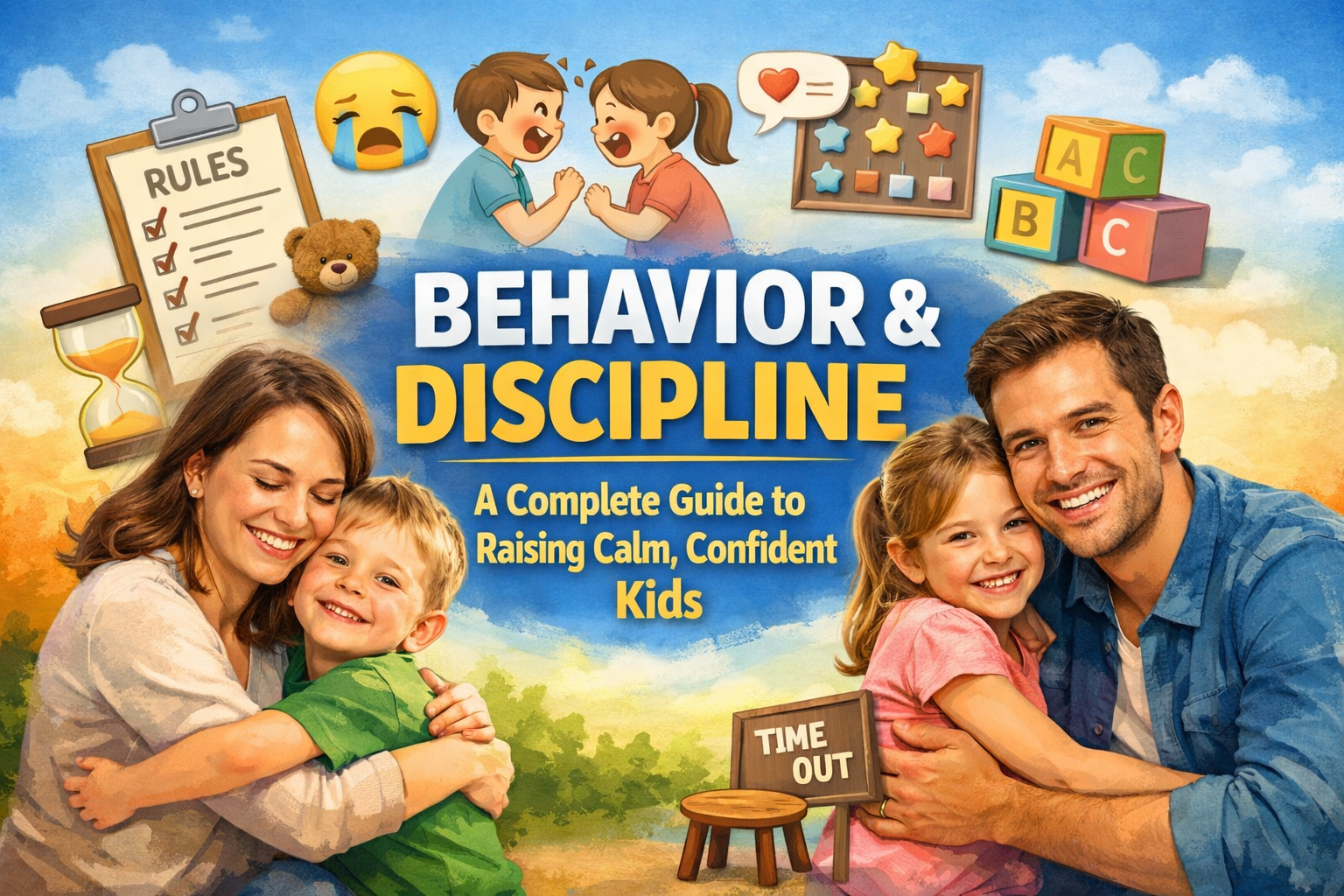
👉 Parenting Tips: Complete Guide
Every parent wants calm, confident, well-behaved kids—but real life doesn’t always look that way. Tantrums happen. Sibling fights break out. Bedtime becomes a battle. The good news? With the right approach, you can guide your child’s behavior while building confidence, empathy, and emotional strength.
Looking for more expert advice? Browse all parenting guides here:
Parenting Tips Hub
This complete guide brings together the most effective parenting strategies to help you handle discipline with confidence—without yelling, punishment, or constant frustration.
👶 Building Strong Foundations
Good behavior starts with structure, clarity, and connection. These guides will help you create a strong foundation your child can thrive in:
- How to Set Clear Boundaries and Expectations with Young Children
- The Power of Routine
- Building Confidence Through Age-Appropriate Responsibilities
💬 Better Communication = Better Behavior
Many behavior issues come down to communication. When kids feel heard, they act differently.
🔥 Handling Tantrums, Meltdowns & Big Emotions
Every parent faces emotional outbursts. The key is knowing how to respond calmly and effectively.
👨👩👧👦 Navigating Everyday Challenges
From sibling fights to daily frustrations, these guides help you manage common parenting struggles with confidence.
🏆 Discipline That Actually Works
Discipline isn’t about punishment—it’s about teaching. These approaches focus on long-term growth and respect.
🌟 Final Thoughts
There’s no such thing as a perfect parent—but there are powerful tools that make parenting easier and more enjoyable.
Start small. Stay consistent. And remember—every moment is a chance to teach, connect, and grow together.
❓ Frequently Asked Questions
What is the best way to discipline a child without yelling?
Focus on calm communication, clear boundaries, and consistent consequences. Positive discipline techniques are proven to be more effective long-term than yelling or punishment.
How do I stop my child’s tantrums?
Tantrums are often caused by frustration or lack of emotional skills. Teaching self-regulation and staying calm during outbursts helps reduce them over time.
How important are routines for kids?
Routines provide structure and predictability, which helps children feel secure and behave better.
Should I reward good behavior?
Rewards can work short-term, but praise and intrinsic motivation help children build lasting positive habits.
How do I handle sibling fights?
Teach problem-solving, encourage empathy, and avoid always taking sides. Guide them toward resolving conflicts independently.
📚 Explore more parenting guides:
👉 Behavior & Discipline
👉 Health & Wellbeing
👉 Learning & Development
👉 Parenting Challenges