
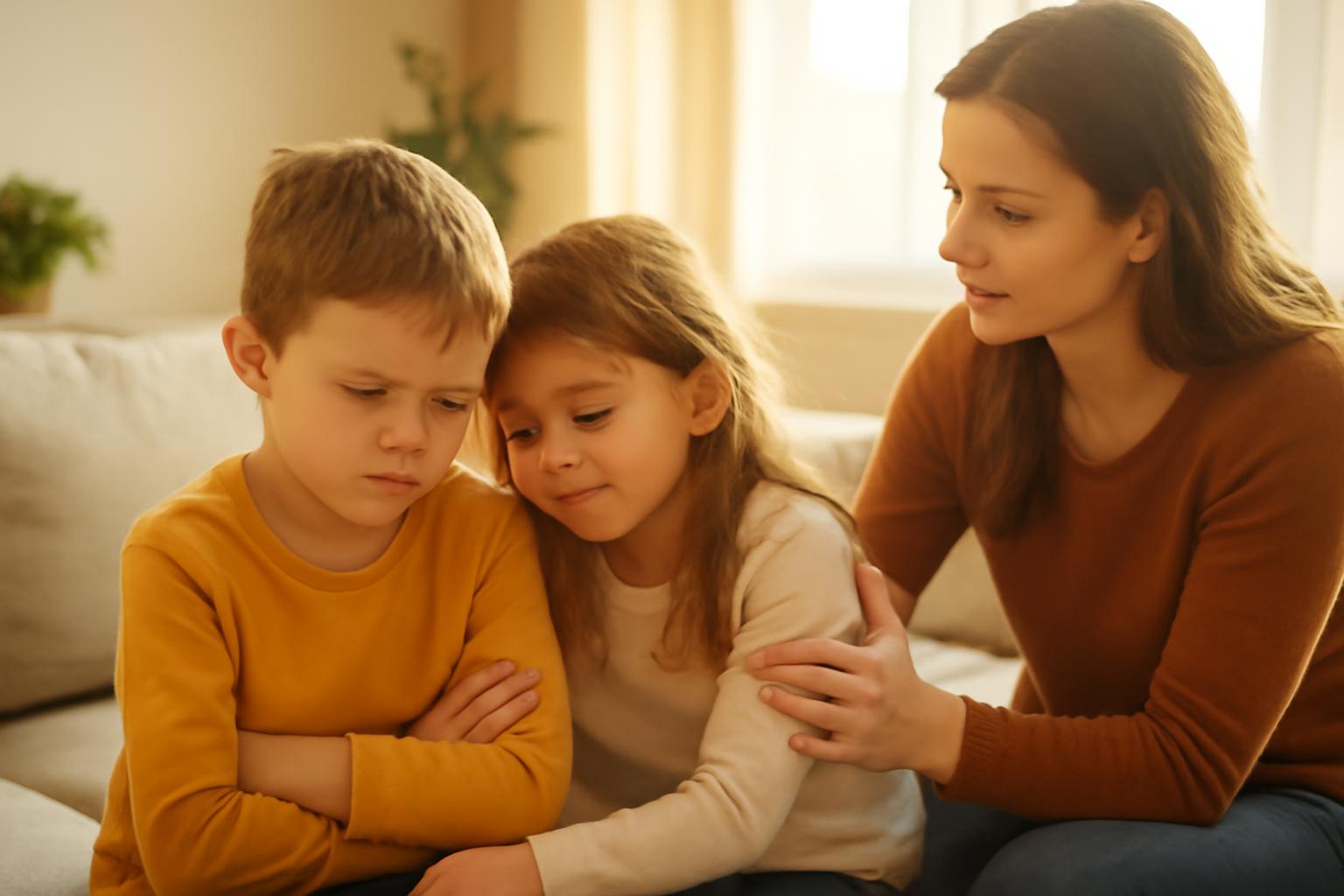
One child is suddenly glued to your side the minute the baby needs a diaper change, and your older kid who usually shares just fine is now furious over a blue cup. Sibling jealousy rarely announces itself in neat, obvious ways. More often, it shows up as clinginess, bossiness, tears, tattling, or a child acting younger than they did last week.
When one child feels pushed out, compared, or uncertain about their place in the family, jealousy can flare fast. That does not mean you are doing something wrong, and it does not automatically mean your kids are headed for a terrible relationship. It usually means one child is asking, in the messiest possible way, “Do I still matter here?”
The goal is not to make siblings feel exactly the same all the time. That is not realistic. The goal is to help each child feel secure, seen, and capable of handling hard feelings without turning every small frustration into a family-wide explosion.
Why This Happens
Jealousy between siblings often starts with normal child development. Young children are naturally focused on their own needs. They notice who got the bigger muffin, who sat next to you, who stayed up later, and who got praised for cleaning up. Adults can look at those details and shrug. Kids often treat them like evidence.
Big family changes can make those feelings stronger. A new baby, one child starting school, a parent working longer hours, summer schedule changes, or even a sibling suddenly needing more attention can all stir up insecurity. A child may not say, “I feel displaced.” They may grab toys, interrupt constantly, pick fights, or insist everything is unfair.
Temperament matters too. Some children are naturally more sensitive to comparison. Others are competitive by default. Some express jealousy loudly. Others go quiet and withdraw. If family life already feels intense, this broader guide on parenting through difficult phases can help you zoom out and see sibling jealousy as part of a season, not the whole story.
It also helps to remember that jealousy is not always about wanting the exact thing a sibling has. Sometimes it is about wanting reassurance. A child who keeps interrupting while you help their brother with homework may not care about math at all. They may just want proof they still have access to you.
What Parents Can Do
Name the feeling without shaming it
Kids calm down faster when they feel understood, not judged. Instead of saying, “Stop being jealous,” try, “You wanted me with you too,” or “It looks like that felt unfair.” Naming the feeling does not mean agreeing with the behavior. It simply lowers the heat.
You can follow that with a limit: “You can be upset. You may not shove your sister.” This combination of empathy and firmness is often much more effective than trying to talk a child out of the feeling itself.
Avoid constant comparison
Even well-meaning comments can sting. “Why can’t you get dressed like your brother?” or “Your sister never makes a fuss about this” can deepen rivalry fast. Children hear comparison as ranking, and ranking tends to invite competition.
Try to describe what you want without pulling the other child into it: “Shoes on by the door, please,” works better than bringing a sibling in as the standard.
Give each child small moments of undivided attention
This does not need to be elaborate. Ten calm minutes folding laundry together, reading one book alone, walking to the mailbox, or letting one child help you make toast can go a long way. What matters is not the activity. It is the message: “I still see you when your sibling is around.”
Parents sometimes think they need equal time measured down to the minute. Usually you need predictable connection more than perfect equality. A child who knows they get a little one-on-one time regularly often stops fighting so hard to claim it in chaotic ways.
Teach children what to do instead of attacking
If jealousy always turns into grabbing, tattling, or cruel comments, your child needs replacement skills. Practice simple phrases such as, “Can I have a turn when you’re done?” “Can you help me too?” or “I feel left out.” Those lines are much more usable for a child than “Be nice.”
When big emotions run the show, this article on supporting your child through big emotions can help you build the emotional vocabulary that makes sibling conflict less explosive.
Notice the good moments out loud
Sibling relationships are easy to narrate only when they go wrong. Try catching the better moments too: “You made room for your brother on the couch,” “You waited while she finished her sentence,” or “You looked disappointed and still used kind words.” Specific praise helps children see themselves as capable of handling jealousy without acting on every impulse.
Step in early when rivalry is predictable
If jealousy reliably spikes during transitions, hunger, bedtime, or when one child gets help with something difficult, plan ahead. Bring a snack before pickup. Set a small job for the waiting child. Rotate who gets to choose the bath toy or bedtime song. Prevention is often calmer than trying to referee after the fight is already rolling.
Common Mistakes to Avoid
One common mistake is trying to force closeness on the spot. When a child is already simmering, saying, “Give your sister a hug right now,” usually creates more resistance, not warmth. Start with regulation and repair. Connection can come later.
Another mistake is deciding that fairness means sameness. Siblings often need different things. One child may need more help with transitions, another may need more quiet time, and another may simply need more physical reassurance. Fair does not always look identical.
It is also easy to over-focus on the louder child and miss the quieter one. The child doing the whining, poking, or grabbing is not the only one who needs support. The sibling on the receiving end may need help setting boundaries, feeling heard, and recovering too.
Parents can also accidentally turn every disagreement into a courtroom case. If you spend all day deciding who started what, children can get even more invested in proving innocence. In many situations, it works better to pause the interaction, restate the rule, and move everyone toward a reset. If the conflict pattern feels less like jealousy and more like nonstop control battles, this guide on getting through power struggles may help.
Finally, try not to label a child as “the jealous one,” “the dramatic one,” or “the mean one.” Kids grow into the stories they hear about themselves. Talk about the moment, not their identity.
Simple Plan to Try This Week
You do not need a total family overhaul to reduce sibling jealousy. Try this one-week reset instead.
Day 1: Pick one trigger
Choose the situation that creates the most jealousy right now. Maybe it is when the baby gets fed, when one child gets homework help, or when siblings fight over who sits next to you.
Day 2: Write one sentence you will use
Keep it simple and steady. Try, “You wanted a turn with me too,” or “You’re upset, and I won’t let you push.” Having the sentence ready makes it easier to stay calm when emotions climb.
Day 3: Add one tiny one-on-one ritual
Give each child a small predictable moment with you. Five minutes before bed counts. So does a quick errand or a short check-in after school.
Day 4: Practice a replacement phrase
Role-play once when everyone is calm. “Say, ‘Can I be next?’” “Say, ‘I need help too.’” Children use what they practice, not what they hear only in the middle of a meltdown.
Day 5: Catch one positive sibling moment
Say exactly what you noticed. Not “Good job.” Try, “You were annoyed and still handed the marker back.” Specific praise feels more real and teaches what to repeat.
Day 6: Reduce one comparison point
If certain battles always start over who gets first pick, who gets more, or who got praised, simplify it. Rotate turns. Use the same cups. Make the rule visible and boring.
Day 7: Review what helped most
Maybe the jealousy did not disappear, but perhaps the fights got shorter or one child used words sooner. Keep the strategy that worked best and use it again next week.
Related:
Helpful Tools
You do not need to buy anything to handle sibling jealousy, but a couple of optional tools can help children express feelings more clearly and help parents respond with less guesswork.
- The Whole-Brain Child is a useful parent read if you want a practical framework for responding to big feelings and conflict without escalating the moment.
- Feelings and Emotions Cards can help younger kids name what they are feeling before jealousy turns into grabbing, shouting, or shutting down.
FAQ
Is sibling jealousy normal?
Yes. It is very common, especially during transitions, uneven attention, or developmental stages when children are more sensitive to fairness and belonging.
Should I make everything exactly equal between siblings?
No. Equal is not always the same as fair. Children often need different support at different times. What matters most is that each child feels seen and respected.
What if one child keeps acting like a baby after a new sibling arrives?
That is a common stress response. Offer reassurance, a little extra connection, and calm limits. Acting younger is often a child’s way of asking for security, not a sign that you have spoiled them.
When should I step in during sibling conflict?
Step in early if there is hitting, shoving, cruelty, or one child clearly cannot handle the moment well. You do not need to mediate every minor disagreement, but you do need to protect safety and coach better skills.
How long does it take to improve sibling jealousy?
Usually it gets better gradually, not all at once. Consistent attention, fewer comparisons, and clear coaching often reduce the intensity over a few weeks, especially when parents stop feeding the rivalry by accident.
Jealousy between siblings is uncomfortable, but it is also workable. Underneath most of the grabbing, tattling, and “that’s not fair” moments is a child who wants reassurance that there is still room for them in the family. When you respond with steady limits and real connection, that insecurity starts to shrink. If your household is dealing with more open conflict too, this article on sibling rivalry is a helpful next read.