
Building Social Skills: Activities to Help Kids Make Friends and Communicate Effectively
Social skills are a cornerstone of childhood development, essential for building friendships, resolving conflicts, and fostering empathy. Here are some engaging activities to help kids learn and practice skills like active listening, cooperation, and empathy. Through games, teamwork exercises, and role-playing, you can create fun opportunities for your child to connect with others and communicate effectively.
🔎 Encourage Independent Play
1. Role-Playing Scenarios
How it Works: Role-playing is a fantastic way to teach kids how to handle various social situations. Set up scenarios where they might need to express feelings, ask for help, or solve a disagreement. Take turns acting out roles, like asking someone to play or negotiating over shared toys.
Why It Helps: Role-playing teaches kids empathy by allowing them to experience different perspectives. Practicing these scenarios helps them feel more confident in real-life social interactions.
Example Scenario: Try a simple scenario like “asking to join a game” or “sharing toys,” and have your child practice kind and respectful ways to approach others.
2. Board Games That Encourage Turn-Taking and Communication
How it Works: Games like “Guess Who?” or “The Game of Life” require players to communicate, wait their turn, and sometimes even collaborate. For younger kids, try cooperative games like “Outfoxed!” where they work together to solve a mystery, which promotes teamwork and patience.
Why It Helps: Board games introduce rules, structure, and turn-taking, essential aspects of social interaction. They also help kids practice listening, waiting, and handling both winning and losing graciously.
Tip: Encourage open conversations during the game, such as discussing strategies or talking about what they enjoy in the game, to build comfort in communicating.
3. Team-Building Challenges
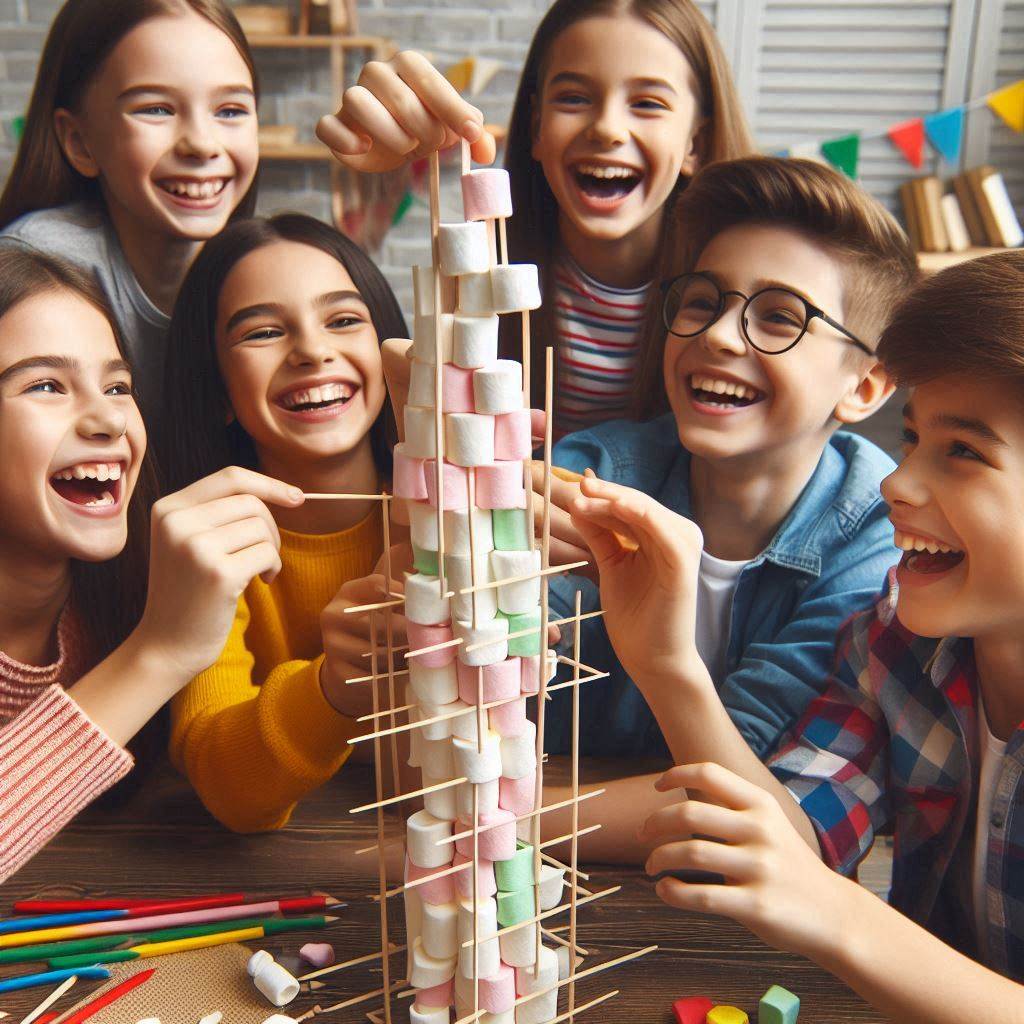
How it Works: Set up teamwork-based challenges where kids must collaborate to achieve a goal. Classic activities include building a tower with blocks, solving a puzzle together, or organizing a scavenger hunt. For added fun, assign different “roles” within the team, like leader, builder, or artist.
Why It Helps: Team-building exercises encourage kids to work together, share ideas, and respect each other’s contributions. They also foster patience and allow children to understand the value of teamwork, which is crucial in group settings.
Example Activity: Try a simple activity like building the tallest tower using only marshmallows and toothpicks. Each child can contribute ideas, and they’ll quickly learn that cooperation makes the structure stronger!
4. Empathy-Building Games
How it Works: Play games that encourage empathy and understanding of emotions. One example is “Emotion Charades,” where kids act out different emotions, and others guess the feeling. Another option is “Circle of Compliments,” where everyone gives a positive, genuine compliment to the person next to them.
Why It Helps: Understanding and expressing emotions is a key part of emotional intelligence. Activities like these help kids recognize feelings in themselves and others, fostering compassion and kindness.
Example Activity: In “Emotion Charades,” kids can pick from cards with emotions written on them, like “happy,” “sad,” or “excited,” and act them out while others guess. This helps kids become more aware of body language and facial expressions associated with different emotions.
5. Storytelling and Discussion
How it Works: Reading stories with social themes or discussing personal experiences can be a powerful way to develop social skills. Choose books with characters facing common social challenges (like sharing or making friends) and ask questions about how they’d handle the situations.
Why It Helps: Storytelling helps kids process social concepts in a relatable way. Discussing characters’ choices and emotions teaches them about empathy, perspective-taking, and problem-solving.
Example Questions: After a story, you could ask, “Why do you think the character felt sad?” or “What would you do if you were in their place?” These questions help kids learn to think critically about social interactions.
6. Listening Games
How it Works: Games like “Simon Says” or “Telephone” require kids to focus and listen carefully to instructions. In “Telephone,” kids pass along a message by whispering it to each other, practicing both listening and communication.
Why It Helps: Active listening is crucial for good communication. These games help children develop focus, patience, and the ability to understand others’ words accurately.
Tip: After each round, ask kids to reflect on what made listening easier or harder to help them become more aware of how they communicate.
7. “I Feel” Statements Practice
How it Works: Practice using “I feel” statements to help kids express their emotions. Create a fun activity where each child picks an “emotion card” and creates a statement using “I feel [emotion] when…” For instance, “I feel happy when I play with my friends.”
Why It Helps: “I feel” statements teach children how to communicate their emotions constructively. This skill is invaluable for self-expression and helps prevent misunderstandings.
Example Activity: Set up a “Feelings Wall” where kids can post their statements. This can be a great way for them to practice expressing their emotions and reflecting on their feelings.
Final Thoughts
Building social skills takes practice, but these fun activities can make learning enjoyable for kids. By engaging in role-playing, teamwork, and empathy-based games, kids gain confidence and learn how to make meaningful connections with others. With a bit of guidance, they’ll be better equipped to form friendships, communicate clearly, and handle social situations with ease.
🧠 Want to help your child learn, grow, and succeed?
Start with our complete guide:
👉 Learning & Development: Complete GuideOr explore all parenting advice here:
👉 Parenting Tips HubOr teach gratitude:
👉How to Teach Gratitude to Kids