Teaching gratitude to kids doesn’t have to feel forced or complicated. Many parents remind their children to say “thank you,” encourage good manners, and try to model appreciation—yet it can still feel like it’s not sticking. The truth is, gratitude isn’t something kids memorize overnight. It’s a skill they build slowly through everyday moments.
When you teach gratitude kids become more aware of the people around them, more thoughtful about what they have, and better able to handle disappointment. Gratitude doesn’t mean ignoring hard feelings or expecting children to be happy all the time. It means helping them notice kindness, effort, comfort, and connection—even on ordinary days.
The good news? Gratitude grows best through simple routines, not big lectures. Small habits during dinner, playtime, or bedtime can make a big difference. If you’re already working on communication or emotional skills at home, you’re closer than you think.
Why gratitude matters for child development
Gratitude is more than just good manners. It helps children build emotional awareness, empathy, and perspective.
A grateful child begins to notice that people make an effort for them—packing lunches, reading bedtime stories, helping with homework, or simply listening after a hard day. This awareness strengthens relationships and encourages kindness in return.
Gratitude also builds resilience. Kids who learn to notice what’s going well can bounce back from frustration more easily. They still feel upset sometimes, but they’re better at seeing the bigger picture.
If you’re also helping your child handle challenges, this pairs well with:
Helping Kids Develop Problem-Solving Skills Through Daily Challenges.
Start with noticing, not forcing
One common mistake is turning gratitude into pressure. Saying “You should be grateful” when a child is upset usually doesn’t help—it makes them feel misunderstood.
Instead, gently point things out:
- “Grandma spent a lot of time making that for you.”
- “Your friend shared when you were feeling left out.”
- “That was kind of your brother to help you.”
This helps kids connect gratitude to real experiences. It’s similar to how children learn social skills through observation. You can reinforce this with:
Building Social Skills.
Teach gratitude kids can understand
Young children need simple, clear examples. “Be grateful” is too abstract—but “your teacher helped you when you were nervous” makes sense.
Try asking:
- “What made you smile today?”
- “Who helped you today?”
- “What felt good today?”
- “What is something small you enjoyed?”
These questions remove pressure. Even small answers like “my snack” or “playing outside” are meaningful starting points.
Build gratitude into daily routines
Consistency matters more than intensity. A short daily habit works better than long talks.
- Dinner time: Share one good thing from the day.
- Bedtime: Ask what they appreciated.
- Car rides: Talk about one helpful person.
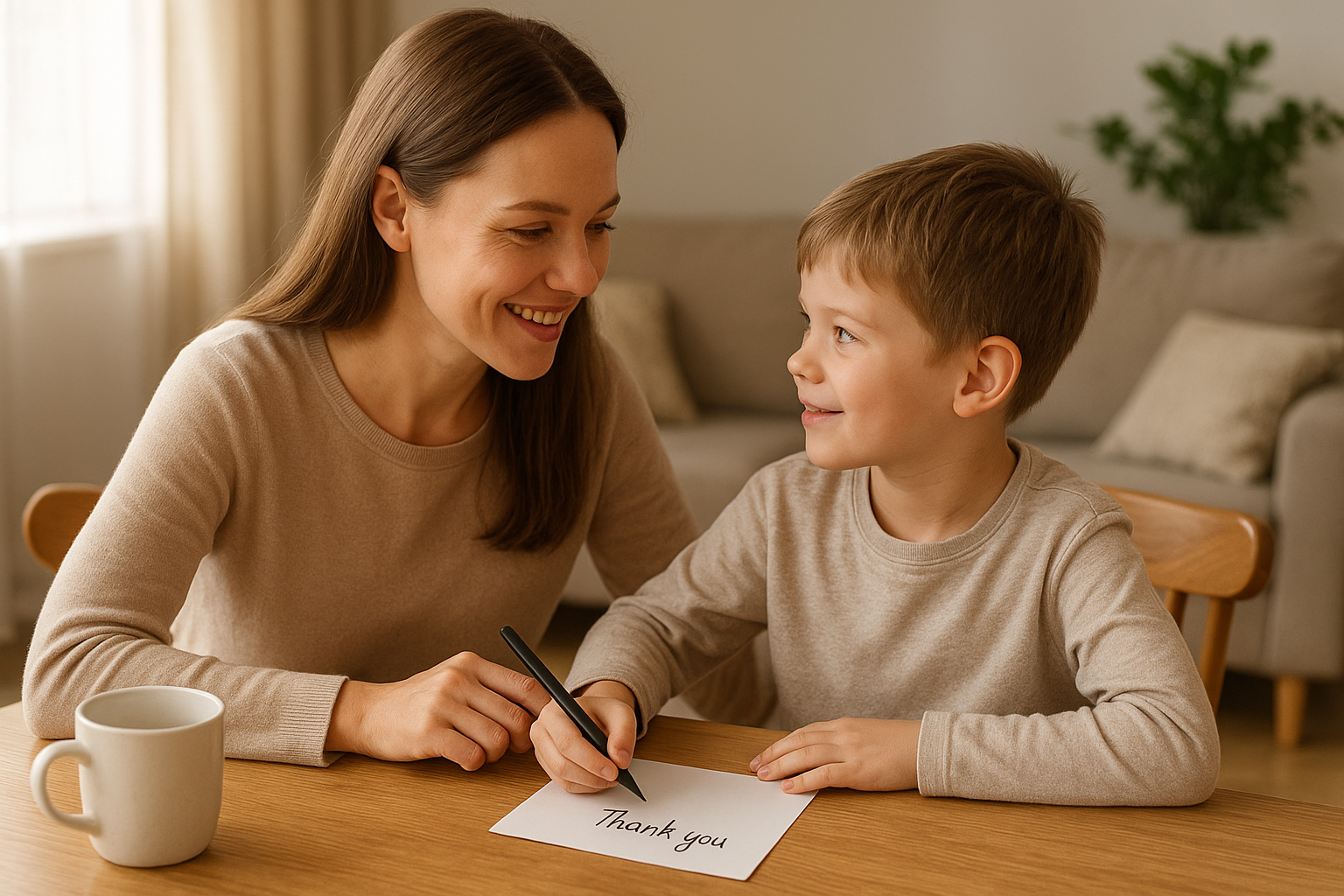
- Thank-you notes: Keep them simple and real.
If your home feels busy, building routines first can help. This guide is useful:
The Power of Routine.
Model gratitude in everyday life
Kids learn more from what you do than what you say.
- “I’m grateful you helped set the table.”
- “That was thoughtful of Dad to help today.”
- “I enjoyed our time together.”
- “I’m thankful we had time to relax.”
This shows that gratitude isn’t just for big moments—it’s part of daily life.
You can also support this mindset with:
Growth Mindset for Kids.
Allow space for hard feelings
Gratitude should never replace emotions.
If your child is upset, start with empathy:
“You were really looking forward to that,” or “That feels unfair.”
Then gently add perspective:
- “It was disappointing, but I’m glad we still had time together.”
- “You’re upset, but your friend still tried to include you.”
- “That didn’t go how you wanted, but you tried your best.”
This teaches kids that gratitude and feelings can exist together.
Make gratitude active
Some kids express gratitude better through actions than words.
Encourage them to:
- Help a neighbor
- Draw a picture for a teacher
- Write a short note
- Do something kind without being asked
This turns gratitude into something real and meaningful.
Keep expectations realistic
Gratitude looks different at every age.
A younger child may say “I liked my snack.”
An older child may thank someone or reflect on effort.
Gratitude will come and go—and that’s normal. Kids are learning.
Conclusion
Gratitude isn’t about raising children who never complain. It’s about helping them notice kindness, effort, and connection in everyday life.
You don’t need a perfect system. Start small—one question at dinner, one moment at bedtime. Over time, those small moments turn into lasting habits.
FAQ
At what age can kids learn gratitude?
Even toddlers can begin by noticing kindness and learning simple thank-you habits.
How do I teach gratitude without forcing it?
Model it, point it out naturally, and keep routines simple instead of lecturing.
What if my child seems ungrateful?
Stay consistent. Give them chances to notice effort and practice appreciation through actions.
Should kids be grateful when upset?
No. Let them feel their emotions first. Gratitude works best after they feel understood.
What is the easiest habit to start?
Ask one simple question daily: “What is one thing you liked today?”
🌈 Want to help your child grow emotionally and socially?