
How to Build Better Behavior Habits
Some kids can remember every rule of a made-up backyard game but somehow forget, every single day, that shoes go on before you head out the door. How to Build Better Behavior Habits often looks less like a big discipline problem and more like the same small struggle happening over and over. The good news is that behavior habits can be taught, practiced, and strengthened.
Maybe it is the morning routine that falls apart at the same point every day. Maybe your child throws their backpack down instead of putting it away. Maybe they interrupt constantly, leave wet towels on the floor, or need six reminders to start brushing teeth. These moments wear parents down not because they are huge emergencies, but because they are so incredibly repetitive.
When that happens, it is easy to think your child is choosing to be difficult. Sometimes they are pushing limits, sure. But often, the bigger issue is that a good behavior has not become automatic yet. Kids need more practice, more structure, and more consistency than adults usually expect. If you approach behavior like habit-building instead of constant correction, home can feel a lot less tense.
That same shift also works well alongside calmer discipline strategies, because habits grow faster when kids are not bracing for the next lecture.
Why This Happens
Adults do many daily tasks on autopilot. We lock the door, put dishes in the sink, or grab what we need before leaving without much thought. Children are still building that autopilot. Even when they know what to do, knowing is not the same as doing it consistently.
Behavior habits depend on a few things:
- Repetition: Kids need many chances to practice the same action in the same context.
- Clear cues: They do better when one step naturally leads to the next.
- Simple expectations: Long lectures are hard to remember in the moment.
- Emotional regulation: A hungry, tired, frustrated child is less able to follow a good habit.
This is why a child might be perfectly capable of hanging up a coat on Saturday but still drop it on the floor every Monday after school. Transitions, fatigue, excitement, and distraction all matter. If the environment is chaotic, good habits fall apart faster.
That is also why routines matter so much. If you have not read it yet, a strong family routine can take a lot of the drama out of repeated behavior struggles.
What Parents Can Do
Pick one habit first
Do not try to fix everything at once. If your child is struggling with listening, cleanup, bedtime stalling, and morning dawdling, choose one behavior to work on first. A narrow target helps everyone succeed faster.
Good examples include:
- Putting shoes in one spot after coming home
- Starting homework within ten minutes of snack
- Bringing dishes to the sink after meals
- Using a calm voice when asking for help
A vague goal like ?behave better? is too fuzzy. A goal like ?put your backpack on the hook when you come in? is teachable.
Create a simple cue
Habits stick better when there is an obvious trigger. Try ?When you come in the door, backpack goes on the hook.? Or ?After pajamas, teeth.? Or ?When the timer rings, toys go in the bin.?
Children usually do better with short, repeatable language than with fresh explanations every day. You are not trying to sound creative. You are trying to make the next step easy to remember.
If transitions are rough, this visual timer can be a helpful optional tool because it shows kids how much time is left without you having to repeat yourself every minute.
Practice when nobody is upset
One of the best parenting tricks is practicing the habit at a calm time instead of only correcting it in the hard moment. If mornings are a mess, do a two-minute pretend morning in the afternoon. Let your child walk to the door, hang the backpack, put shoes on, and head out again just for practice.
It can feel silly, but kids learn through rehearsal. Athletes do drills. Musicians repeat scales. Children need behavior practice the same way.
You might say:
- ?Let?s practice coming in from school.?
- ?Show me what backpack, shoes, and lunchbox look like.?
- ?Let?s do that again, but this time really slowly.?
Notice progress early
Parents often wait until a behavior is fully consistent before saying anything positive. That is understandable, but it misses a useful window. Notice the small improvements while the habit is still forming.
Try specific feedback like:
- ?You put your water bottle away without a reminder.?
- ?You started getting ready right when I asked.?
- ?You remembered the first two steps on your own.?
That kind of feedback teaches kids exactly what worked. It is more useful than a vague ?good job.? It also fits nicely with positive discipline approaches that focus on teaching instead of just punishing.
Keep consequences connected
If a child forgets or refuses, keep your response calm and connected to the behavior. Long punishments for small habit mistakes usually create resentment, not learning.
For example:
- If art supplies are left out, they get put away before the next activity.
- If a child keeps jumping on the couch after reminders, couch time ends for now.
- If the backpack is not packed, the fun part of the morning pauses until it is done.
This is where natural and logical consequences can be really effective. The goal is not to make your child feel bad. The goal is to help the habit make sense.
Make the environment do some of the work
Sometimes ?bad behavior? is really a setup problem. If you want your child to put things away, there needs to be an obvious place to put them. If you want a smoother bedtime, the essentials should already be within reach. If you want kinder sibling interactions, kids may need more space, more supervision, or fewer flashpoints right before dinner.
Ask yourself:
- Is the expectation easy to see?
- Is the item my child needs actually accessible?
- Am I asking this at the hungriest or most rushed part of the day?
When household expectations are consistent, kids learn faster. This article on creating consistent household rules is useful if everyone in the home is enforcing things a little differently.
Common Mistakes to Avoid
Changing the rule every few days
If you decide a habit matters on Monday, ignore it on Tuesday, and explode about it on Thursday, the pattern gets blurry. Consistency matters more than intensity.
Talking too much in the moment
When a child is already distracted or dysregulated, a long speech rarely helps. Short cue, calm follow-through, done.
Expecting independence before the habit is built
Kids often need a lot of support before they can do something alone. Reminders, checklists, practice runs, and staying nearby are not signs of failure. They are part of the teaching process.
Focusing only on what is going wrong
If the only time your child hears about the habit is when they miss it, they may start tuning you out. Catch the small wins too.
Choosing too many targets at once
When everything becomes the priority, nobody knows where to focus. Pick one behavior, get traction, then move to the next.
Simple Plan to Try This Week
If you want a realistic reset, try this five-step plan:
- Choose one daily behavior habit. Pick something concrete like shoes, backpack, dishes, bedtime steps, or speaking respectfully.
- Define the cue. Decide what comes right before the habit. ?After snack, homework starts.? ?When we walk in, backpack on hook.?
- Practice once a day. Do a calm rehearsal for two or three minutes, especially if the real moment is usually rushed.
- Use one short reminder phrase. Repeat the same words instead of inventing a new lecture each time.
- Notice improvement. Aim to comment on effort or progress at least once a day.
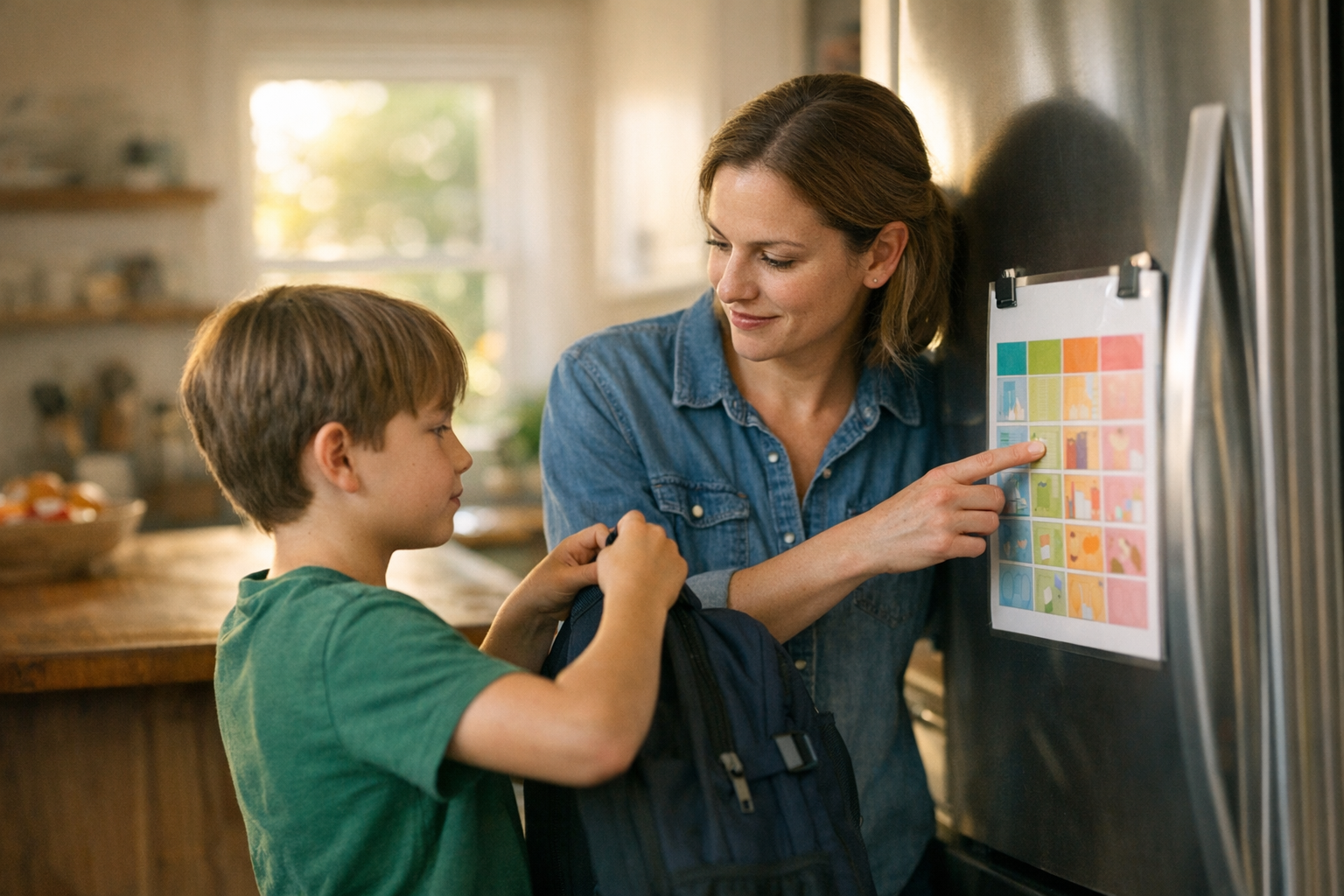
If you want a visual way to support consistency, a responsibility chart like this one can be a useful optional tool for habits such as morning tasks, cleanup, or after-school routines.
Do not expect perfection in one week. What you are looking for is less friction, faster follow-through, and a child who starts to know what comes next without constant prompting.
Helpful Tools
- Time Timer Original: A visual timer can help some kids handle transitions and see how much time is left. View on Amazon.
- Melissa & Doug Responsibility Chart: Useful for families working on repeatable routines, chores, or simple daily expectations. View on Amazon.
FAQ
How long does it take for a child to build a behavior habit?
Usually longer than parents hope. Some habits improve in a week or two, while others take much longer. Age, temperament, consistency, and the time of day all make a difference.
Should I use rewards for every new behavior?
No. Some children respond well to a short-term external motivator, but many habits can be built through practice, predictability, and specific encouragement. Rewards work best when they are simple and not used forever.
What if my child knows what to do but still does not do it?
That usually means the habit is not automatic yet, or something in the environment is getting in the way. Look at timing, transitions, hunger, tiredness, and whether the task is actually easy to complete.
Is it better to correct immediately or wait until later?
Brief correction in the moment is usually best, especially if it is calm and connected. If emotions are running high, keep it short and teach more later when everyone is regulated.
When should I worry that a behavior issue is more than a habit problem?
If a behavior suddenly changes, creates safety concerns, or seems tied to bigger emotional, school, or developmental struggles, it may be worth talking with your child?s pediatrician, teacher, or a qualified professional for more support.
Conclusion
Better behavior habits usually do not come from one perfect consequence or one big family meeting. They grow from repetition, clear expectations, and a parent who keeps teaching the same small skill without turning every rough moment into a battle. If your house has been feeling stuck, start smaller than you think. One habit, one cue, one week of steady practice can change a lot.
And if you are trying to make everyday discipline feel calmer overall, this guide on how to discipline without yelling is a good next read.