
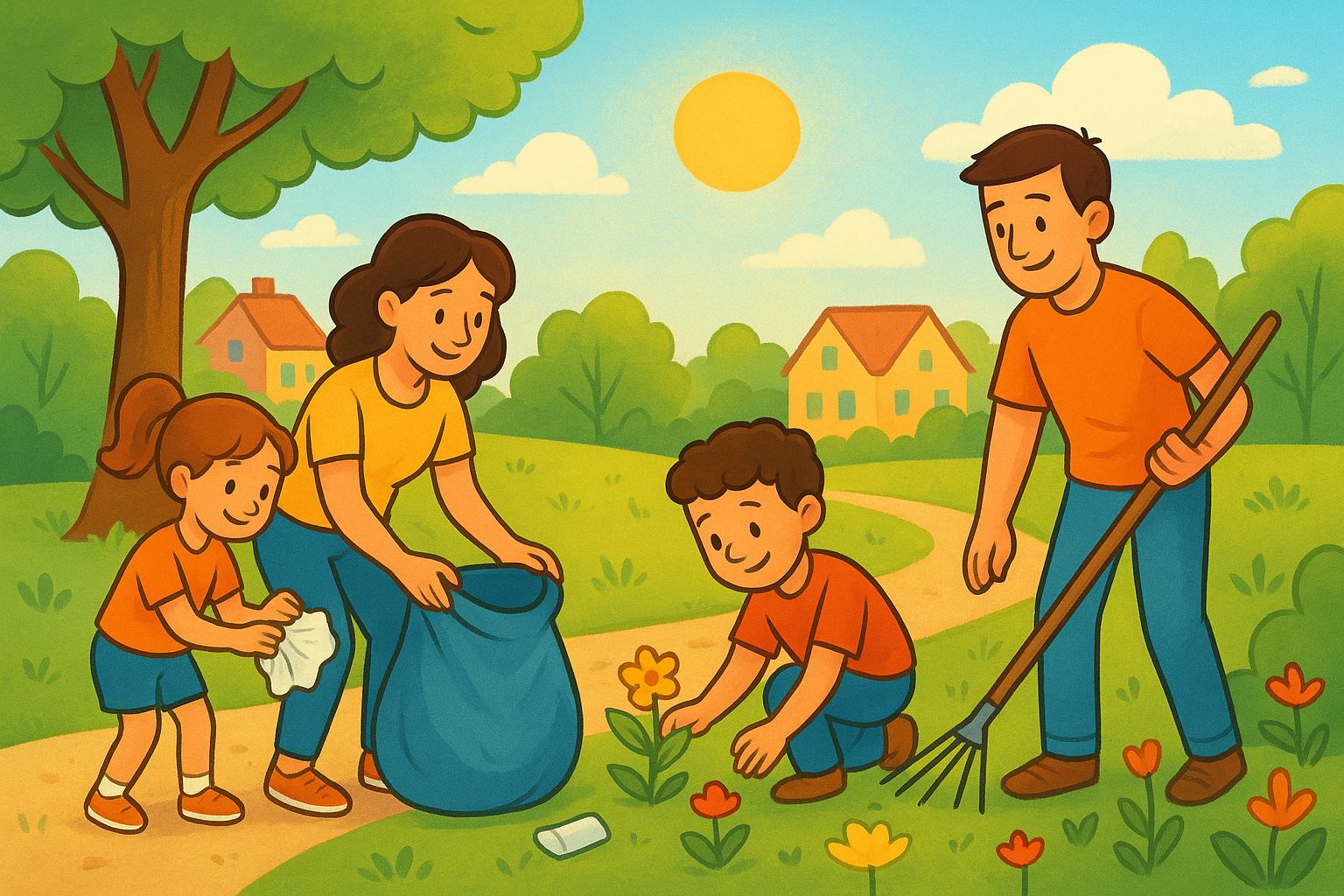
One Saturday, you promise a fun family day, and five minutes later someone is arguing over whose turn it is to pick the activity. Family volunteering can be a surprisingly good reset: kids have something real to do, parents get out of referee mode for a while, and everyone leaves feeling a little more connected than when they started.
When parents hear the word volunteer, it can sound like a big production. Maybe you picture signing forms, organizing donations for weeks, or trying to keep a tired child quiet at a serious event. In real life, family volunteering works best when it is simple, local, and realistic for the age of your kids.
The goal is not to raise perfect little humanitarians. It is to help children practice noticing other people, contributing in small ways, and seeing that they can be helpful right now, not someday when they are older. It can also be one of the easiest ways to build connection as a family, especially if you have been craving more meaningful time together. If you want more low-pressure ways to connect, family bonding activities can pair nicely with service projects that feel warm instead of forced.
Why This Happens
Kids are naturally focused on the world right in front of them. That is normal. A six-year-old who is upset about the blue cup instead of the red one is not selfish in the grown-up sense. They are still learning perspective, empathy, patience, and how their actions affect other people.
That is why family volunteering can be so powerful. It gives children a concrete experience instead of a lecture. Saying, “We should help others,” is abstract. Packing snack bags for a local shelter, picking up litter at the park, or making cards for seniors gives kids something they can see and touch.
It also helps that many children do better with purpose than with vague free time. Some kids who seem restless at home become focused when they have a clear mission: sort these canned foods, carry these books, water these plants, tape this card shut. Service turns “What are we doing now?” into “I know how I can help.” If your family likes simple, active plans, you might also enjoy outdoor activities that cost nothing, since many volunteer ideas happen outside and feel more like an outing than a chore.
Another reason volunteering works is that it lets kids experience competence. Children love feeling useful. Even small tasks, like wiping tables at a community event or choosing extra groceries for a food drive, can help them think, “I can do something that matters.”
What Parents Can Do
Start with short, visible acts of help
The easiest volunteer projects are the ones where kids can see the result quickly. Think in 20- to 60-minute chunks, especially if your children are young. Good starting points include:
- Picking up trash at a neighborhood park
- Bringing bottled water and snacks to a community donation drive
- Sorting gently used toys or clothes to donate
- Making thank-you cards for teachers, crossing guards, firefighters, or nursing home residents
- Helping a neighbor pull weeds, rake leaves, or carry groceries
Short projects leave kids feeling successful instead of drained. You want them to finish thinking, “That was actually kind of nice,” not “Please never make me do that again.”
Match the project to your child’s age and temperament
A shy child may prefer quiet behind-the-scenes jobs like packing hygiene kits or baking muffins for a fundraiser. A highly social child may love greeting people at a school drive or helping hand out supplies. A preschooler may do best with a tiny job, like decorating donation bags with stickers. An older child might enjoy helping plan the whole project.
It helps to frame choices in a simple way: “Do you want to help by making something, sorting something, or delivering something?” That gives kids ownership without overwhelming them.
Explain the “why” in kid language
Children do better when they understand who they are helping and why it matters. Keep it clear and calm:
- “Some families need extra food this week, so we are sharing what we can.”
- “These cards are for people who may feel lonely and would like to know someone is thinking of them.”
- “We all use this park, so helping clean it keeps it nice for everyone.”
You do not need a heavy speech. One or two honest sentences are enough.
Make volunteering part of your normal family rhythm
Service does not have to be a once-a-year event during the holidays. In fact, kids often learn more when helping becomes ordinary. You might choose one small act each month, or add a simple service tradition every season. If your family already enjoys making special routines together, family traditions worth starting can inspire ways to make volunteering feel like a natural part of family life.
Examples:
- First Saturday of the month: pick one bag of groceries to donate
- At the start of summer: choose one neighborhood cleanup walk
- Before birthdays: donate outgrown toys
- Before school starts: make appreciation notes for school staff
When it becomes routine, kids stop seeing it as a random parent idea and start seeing it as part of what your family does.
Let kids help make decisions
Children are more engaged when they have a say. You can ask:
- “Who do you think needs help in our community?”
- “Would you rather help people, animals, or nature?”
- “Should we donate things, make something, or go somewhere to help?”
You may be surprised by the answers. One child may care deeply about animals. Another may want to help babies, older adults, or kids their own age. Letting them choose the angle makes the experience feel personal.
Debrief without turning it into a lesson speech
Afterward, keep the conversation light but meaningful. Try questions like:
- “What part felt easiest?”
- “What did you notice?”
- “Did anything surprise you?”
- “Would you want to do that again?”
This helps children process the experience without feeling preached at.
Common Mistakes to Avoid
Choosing a project that is too long. A three-hour event may sound fine to adults, but it can feel endless to a child who missed lunch and is melting down in a folding chair. Start smaller than you think you need to.
Using volunteering as a guilt lesson. Comments like “You should be grateful because other people have it worse” usually make kids defensive or shut down. Focus on kindness and contribution, not shame.
Picking adult-centered projects only. If children are just tagging along while grown-ups do all the meaningful work, they are less likely to connect with it. Give them a real role.
Overexplaining hard topics. Kids do not need every difficult detail. Give truthful, age-appropriate context and leave room for questions.
Expecting instant gratitude or deep empathy. Some children will finish a volunteer activity and immediately ask for a snack or complain that they are bored. That does not mean it failed. Seeds grow quietly.
Simple Plan to Try This Week
If you want to try family volunteering without overcomplicating it, use this easy plan:
Step 1: Pick one cause
Choose just one: helping neighbors, helping animals, helping the environment, or helping families in need.
Step 2: Pick one small action
Examples include filling one donation bag, cleaning one park area, baking one batch of muffins for someone, or making five kind cards.
Step 3: Put it on the calendar
Keep it short. Aim for 30 to 45 minutes. Earlier in the day usually works better than late afternoon, when everyone is tired.
Step 4: Give each child a job
One child can sort, one can decorate, one can carry, one can check items off a list. Even if the jobs are tiny, shared responsibility helps.
Step 5: End with something grounding
Have a snack, take a walk, or talk about one thing each person noticed. You can even pair it with a simple family tradition, the way some families build fun around outings like summer bucket list ideas so the day feels memorable instead of rushed.
Step 6: Decide whether to repeat it
If it went well, repeat the same activity next month. Familiarity makes volunteering easier for kids and easier for you.
FAQ
At what age can kids start volunteering?
Kids can start very young if the activity is simple and hands-on. Preschoolers can help decorate cards, sort donations by color, or pick up litter with close supervision. Older children can take on more responsibility and help plan.
What if my child complains the whole time?
That usually means the task was too long, too abstract, or not a good match for your child. Try a shorter activity next time and give them a clearer job. Complaining does not mean they cannot learn to enjoy helping.
Do we need to volunteer through an organization?
No. Organized opportunities can be great, but plenty of meaningful service happens close to home. Helping a neighbor, donating useful items, cleaning a shared space, or making care packages all count.
How often should families volunteer?
There is no perfect number. Once a month is realistic for many families, but even a small seasonal project can matter. Consistency matters more than frequency.
How do I make sure it feels genuine and not forced?
Keep it age-appropriate, let kids help choose the project, and avoid turning it into a morality speech. Children connect best when helping feels practical, human, and doable.
Family volunteering does not need to be elaborate to matter. A few donated groceries, a clean corner of a park, a card that makes someone smile, a neighbor who feels supported—those are real things. And for kids, those small acts add up to a bigger message: our family notices people, and our family helps when it can. If you are looking for more easy ways to create meaningful time together, family bonding activities is a good next read.