
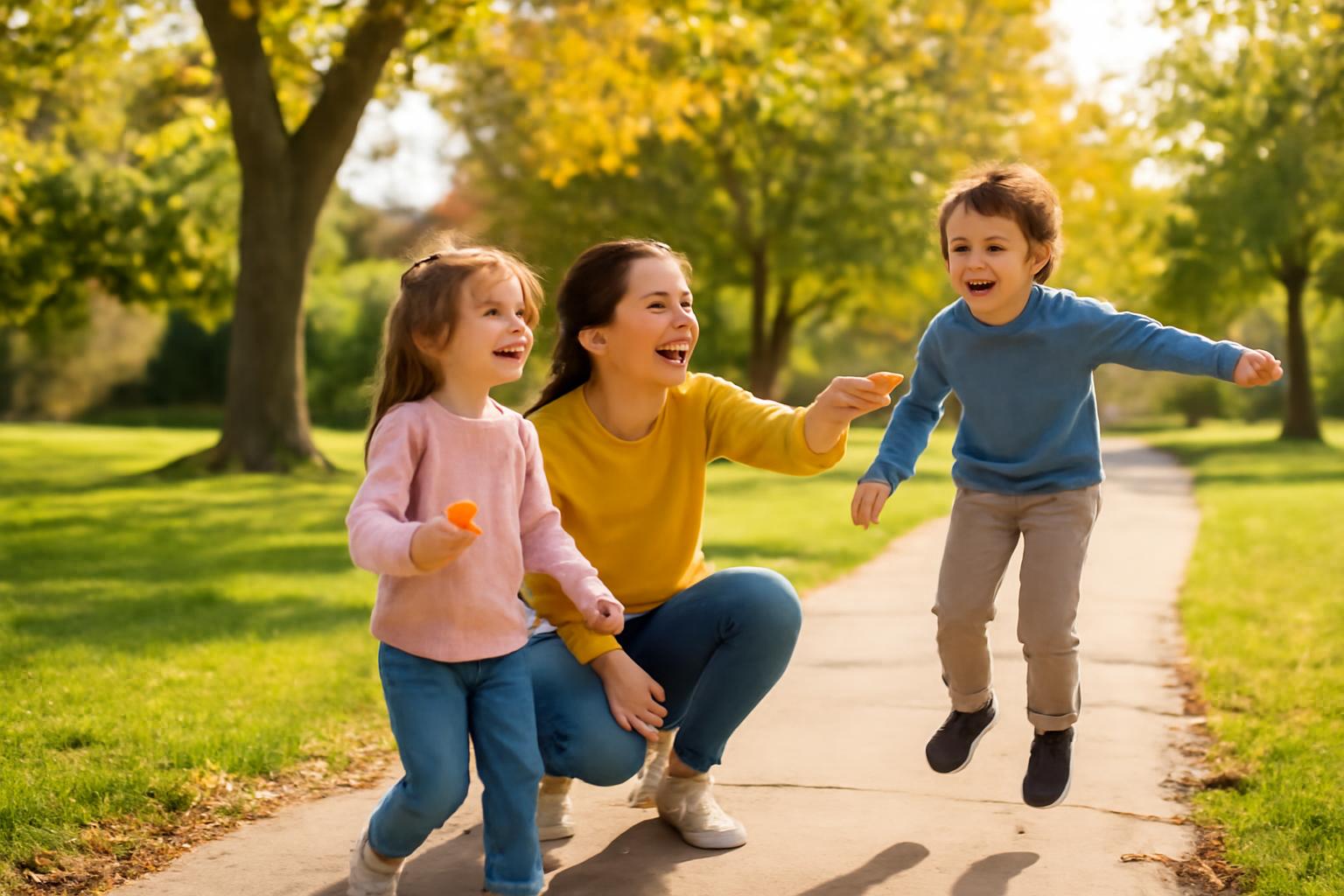
Outdoor Activities That Cost Nothing
The kids are circling the living room for the fifth time, someone is asking for snacks again, and you do not want to spend $40 just to get everybody out of the house for an hour. That is usually the exact moment parents need a list of simple outdoor ideas that cost nothing and still feel like a real plan.
Free outdoor play sounds easy in theory, but in real life it can feel oddly hard to get started. Parents are tired, kids say everything is boring, and the easiest option is often staying inside with screens. The problem is not that families have stopped liking fresh air. The problem is that many of us have quietly started believing an outing only “counts” if it involves tickets, gear, a destination, or a lot of prep.
Most kids do not actually need a big event. They need movement, novelty, and a parent who can get them over the starting hump. A puddle, a sidewalk, a patch of grass, a parking lot line to hop over, or a small walk with a purpose can turn the whole mood around. When outdoor time is simple and repeatable, it becomes much easier to use on ordinary afternoons instead of saving it for perfect weekends.
Why This Happens
Kids often say they are bored when what they really mean is, “I do not know how to begin.” Open-ended outdoor time can be wonderful, but some children need a little structure before their imagination kicks in. Once they are moving, collecting, racing, or noticing things, the play usually takes over on its own.
Parents run into a version of the same problem. If an activity needs packing, driving, coordinating, and cleanup, it stops feeling free even when the price tag is zero. That is why the best no-cost outdoor ideas are usually the smallest ones: things you can do with almost no setup, close to home, and without needing everyone in a great mood first.
There is also a lot of hidden pressure around family fun. Social media can make ordinary play look too ordinary, as if every good memory needs a matching outfit and a scenic backdrop. It does not. Some of the most useful family routines are simple repeatable things, like after-dinner walks, sidewalk games, and tiny neighborhood adventures. If your family needs easy ways to add more movement without turning it into a formal workout, these family-friendly exercises to keep everyone active at home can pair nicely with the ideas here.
What Parents Can Do
Give the outing one small purpose
“Go play outside” is vague enough that many kids will argue with it. “Let’s go find five heart-shaped rocks,” “Let’s see who can spot three birds first,” or “We are going outside for a ten-minute scooter lap” gives the moment a beginning. Purpose lowers resistance. It does not need to be clever. It just needs to be specific.
Use what is already around you
Free outdoor fun gets easier when you stop looking for ideal conditions. Sidewalk chalk is nice, but a stick in dirt works too. A backyard is great, but an apartment walkway, grassy strip, park edge, or quiet cul-de-sac can work just as well. Kids can race leaves in the gutter after rain, make obstacle courses from curbs and benches, collect nature colors, or invent missions around whatever space is available.
Lean on repeatable favorites
Parents sometimes feel like they need a brand-new idea every time. Usually you do not. Children love repetition when the activity feels good. A “listening walk” on Tuesdays, a family race to the mailbox after dinner, or a Saturday morning cloud-spotting loop can become part of the rhythm of home. Repeating simple activities is often what makes them feel special instead of disposable.
Keep the bar low enough to say yes
One of the biggest mistakes is turning outdoor time into a production. Instead of planning a whole afternoon, try a fifteen-minute reset. Do a bug hunt. Toss pinecones into a bucket. Walk around the block and let the kids choose the silliest mailbox. Short outdoor bursts count. In fact, they are often the reason families do it consistently.
Try activities that naturally invite imagination
Some free outdoor activities work because they do not look like exercise or “enrichment” at all. Kids can make up a pretend pet parade with stuffed animals, open a mud bakery, build a tiny fairy village from leaves and pebbles, or create a treasure map of the yard or park. If your child likes hands-on discovery, you can carry the same energy indoors later with fun science experiments you can do at home that still feel playful instead of schoolish.
Keep a short go-to list on your phone
The best time to think of ideas is not when everyone is already cranky. Make a note with ten options your kids actually enjoy. For example: nature scavenger hunt, shadow tag, puddle jumping, bike ride countdown, letter hunt, follow-the-leader walk, bug search, rock collecting, cloud stories, and sidewalk obstacle course. Then when the afternoon stalls, you are choosing from a menu instead of starting from zero.
Common Mistakes to Avoid
- Waiting for lots of free time. If you think outdoor fun only works in big weekend blocks, you will use it less often. Ten to twenty minutes can completely shift the tone of the day.
- Over-explaining the activity. Children tune out long setups. A simple invitation usually works better than a speech. “Come help me find the tiniest leaf on the block” is enough.
- Making it too adult-directed. Offer the spark, then let the kids take some ownership. Once they start pretending the cracks in the sidewalk are lava, you do not need to keep improving it.
- Giving up after one complaint. Many kids protest the transition and then enjoy themselves five minutes later. Resistance at the doorway does not always predict how the activity will go.
- Assuming free means second-best. Some of the most memorable family moments come from repeated ordinary play, not expensive outings. Free can still feel special when it is consistent and engaged.
It can also help to notice which kind of outdoor activity fits your child best. Some kids want movement first, like races and scooter laps. Others want a mission, like collecting or spotting things. Others do best with games that feel social and silly. If your family likes structured play with clear rules, educational games that encourage learning through play can spark outdoor versions too.
Simple Plan to Try This Week
If outdoor time has been feeling harder than it should, try this reset for one week:
- Pick three small windows this week when outdoor time is most realistic, like after school, right after dinner, or before bath.
- Choose one activity for each window ahead of time so no one is negotiating in the moment.
- Keep each outing short, around fifteen to twenty minutes, so it feels doable even on busy days.
- Use one simple theme to start, like “find five tiny things,” “move like an animal,” or “let’s explore one block we usually rush past.”
- Let the kids help choose the next idea once the outing is already going. That keeps the spark without handing them a blank page at the start.
- At the end of the week, notice which activities got the least pushback and the most natural play. Repeat those first.
Many parents are surprised by how much easier family fun becomes when they stop aiming for impressive and start aiming for repeatable. If you want a bigger seasonal list once this simple rhythm is working, summer bucket list ideas can help you expand without making every outing feel expensive or complicated. And if getting outside tends to help everyone regulate after a long day, managing stress together offers more ways to use small shared routines to reset the mood at home.
FAQ
What if my child says outdoor activities are boring?
That usually means the activity is too open-ended or the transition feels annoying. Give them one specific mission instead of a general instruction. A scavenger hunt, race, or challenge is often enough to get things moving.
Do free outdoor activities still count if they are short?
Absolutely. A fifteen-minute reset can help with mood, energy, and family connection. Short and repeatable is often more useful than rare and elaborate.
What if we do not have a backyard?
You do not need one. Sidewalks, apartment courtyards, nearby parks, grassy corners, school blacktops after hours, or a simple walk around the block can all work. Focus on what is accessible, not what looks ideal.
How can I make outdoor time work with different ages?
Choose activities with flexible roles. A toddler can collect leaves while an older child keeps score. A preschooler can follow the leader while a bigger kid invents the route. The goal is not perfect fairness. It is shared momentum.
What if the kids start fighting once we go outside?
Pick activities that reduce competition at first. Try collecting, exploring, or cooperative missions before races or score-based games. Sometimes the best first step is simply moving together without asking siblings to compete.
Outdoor fun does not need a budget to be worthwhile. On many days, what helps most is not a major plan but a small nudge toward movement, fresh air, and a little shared play. When you keep the ideas simple enough to use on ordinary afternoons, they stop feeling like one more parenting chore and start feeling like a reliable reset.