
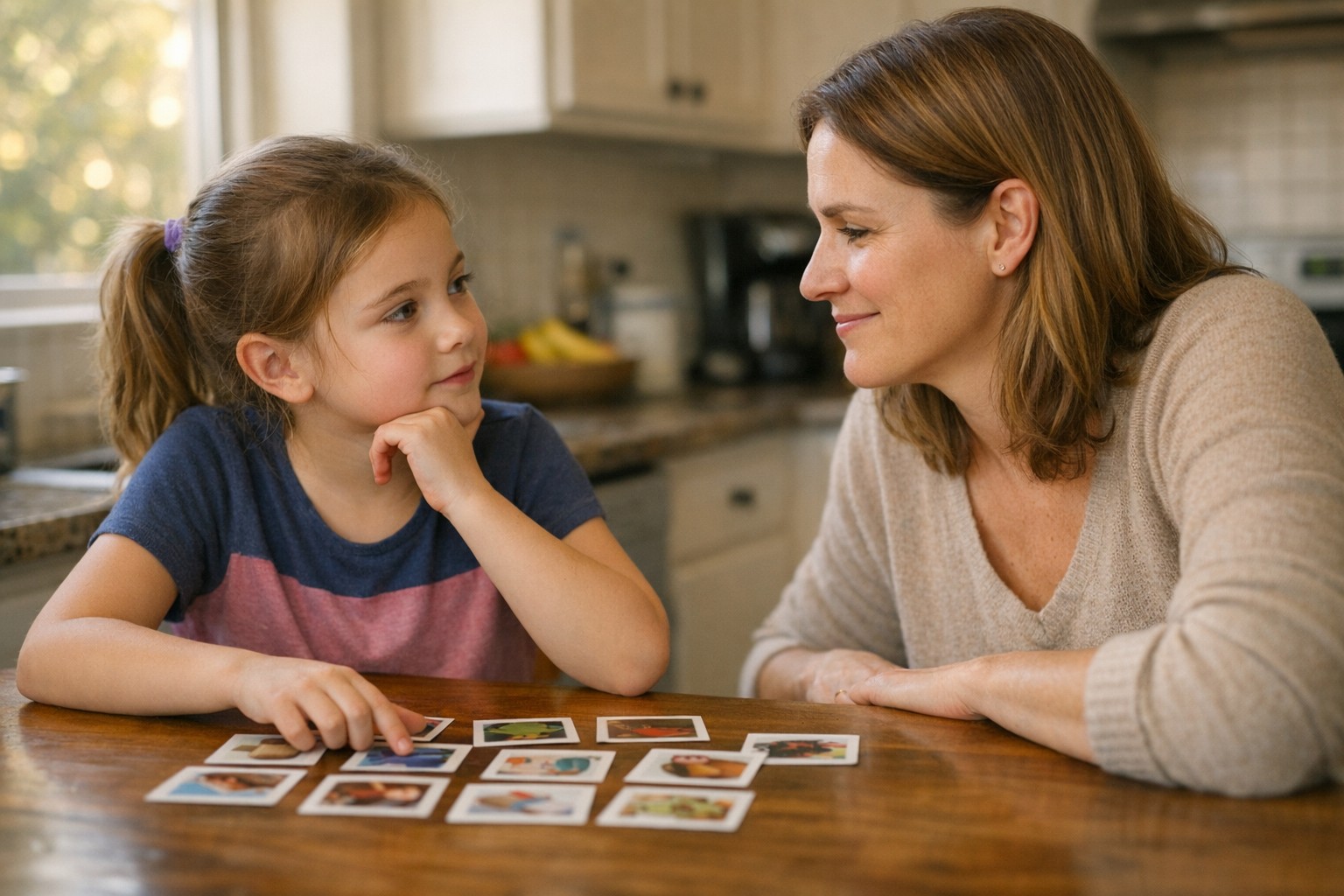
One child can talk nonstop about dinosaurs in the car, then shrug and say “nothing” when a teacher asks how their day went. Another can explain every rule of a made-up game but freeze when it is time to ask a classmate to join in. Communication skills are a lot like any other skill: kids need practice in real situations, not just reminders to “use your words.”
Some children seem naturally chatty, while others need more time, support, and structure. Either way, strong communication is not just about talking more. It includes listening, taking turns, noticing tone, explaining thoughts clearly, asking for help, and finding words for big feelings. These are the skills that help kids make friends, solve problems, speak up at school, and feel understood at home.
The good news is that communication can be built in ordinary family life. You do not need a perfect personality, a classroom setup, or long lectures at the dinner table. Small daily habits usually work better. If your child also struggles with peer connection, this guide on building social skills pairs well with communication practice because the two grow together.
Why This Happens
Kids are still learning how to organize thoughts, read social cues, and manage emotions at the same time. That is a lot of mental work. A child may know exactly what they want to say but lose the words when they feel rushed, embarrassed, upset, or put on the spot.
Age matters too. Younger children are often concrete. They may say “he was mean” when what they really mean is “he took my marker and laughed.” Older kids may have bigger vocabularies but still struggle with confidence, timing, or tone. Some children talk comfortably at home but stay quiet in groups. Others speak quickly and confidently but miss listening skills.
Communication also develops through modeling. Kids learn how to interrupt, explain, disagree, apologize, and ask questions by hearing the people around them do it. If home life is busy, loud, or rushed, they may not get much slow practice. That does not mean anything is wrong. It just means the skill needs more intentional reps.
Emotional awareness plays a big role too. Children who cannot name what they feel often act it out instead. That is one reason emotional language matters. If you want to strengthen that side of communication, introducing emotional intelligence at home can give kids more words for what is happening inside them.
What Parents Can Do
1. Slow the conversation down
Many kids communicate better when they do not feel quizzed. Instead of asking a fast series of questions after school, try one calm opening and wait.
You might say:
- “Tell me one part of your day that felt easy.”
- “Was there a funny moment today?”
- “Did anything feel tricky?”
The pause matters. Some kids need ten or fifteen seconds before they answer. If you jump in too quickly, they learn that silence means you will do the talking for them.
2. Teach kids how to be specific
“It was bad” does not tell you much. Help your child move from vague words to clearer ones without making them feel corrected.
Try:
- “When you say bad, do you mean frustrating, boring, embarrassing, or unfair?”
- “Show me what happened first, then next.”
- “What were you trying to say when that happened?”
This helps children build vocabulary and sequence their thoughts. Over time, they get better at telling stories, explaining problems, and asking for what they need.
3. Practice turn-taking at home
Strong communicators do not just speak. They listen, notice, and respond. Family meals, car rides, and bedtime chats are good places to practice simple turn-taking.
A useful rule is: one person talks, the next person says something about what they heard before adding their own thought. That sounds like:
- “So you felt left out at recess. Did it get better later?”
- “You built the tallest tower? What made it stay up?”
This kind of back-and-forth teaches kids that conversation is shared, not a race.
4. Role-play everyday situations
Role-play can feel silly, which is exactly why it works. It gives kids a low-pressure way to rehearse words before they need them in real life.
Practice situations like:
- asking to join a game
- telling a teacher they are confused
- ordering their own food
- speaking up when a sibling grabs something
- introducing themselves to another child
Keep it short. One or two minutes is enough. If your child groans, make it playful. Use stuffed animals. Switch roles. Let them be the parent or teacher for a turn.
5. Give them useful sentence starters
Many kids know what they want but not how to begin. Sentence starters can lower the pressure.
Examples include:
- “Can I have a turn when you’re done?”
- “I didn’t like that. Please stop.”
- “I’m confused about this part.”
- “Can you explain that again?”
- “I feel nervous, so I need a minute.”
If your child is working on independence in school and daily life, these small communication scripts fit well with the habits in helping kids become independent learners.
6. Notice effort, not just volume
Parents sometimes praise only the loud, confident moments: “Great job speaking up.” But quiet kids also need credit for the smaller wins.
You can say:
- “I noticed you looked at Grandma when you answered her.”
- “You told your brother what you needed without yelling.”
- “You asked for help instead of shutting down. That took courage.”
Specific praise helps kids repeat the exact skill you want to strengthen.
7. Build communication into play
Kids often communicate best when they are doing something, not sitting face-to-face for a serious talk. Board games, pretend play, drawing together, and cooperative building all create natural reasons to explain, listen, negotiate, and problem-solve.
That is one reason learning through play is so effective. Play takes the pressure off and gives language a job to do.
Common Mistakes to Avoid
Correcting every word. If you jump on grammar, pronunciation, or wording every time your child speaks, they may decide talking is not worth the risk. Save corrections for moments when they are calm and open, and keep the main goal in mind: connection first, polish later.
Answering for them too quickly. It is tempting to step in when a child is shy or slow to respond. Sometimes they do need support. But if you always rescue, they lose chances to practice. Try waiting a little longer before you speak for them.
Turning every conversation into a lesson. Kids tune out when every comment becomes a lecture on manners, eye contact, or tone. Aim for short coaching, then move on.
Expecting the same style from every child. A thoughtful quiet child is not failing because they are not as chatty as a sibling. The goal is not to create a mini public speaker. The goal is to help each child communicate clearly and confidently in their own way.
Only practicing after a problem. If you wait until there is a conflict, your child is already stressed. Practice calm language during calm times so it is easier to use later.
Simple Plan to Try This Week
If you want a realistic reset, keep it simple for one week.
Day 1: Pick one communication goal
Choose one skill, such as asking for help, not interrupting, speaking clearly, or naming feelings. One target works better than trying to fix everything at once.
Day 2: Teach one phrase
Introduce one sentence your child can actually use. For example: “Can I have a turn when you’re done?” Practice it twice at home.
Day 3: Role-play for two minutes
Act out a likely situation from school, sports, or sibling life. Keep it light and brief.
Day 4: Create a daily talking moment
Use a predictable time, like snack, bath, or bedtime, for one open-ended question and one follow-up. If homework time is especially tense in your house, a more focused environment like the one described in creating a home environment that supports focused learning can also help children think and respond more clearly.
Day 5: Catch one success
Name a specific thing your child did well. Keep it concrete: “You explained that really clearly,” or “You waited for your sister to finish talking.”
Day 6: Practice in the real world
Let your child order a snack, ask a store employee a simple question, or greet a neighbor. Real-life practice matters.
Day 7: Reflect together
Ask: “Which words felt easiest to use this week?” and “What should we practice again?” The goal is progress, not perfection.
Helpful Tools
Most communication practice does not require buying anything, but a couple of tools can make it easier if your child likes structure.
- Conversation Cards for Kids can help reluctant talkers get started with simple prompts and low-pressure back-and-forth.
- Feelings and Emotions Cards can be useful for children who know they feel “weird” or “mad” but need help finding more exact words.
These are optional tools, not magic fixes. What helps most is using them consistently in short, relaxed moments.
FAQ
How can I help a shy child communicate better?
Start with low-pressure situations and do not force performances. Practice one-on-one first, give sentence starters, and praise small efforts like making eye contact or answering with a full sentence.
What if my child talks a lot but still struggles socially?
That usually means the missing skill is not talking but listening, taking turns, reading cues, or staying on topic. Focus on back-and-forth conversation rather than just encouraging more speech.
At what age should kids be able to express feelings clearly?
It develops gradually. Young children often need lots of help naming feelings, while older kids may know the words but still need support using them in the moment. Clear emotional language is built over time.
Should I correct rude tone right away?
If the moment is heated, calm things down first. Once your child is regulated, revisit it briefly: what they said, how it sounded, and what they could try next time. Teaching goes better after the storm passes.
What if my child says “I don’t know” to everything?
Try smaller, more concrete prompts. Ask about one moment, one person, or one choice instead of big broad questions. Sometimes “I don’t know” really means “I need help getting started.”
Communication skills grow in little everyday moments: on the couch, in the car, during a sibling squabble, while ordering fries, or when a child finally finds the words for a hard feeling. You do not need a perfect script. You just need repetition, patience, and room for your child to try. If you want another easy next step, building social skills is a natural follow-up because kids often gain confidence in both areas together.