
It is 9:14 p.m., your child has asked for water twice, needed one more hug, and somehow turned bedtime into a full evening event. If you have ever sat on the hallway floor wondering whether your child is overtired, undertired, or just suddenly powered by moonlight, you are not the only one. Most parents do not need a perfect sleep chart. They need a realistic way to tell whether their child is getting enough rest and what to do when bedtime keeps sliding off the rails.
Sleep advice gets stressful fast. One article says your child should be asleep by 7:00. Another makes it sound like one late bedtime will ruin the week. Real life is messier than that. Some kids fall asleep fast. Others seem wide awake right when everyone else is running on fumes.
The helpful question is not whether your child matches somebody else’s exact schedule. It is whether they are getting enough sleep for their age and daily demands. When kids are short on sleep, it does not always look like yawning. It can look like silliness, tears over tiny problems, morning battles, trouble focusing, or a child who suddenly seems much less flexible than usual.
Why This Happens
Kids need a lot of sleep because their brains and bodies are doing a lot of work. They are growing, learning, regulating emotions, storing memories, and recovering from busy days. That is why sleep is not just “rest.” It is part of how children function well the next day.
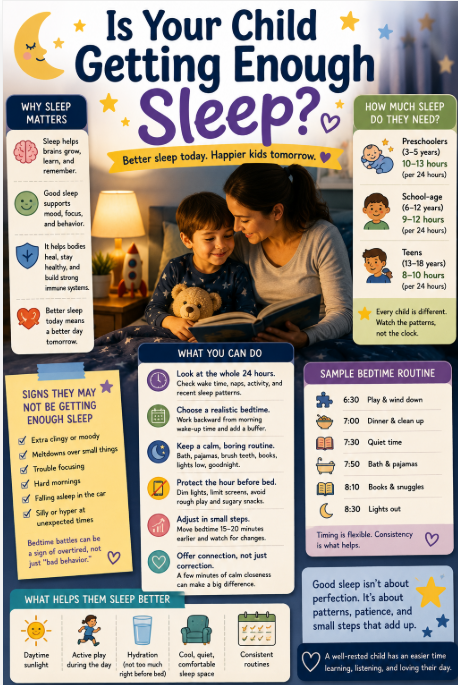
At the same time, sleep needs are not identical from child to child. A general rule many parents use is that preschoolers often need about 10 to 13 hours in a 24-hour period, school-age kids often need around 9 to 12 hours, and teens usually still need more sleep than adults assume. The point is not to memorize a chart down to the minute. It is to notice patterns. If your child gets ten solid hours and wakes fairly well, handles the day decently, and is not crashing by late afternoon, that may be a better clue than comparing them with a friend’s child.
Sleep also gets disrupted by ordinary family life. Busy evenings, late sports practice, screens too close to bedtime, inconsistent routines, worries, growth spurts, travel, and even a child getting a “second wind” can all make bedtime harder. If your evenings already feel tense, this guide on building a steady routine for kids and parents can help because the smoother the day feels overall, the easier bedtime usually gets.
What Parents Can Do
Look at the whole 24 hours, not just bedtime
If your child is not falling asleep easily, bedtime is only one part of the puzzle. Ask yourself when they woke up, whether they napped, how active the day was, and how wired they seem after dinner. A child who slept late, napped long, and had a quiet indoor day may not be tired at the time you want them to be. A child who missed sleep for several nights may look hyper instead of sleepy.
Instead of asking, “Why are they not tired?” try, “What did their sleep add up to over the last few days?” That helps you spot patterns instead of treating every rough night like a mystery.
Watch for overtired signs parents often miss
Some children get clingy when they are tired. Others get loud, impulsive, or impossible about small requests. A child who melts down over pajamas or starts wrestling on the couch at 8:30 may not be resisting bedtime for fun. They may be past their easier window for winding down.
Common clues include extra silliness, emotional whiplash, harder mornings, falling asleep in the car at the wrong time, rough behavior after school, and trouble focusing on ordinary tasks. If your child is also struggling with emotional overload, managing stress together is worth reading because stress and tiredness often pile onto each other.
Choose a bedtime that fits your real family life
A bedtime that only works in fantasy land is not helpful. Look backward from the wake-up time your family actually needs. If your child must get up at 6:45 and does best with roughly ten to eleven hours of sleep, that tells you more than a random “kids should be in bed by eight” rule.
Then give yourself a buffer. Bedtime is not the moment your child is finally asleep. It is when the wind-down begins. If it normally takes thirty minutes to settle, plan for that instead of pretending it will magically take seven tonight.
Make the routine boring in the best possible way
Predictable bedtime routines work because they reduce negotiation. Bath, pajamas, brush teeth, one or two books, lights low, goodnight. That sequence does not need to be fancy. It just needs to repeat often enough that your child’s body starts expecting sleep next.
If bedtime has become emotional, keep your voice low and your steps simple. A routine that is gentle and slightly boring usually works better than one full of last-minute choices and stimulation. If your child is especially anxious about sleeping alone, this guide on what to do when your child will not sleep alone can help you separate sleep-need questions from bedtime-anxiety questions.
Protect the hour before bed
The hour before sleep does a lot of heavy lifting. Bright screens, rough play, sugary snacks, and chaotic transitions can all make it harder for the brain to downshift. You do not need a perfect candlelit routine. You just want to avoid the stuff that revs kids up right when you are hoping they will settle down.
Try dimmer lights, quieter activities, simple snacks if needed, and fewer surprises. Kids who spend the evening bouncing from one thing to another often arrive at bed feeling physically tired but mentally switched on.
Adjust in small increments
If your child is clearly not getting enough sleep, resist the urge to change everything overnight. Move bedtime earlier by fifteen to twenty minutes for several nights and see what happens. If mornings are brutal or the late-afternoon crash keeps showing up, that small shift may help more than a dramatic overhaul.
The same goes for children who take forever to fall asleep. A bedtime that is too early can create a long struggle that makes everyone dread the routine. Small adjustments tell you more than guessing.
Common Mistakes to Avoid
One mistake is focusing only on how bedtime looks instead of how the next day feels. Some children go down quietly but are still not getting enough sleep overall. Others protest bedtime yet still log enough hours and function fine. Behavior during bedtime matters, but daytime patterns matter more.
Another common mistake is adding too many bedtime extras in hopes of making sleep easier. One more song, one more show, one more snack, one more check-in, one more negotiation. Parents usually do this because they are tired and trying to avoid a scene, but all those extras can turn into a routine your child now expects.
It also helps not to treat every rough night as a sign that something is deeply wrong. Travel, illness, schedule changes, and excitement can all throw sleep off for a bit. If you want a broader reset, this article on why sleep matters for kids is a useful companion.
And finally, avoid comparing your child too much. The kid who happily goes to bed at 7:30 is not superior to the kid who needs more time to wind down. The goal is not winning bedtime. The goal is enough sleep for your child to function well.
Simple Plan to Try This Week
If you are not sure whether your child is getting enough rest, try this for one week:
Day 1: Track sleep honestly
Write down when your child actually fell asleep, when they woke, and whether they napped. Use real numbers, not best guesses.
Day 2: Notice daytime clues
Pay attention to mornings, after-school behavior, and the hour before bed. Are they dragging, melting down, getting hyper, or needing constant reminders?
Day 3: Tighten the bedtime routine
Pick a short sequence you can repeat every night. Cut one thing that tends to drag bedtime later.
Day 4: Clean up the pre-bed hour
Lower noise, lower stimulation, and keep screens away from the last stretch before lights out if possible.
Day 5: Shift bedtime slightly if needed
If your child seems overtired, move bedtime earlier by fifteen to twenty minutes. If they lie awake forever, look at whether bedtime may be unrealistic for their current schedule.
Day 6: Stick with it even if one night is messy
Sleep changes often need a few days before the pattern becomes obvious. One rough night does not mean the plan failed.
Day 7: Keep what helped most
Maybe it was the earlier routine. Maybe it was fewer bedtime choices. Maybe it was realizing your child needed more total sleep than you thought. Keep the part that made the biggest difference.
Related:
Helpful Tools
You do not need special gear to improve sleep, but a couple of optional tools can make bedtime cues clearer for kids.
- Hatch Rest can help create a calmer, more predictable bedtime atmosphere with consistent sound and light cues.
- Mella Kids Clock can be useful for kids who wake too early or struggle to understand when it is time to stay in bed versus get up.
FAQ
How do I know if my child is not getting enough sleep?
Look for patterns like hard wake-ups, mood swings, extra meltdowns, late-afternoon crashes, trouble focusing, and bedtime that turns chaotic night after night.
Should I put my child to bed earlier if they seem overtired?
Usually yes, but start small. Try moving bedtime earlier by fifteen to twenty minutes for several nights and watch how your child responds.
What if my child is tired but still fights bedtime?
That is common. Some tired kids become more wired, silly, or emotional. A simpler routine and a calmer final hour often help more than extra talking.
Do all kids of the same age need the exact same amount of sleep?
No. Age ranges are helpful, but individual kids vary. The better test is whether your child wakes, behaves, and functions reasonably well on their current amount.
When should I worry less about the clock and more about the pattern?
Almost always. One late night is not the big issue. The bigger question is whether your child seems well-rested most days or chronically short on sleep.
Figuring out your child’s sleep needs is usually less about finding the perfect number and more about noticing what life looks like when they are truly rested. If bedtime itself is the sticking point, you may also find this guide to bedtime battles helpful as a next step.