
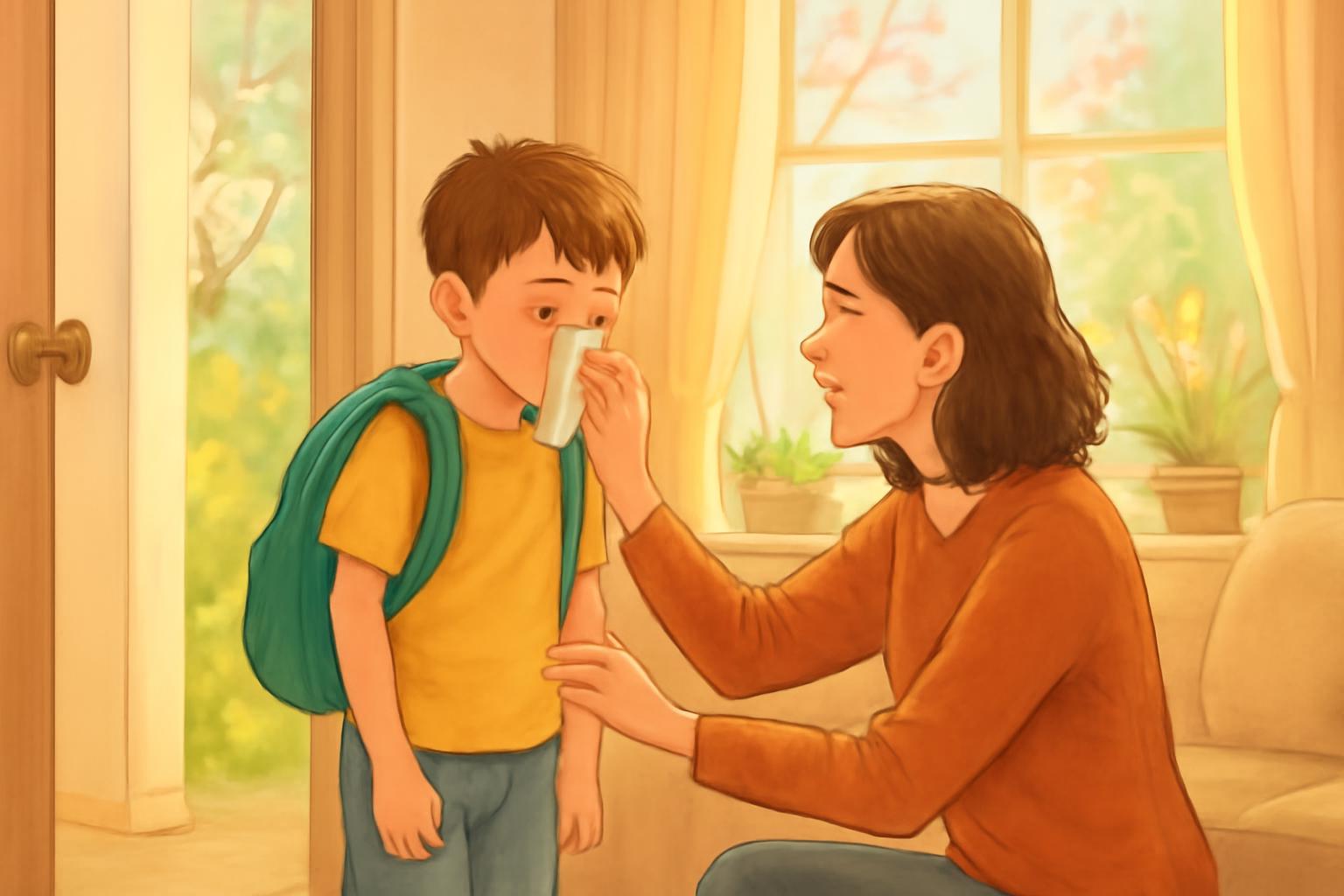
The windows are finally open, your child wants to live outside, and then the sneezing starts. One minute they are racing through the yard. The next they are rubbing their eyes, breathing through their mouth at dinner, and waking up cranky because nobody slept well. Seasonal allergies can turn a beautiful week into a long string of tiny struggles, especially when parents are trying to figure out whether their child is tired, sick, or simply miserable from all the pollen in the air.
Most families do not need a complicated allergy master plan. They need a few practical habits that make daily life easier. The goal is not to panic every time the pollen count rises. It is to notice patterns, lower the everyday irritation where you can, and know when symptoms are getting disruptive enough to bring to your child’s doctor.
This article is not a diagnosis guide, and it is not a substitute for medical care. It is a parent-to-parent plan for dealing with the real-life parts: the itchy eyes after recess, the stuffy nose at bedtime, the damp shoes by the back door, and the way small discomfort can make a child seem unusually whiny, tired, or distracted.
Why This Happens
Seasonal allergies happen when a child’s immune system reacts to things like pollen, grass, or mold in the environment. In everyday terms, the body treats something harmless as if it is a problem and creates symptoms such as sneezing, itchy eyes, a runny nose, congestion, or throat clearing.
For parents, the tricky part is that allergy symptoms rarely arrive in a tidy way. A child might not say, “My allergies are bothering me.” They might say their nose feels weird, rub their face all afternoon, ask to skip soccer because they are “too tired,” or melt down over something small because they did not sleep well the night before.
That last part matters more than people realize. When kids are uncomfortable, their behavior often changes before they have words for what is wrong. A child who is breathing through a stuffy nose all night may look extra emotional the next day. A child with itchy eyes may struggle to focus on books or homework. If sleep has been rocky, Sleep Matters can help you think through whether tiredness is adding fuel to the problem.
Allergies also tend to pile onto regular family stress. Morning routines take longer. Bedtime gets messier. Outdoor fun suddenly needs more planning. That does not mean anyone is doing something wrong. It just means the season may call for a few temporary adjustments instead of trying to force the usual routine to work exactly the same way.
What Parents Can Do
Pay attention to the pattern, not one rough day
A single sneezy afternoon does not tell you much. A pattern does. Notice whether symptoms show up after school, after playing outside, when the windows have been open, or during a certain month every year. Jot a few notes in your phone if that helps. Parents do not need a medical chart. You just need enough detail to notice whether your child always seems worse after the soccer field, the park, or windy days.
Patterns also help when you talk with a pediatrician. “She sneezes sometimes” is hard to act on. “He gets itchy eyes and a stuffy nose most evenings after recess all through spring” is a lot more useful.
Make the after-outside reset easy
When kids come in from high-pollen play, a simple reset can go a long way. Think shoes off, hands washed, face rinsed, and if needed a quick change into indoor clothes. You do not have to make this dramatic. It can be as casual as, “Outside clothes in the hamper, then snack.”
That tiny routine helps keep pollen from riding straight to the couch, pillow, and stuffed animals. If your family already does better when habits are automatic, building a morning routine that energizes kids and parents uses the same low-friction habit idea that works well here too.
Protect sleep like it matters, because it does
Even mild allergy discomfort can wreck sleep. A child who cannot breathe comfortably through their nose or keeps rubbing itchy eyes at bedtime is more likely to fight sleep, wake up groggy, or start the next day already running low on patience.
Try a calmer bedroom setup during rough weeks: fresh pillowcases, windows closed if outdoor triggers are high, and a simple bedtime flow that does not leave your child overheated or overstimulated. If bedtime has already become a daily battle, Sleep Matters is worth borrowing from, even if the original problem was not allergies.
Scale outdoor time instead of canceling it
Parents sometimes swing between two extremes: ignoring symptoms completely or avoiding outside time altogether. Most families do better somewhere in the middle. If a certain part of the day is clearly rougher, aim for shorter outdoor blocks, shaded play, or activities that are easier to leave without a meltdown.
Kids still need movement, fresh air, and normal fun. On higher-symptom days, you may simply need to shift the plan. A family walk, backyard chalk, or a shorter playground stop may work better than a full afternoon rolling in the grass. If you need ideas that still let kids move without overcomplicating things, family-friendly exercises to keep everyone active at home has some useful backup ideas.
Talk about symptoms in simple language
Children handle discomfort better when they can name it. You can say, “Your eyes look itchy,” “Your nose seems stuffy today,” or “I think outside pollen may be bothering you.” That is different from making a child feel fragile. It just gives them words and helps them understand why you are making small changes.
Simple language also keeps kids from feeling confused when they do not feel fully sick but also do not feel normal. Some children get anxious when their body feels off in a way they cannot explain. Calm, matter-of-fact naming helps more than constant questioning.
Know when to call the doctor
If symptoms are frequent, disrupting sleep, making school harder, or leaving you unsure whether it is allergies or something else, check in with your child’s doctor. That is especially true if the pattern keeps returning each season or if your child is miserable enough that regular routines are falling apart.
The goal is not to tough it out forever. It is to avoid guessing when symptoms are clearly affecting quality of life.
Common Mistakes to Avoid
One common mistake is assuming every grumpy day is behavioral. Sometimes a child who seems unusually clingy, irritable, or unfocused is just worn down by poor sleep and constant discomfort. That does not erase limits, but it should shape your expectations.
Another mistake is changing everything at once. You do not need a dozen new rules, a big shopping list, and a complete ban on outdoor play. Start with the most obvious pressure points: what comes into the house after outdoor time, what bedtime feels like, and whether symptoms follow a repeatable pattern.
Parents also sometimes fall into nonstop symptom talk. When every interaction becomes “Are your eyes itchy now? How about now?” kids can get more bothered by the conversation than the symptom itself. Try calm observation, brief check-ins, and practical action.
Finally, do not underestimate how much discomfort affects family rhythm. If your child is extra tired, hydration, meals, and transitions may need a bit more support for a week or two. Basic support still matters, and Hydration Hacks for Kids is a useful reminder that children who feel yucky often need easy, low-drama ways to keep up with the basics.
Simple Plan to Try This Week
If your family has been reacting to allergy days one cranky hour at a time, try this simple one-week reset.
Day 1: Notice the timing
Pick one easy thing to track: sneezing after school, itchy eyes at dinner, worse sleep after outdoor play, or stuffiness first thing in the morning.
Day 2: Create an after-outside routine
Keep it short enough that everyone can actually do it: shoes off, hands washed, face rinsed, snack.
Day 3: Refresh the sleep space
Swap pillowcases, tidy the bed area, and keep bedtime calmer than usual. The goal is comfort, not perfection.
Day 4: Make outdoor time strategic
Choose a lower-stress activity or shorten the outing if you already know long outdoor stretches tend to backfire.
Day 5: Use clear words
Help your child describe what they feel. “Itchy,” “stuffy,” “scratchy,” and “tired” are more useful than “bad.”
Day 6: Decide if the pattern is big enough to follow up on
If symptoms have clearly become a recurring problem, make a note to contact your child’s doctor instead of trying to manage it by guesswork.
Day 7: Keep the two habits that helped most
Maybe it was washing up after outside time. Maybe it was an earlier bedtime. Maybe it was simply realizing your child behaves differently when they are uncomfortable. Keep the changes that made life smoother and drop the rest.
FAQ
How can I tell if it is seasonal allergies and not just a cold?
Parents cannot always tell right away, which is why patterns matter. If symptoms show up around the same season, especially after outdoor time, and keep repeating, that is useful information to share with your child’s doctor.
Should I keep my child indoors all spring if pollen seems to bother them?
Usually no. Most families do better with smarter outdoor timing, shorter outings, and a simple wash-up routine afterward rather than cutting out outside play completely.
Why do allergies seem to affect behavior so much?
Because discomfort wears kids down. Poor sleep, itchy eyes, mouth breathing, and constant irritation can make children more emotional, distracted, or quick to melt down.
Can seasonal allergies make bedtime harder?
Yes. A stuffy nose, irritated throat, or itchy eyes can make it harder for kids to settle and stay asleep, which is why bedtime support matters during rough weeks.
When should I involve the pediatrician?
If symptoms are frequent, confusing, affecting sleep or school, or making your child consistently miserable, it is a good time to check in with the doctor instead of continuing to guess.
Managing seasonal allergies is rarely about one perfect fix. It is usually about noticing what sets your child off, making a few smart adjustments, and remembering that a kid who seems extra sensitive may simply be uncomfortable. A calmer routine can help a lot, and if everyday stress is piling on too, Managing Stress Together is a good next read.