
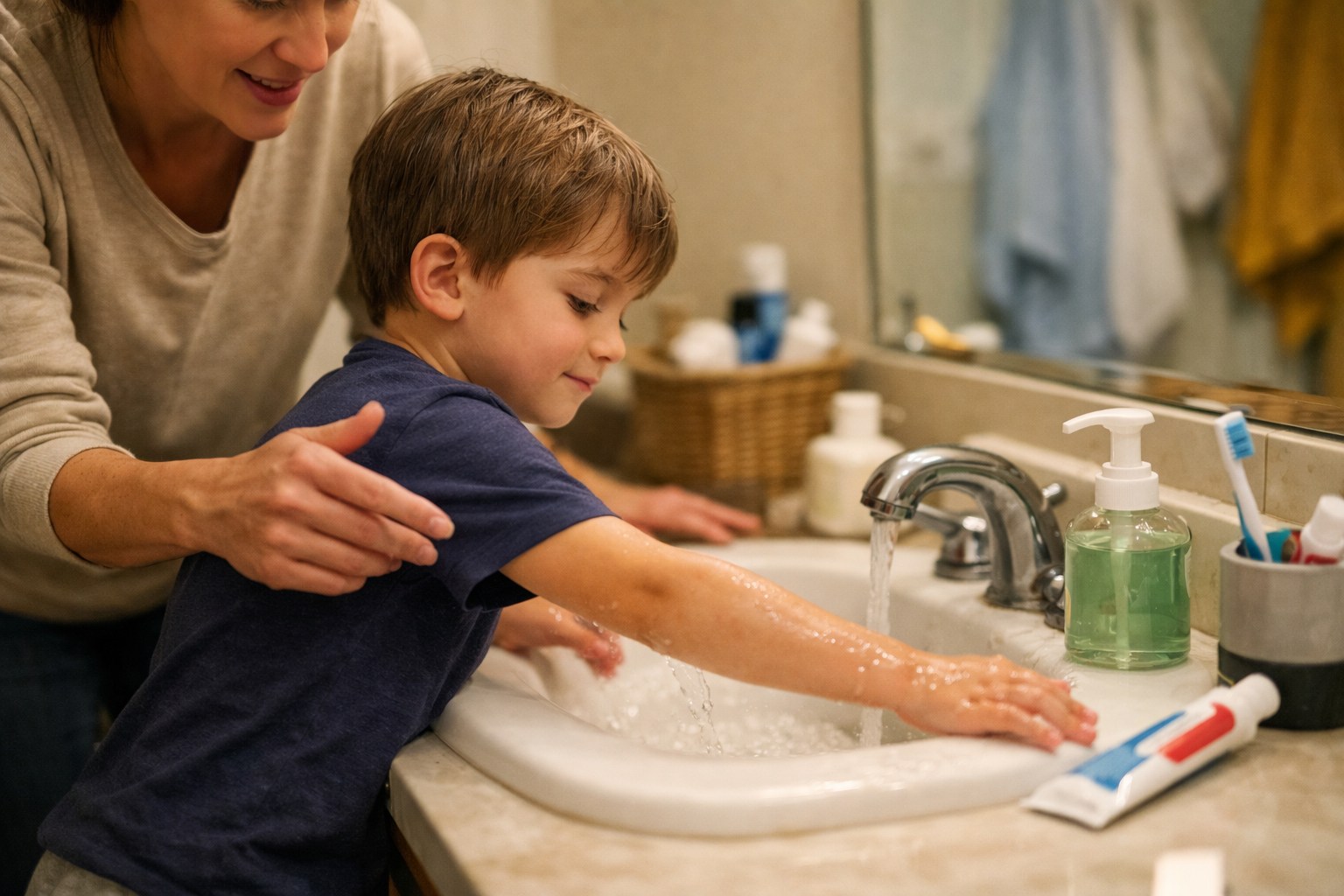
Encouraging Healthy Hygiene Habits
The hand soap is right there, but your child somehow did a two-second splash and declared the job finished. Toothbrushing turns into a debate, bath time gets negotiated like a labor contract, and you start wondering how something so basic became part of your daily workload. Healthy hygiene habits usually do not fall apart because kids are lazy or parents are not trying. They fall apart because these routines feel repetitive, boring, sensory-heavy, and easy for children to rush through.
Most parents have had a moment where they realize they have said “Did you wash with soap?” or “Go brush again” more times than they ever expected. If that is your house, you are not alone. Hygiene habits take time because children are learning more than the physical steps. They are also learning body awareness, sequencing, consistency, and responsibility. The goal is not raising a child who obeys on command. The goal is raising a child who slowly learns to care for their own body without constant supervision.
That is why it helps to treat hygiene like any other life skill. Just like families often build better routines by starting small with healthy habits that fit real life, kids do better when washing, brushing, and bathing are taught in repeatable, manageable steps.
Why This Happens
Adults tend to see hygiene as obvious. Kids do not. To a child, brushing teeth may feel long, handwashing may interrupt play, and hair washing may be uncomfortable. A lot of resistance comes from normal child development rather than defiance.
Younger kids especially live in the moment. If they are building with blocks, they do not care that dinner is coming and hands need washing first. They care that they were in the middle of something important to them. Hygiene can also involve sensory issues. Some kids hate mint toothpaste, wet sleeves, water on their face, the sound of an electric toothbrush, or the feeling of shampoo near their eyes.
There is also a skill gap. Many children know they are supposed to wash hands, but they do not actually know what counts as a good handwash. They know they should brush teeth, but they rush the back teeth or forget whole sections. They hear “take a bath” and think being in the water is the same thing as getting clean.
Routines matter too. Children usually handle hygiene better when it is built into the same rhythm each day. If every night feels different, parents end up relying on reminders, warnings, and last-minute power struggles. A more predictable structure, like the kind that helps with healthy daily routines, makes basic care feel less negotiable.
What Parents Can Do
Make the routine concrete, not vague
“Go get clean” is too broad for many kids. Clear steps work better. Try: “First wash hands with soap, then scrub between fingers, then dry them.” Or: “Brush top teeth, bottom teeth, back teeth, then tongue.”
If your child is young, show them exactly what you mean. Do one step together instead of correcting from across the room. Kids often need coaching before they can be independent.
You can say:
“Let me show you what a real soap scrub looks like.”
“You do the front teeth. I’ll help you remember the back ones.”
“We’re not trying to be fast. We’re trying to be thorough.”
Attach hygiene to existing anchors
It is easier to remember habits that happen after something predictable. Wash hands before meals. Brush teeth after breakfast and before bedtime stories. Bathe after sports practice or outdoor play. When routines stay connected to daily anchors, children stop experiencing them as random interruptions.
This is especially helpful on busy school days. Families who already lean on simple structure for mornings, meals, and bedtime often find that hygiene goes better when it is folded into the same flow instead of treated like a separate battle.
Reduce the friction
If your child resists every single time, look for what is making the task unpleasant. Maybe the soap dispenser is hard to press. Maybe the towel is too high. Maybe the toothpaste flavor is too strong. Maybe bath time starts too late, when everyone is already tired.
Small fixes can matter more than bigger speeches. Put a stool by the sink. Roll sleeves up before washing. Let your child choose between two mild toothpaste flavors. Keep hair washing separate from bath play if that is the part they hate most.
Sometimes parents assume a child needs more discipline when what they really need is a routine with less friction.
Use practice when nobody is in a rush
Teaching works better during calm moments than during the bedtime scramble. Practice handwashing at 2 p.m. just for fun. Let your child brush a stuffed animal’s “teeth.” Do a silly “germ check” game before lunch. When children rehearse skills outside the stressful moment, they are more likely to use them later.
This approach also helps children who get embarrassed by constant correction. A calm practice moment feels more like coaching and less like failing.
Give responsibility in pieces
Independence should grow gradually. A four-year-old might put toothpaste on with help and brush while you finish the last section. A seven-year-old might shower mostly alone but still need reminders about shampoo or rinsing well. Expecting full independence too early often creates sloppy habits and constant frustration.
Think of it as “I do, we do, you do.” Start with support, then share the task, then slowly hand more over.
Praise the process, not just the outcome
Kids hear plenty of correction around hygiene. It helps when they also hear what they are doing right. Be specific. “You remembered soap without being asked.” “You brushed longer tonight.” “You went back and washed after using the bathroom.”
That kind of feedback builds competence. It also connects hygiene with growing responsibility, which supports a child’s sense of capability and even ties into broader emotional confidence and emotional well-being.
Keep the tone calm and matter-of-fact
Children often resist more when parents sound exasperated or disgusted. Try to keep the tone steady, even if you are tired of repeating yourself. Hygiene is personal. Shame can backfire fast.
Instead of:
“That’s gross. Go do it properly.”
Try:
“Your hands need another wash with soap.”
“Your teeth still need the back part.”
“Let’s try again so your body is actually clean.”
Common Mistakes to Avoid
One common mistake is assuming a child is refusing when they may actually be overwhelmed, distracted, or unclear on the steps. Another is expecting independence before a skill is truly learned. If you always send your child off alone and then criticize the result, everyone ends up frustrated.
Another mistake is turning hygiene into a lecture. Long explanations at bedtime rarely help a tired child brush better. Short, clear prompts work better than speeches.
Parents also sometimes use too much pressure too quickly. Threats might get short-term compliance, but they do not teach body care well. A child who feels nagged every day may start resisting the routine itself instead of learning it.
It is also easy to overfocus on perfection. The goal is consistent progress, not a flawless bath every single night. If your child is learning to wash more thoroughly, remember soap more often, or need fewer reminders than last month, that counts.
Simple Plan to Try This Week
If hygiene habits have been messy lately, do not overhaul everything at once. Pick one routine and make it easier to succeed.
Day 1: Choose the toughest hygiene battle
Decide whether the main issue is handwashing, toothbrushing, bathing, or another daily care task. Work on one thing first instead of trying to fix every routine at once.
Day 2: Break it into visible steps
Write or say the steps in order. For example: wet toothbrush, toothpaste, top teeth, bottom teeth, back teeth, spit, rinse. Keep it simple enough that your child can remember it.
Day 3: Fix one source of friction
Add a stool, switch products, move supplies lower, or adjust the timing. Look for the easiest practical improvement.
Day 4: Practice during a calm moment
Do a no-pressure practice run when nobody is hurrying. Model it, help, then let your child try.
Day 5: Add one specific praise line
Notice one success and name it clearly. “You washed longer today.” “You remembered before I asked.” “You handled the whole handwashing routine on your own.”
Day 6 and 7: Repeat the same script
Consistency matters more than intensity. Use the same short cues, same timing, and same expectations for several days in a row. Kids often improve when the adult response becomes more predictable.
If mornings are especially rushed, it can help to pair hygiene steps with other repeatable routines, the same way many families simplify food and prep decisions with habits that support things like school lunch routines and calmer starts to the day.
FAQ
What age should kids manage hygiene on their own?
It depends on the task and the child. Many kids can do parts independently quite young, but most still need reminders, supervision, or a final check for a while. Independence usually grows in stages.
What if my child rushes through brushing teeth every time?
Break the task into sections and supervise more closely for now. Many children need more structure, not just more reminders. Practicing outside the bedtime rush can also help.
How can I help a child who hates washing hair?
Try reducing the sensory stress. Use a washcloth for the face, tilt the head back, keep shampoo out of the eyes, and separate hair washing from the rest of the bath if needed.
Should I use rewards for hygiene routines?
Sometimes short-term motivation helps, especially when building a new habit. But the bigger goal is helping your child see hygiene as a normal part of daily life, not something they only do for a prize.
What if hygiene habits suddenly get worse?
Look for changes in schedule, sleep, stress, sensory needs, or independence expectations. A child who is overtired, rushed, or emotionally off balance may struggle more with ordinary routines than usual.
Healthy hygiene habits usually become easier the same way most family routines do: slowly, with repetition, and with less drama than we imagine. You do not need to create perfect mornings or perfect bedtime routines. You just need a simple system your child can keep practicing. And if your home has been feeling scattered lately, it can help to step back and strengthen the bigger structure around everyday healthy habits so these smaller routines have somewhere solid to stick.