
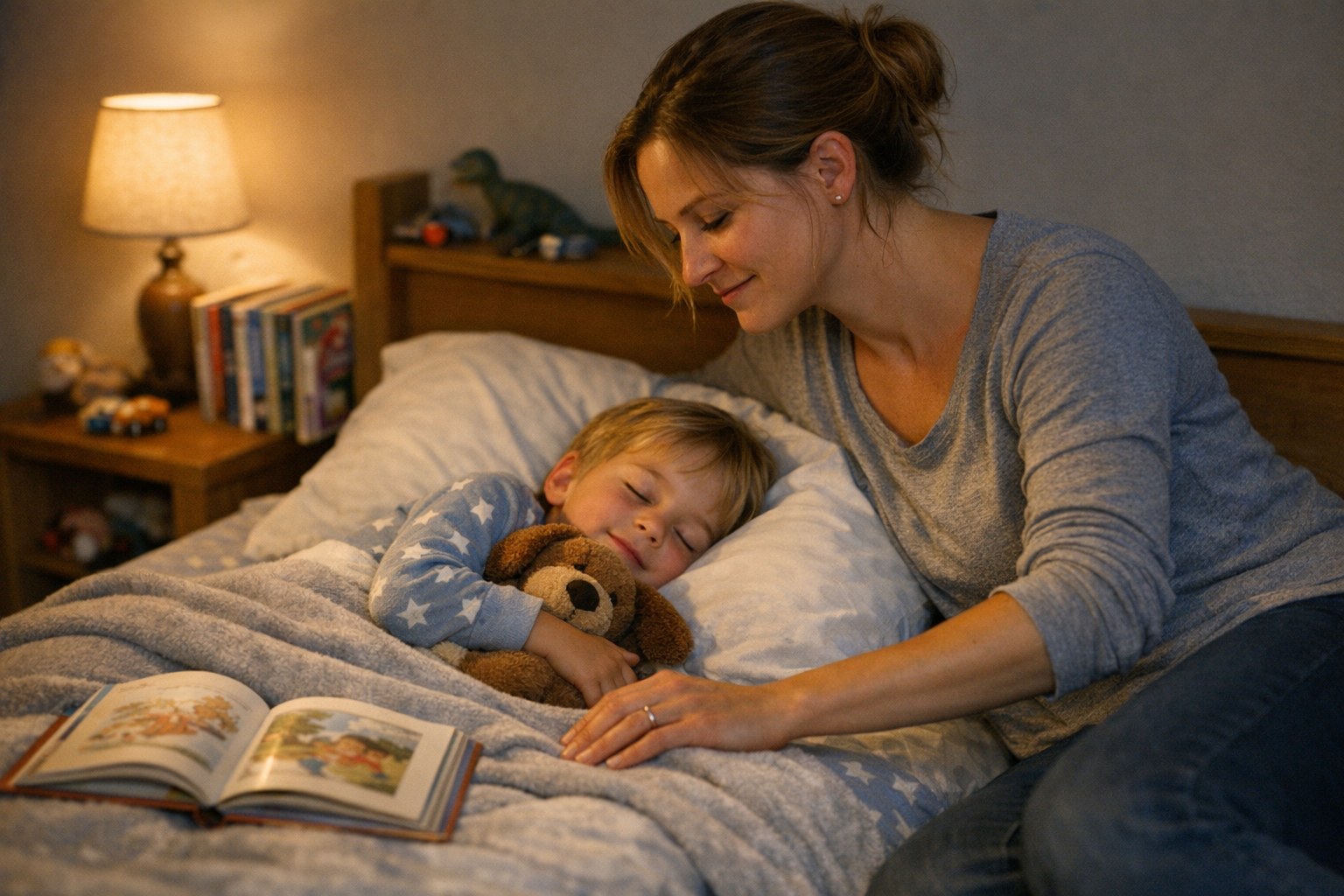
Bedtime usually does not fall apart all at once. It starts with one glass of water, then a missing stuffed animal, then a child who suddenly remembers a very important question about dinosaurs right after you said lights out.
If evenings feel longer than they should, you are not doing bedtime wrong. A lot of families hit the same wall. Kids get silly when they are overtired, parents are running on fumes, and even small delays can turn into a 90-minute production. The tricky part is that bedtime is not just one task. It is a chain of transitions at the end of a long day.
A bedtime routine that actually works usually does two things: it helps your child’s body slow down, and it removes as many decision points as possible. Instead of negotiating every step, you build a predictable rhythm your child starts to recognize. If your whole day feels a little scattered, creating healthy daily routines can make the rest of the schedule support bedtime instead of working against it.
Why This Happens
Parents often assume bedtime battles mean a child is being difficult on purpose. Sometimes that is not what is going on at all. A child can be tired and still resist sleep. In fact, being overtired often makes kids more wired, more emotional, and less cooperative.
Young children also struggle with transitions. Stopping a fun activity, leaving a parent, being alone in a room, and turning off the lights can all feel bigger at night. Even kids who do well during the day may suddenly need more reassurance once the house gets quiet.
Another common issue is inconsistency. If bedtime changes a lot from one night to the next, your child never quite knows what to expect. It is hard to settle when the runway keeps moving.
It helps to think of bedtime as a habit loop rather than a single moment. If your child is also waking frequently or asking for company after lights out, this guide on what to do when your child won’t sleep alone can help with the next layer of the problem.
What Parents Can Do
Start earlier than you think you need to
One of the biggest bedtime mistakes is starting the routine only when your child already looks tired and floppy. By then, many kids are past the sweet spot and heading straight into chaos. Try beginning the wind-down 20 to 30 minutes earlier than your current point of crisis.
That does not mean lights out earlier right away. It means starting the calming sequence earlier so nobody has to rush. A child who feels hurried often gets more wound up, not less.
Use the same order every night
Consistency matters more than making the routine elaborate. A short routine you can actually repeat works better than a perfect one you only manage twice a week.
For many families, a simple order works well: bath or wash-up, pajamas, brush teeth, one or two books, cuddle, lights out. Older kids may swap bath time for a quick room reset or shower. The point is not the exact list. The point is keeping the order steady enough that your child can predict what comes next.
When kids know the pattern, they use less energy arguing about each step. Predictability often lowers resistance on its own. That is one reason routines can be so powerful, as explained in the power of routine.
Make the last 30 minutes boring in a good way
If the goal is sleep, the last part of the evening should feel quieter than the rest of the day. Bright screens, rough play, exciting snacks, and last-minute races down the hallway all work against that.
Dim lights, put away the most stimulating toys, and keep your own voice calmer than usual. Think “slow landing,” not “hard stop.” If your child carries stress into the evening, a few simple ideas from teaching kids mindfulness in simple ways can fit naturally into bedtime without making it feel forced.
Decide the non-negotiables before bedtime starts
Bedtime unravels fast when parents are making decisions in real time while already exhausted. Decide in advance how many books, whether there is a snack, how many check-ins you will do, and what happens after lights out.
Then keep your language simple. “Tonight we are doing pajamas, teeth, two books, one song, then sleep.” Children do not need a long speech. They need a clear map.
If your child asks for one more thing at every step, try using a gentle script: “I know you want another book. Tonight we are doing two.” Calm repetition usually works better than fresh negotiating each time.
Create one cue that bedtime is really here
A specific cue helps children shift from routine to sleep. It could be a nightlight turning on, a sound machine starting, the same final phrase every night, or a short goodnight ritual. These little cues tell the brain, “This part is familiar. We know what happens now.”
For example: “One hug, one kiss, see you when the sun comes up.” Repeating the same closing words every night can feel surprisingly grounding to a child.
Keep connection in the routine, not in endless delays
Some kids stretch bedtime because bedtime is the only time they get a parent all to themselves. If that is your child, the answer is not necessarily a tougher voice. Sometimes it is more intentional connection earlier in the routine.
Pause for five good minutes of real attention. Read slowly. Rub their back. Ask one calm question about the day. A child who feels filled up with connection is often less likely to keep inventing reasons to call you back.
Adjust the routine to the child you actually have
A three-year-old, a six-year-old, and a ten-year-old do not need the same bedtime flow. Some kids need more sensory calming. Some need fewer steps. Some need clearer boundaries. Some do better with a visual checklist on the wall so bedtime is not just a string of reminders from you.
If your child melts down every night at tooth brushing, do not ignore that detail. Solve that piece. Keep the toothbrush in the bathroom they prefer. Use a stool they can reach comfortably. Put pajamas out ahead of time. A routine works best when it respects the actual friction points in your house.
Common Mistakes to Avoid
One common mistake is changing the plan every time bedtime gets hard. A little experimenting is fine, but a routine needs time to become familiar before you can judge whether it works.
Another mistake is turning bedtime into the day’s final power struggle. Calm, boring follow-through is usually more effective than threats, lectures, or big reactions.
It is also easy to accidentally reward stalling. If every call-out leads to a long conversation, another story, or extra cuddling, your child learns that bedtime delays pay well. Keep your response after lights out brief, predictable, and less interesting than settling down.
Finally, do not expect instant results. If bedtime has been messy for a while, your child may test the new structure before accepting it. Consistency is what teaches the lesson.
Simple Plan to Try This Week
If bedtime has gotten too complicated, try this one-week reset.
Day 1: Pick your target bedtime
Choose a realistic lights-out time based on your child’s age and your actual evenings. You can also review how much sleep kids really need if you want a better sense of what window makes sense for your child.
Day 2: Write a 4-step routine
Keep it short. For example: wash up, pajamas, two books, lights out. Put the steps where your child can see them if that helps.
Day 3: Move prep earlier
Lay out pajamas, refill the water cup, and choose books before the routine starts. This cuts down on wandering and “I forgot” moments.
Day 4: Lower stimulation 30 minutes before bed
Dim lights, end screens, and pick one quiet activity. This step often matters more than parents expect.
Day 5: Use one closing phrase
Choose the same final words every night. Make them warm and short. Repeat them after the last cuddle so bedtime has a clean ending.
Day 6: Keep call-backs brief
If your child calls out, respond calmly and quickly. Tuck them back in, repeat the plan, and leave again. No long negotiating.
Day 7: Notice what improved
Do not only ask whether bedtime became perfect. Ask whether it got shorter, calmer, or more predictable. That is real progress.
Helpful Tools
Some families like having a few practical tools, especially when the goal is making bedtime feel more predictable instead of more parental. These are optional, not magic fixes.
A Hatch Rest can be useful if your child responds well to a consistent sound and light cue that signals it is time to wind down and stay in bed.
A Mella Kids Clock can help children who wake early or keep asking when morning starts, because it gives them a simple visual cue instead of relying on them to understand a digital clock.
FAQ
How long should a bedtime routine be?
For many kids, 20 to 40 minutes is enough. The best routine is long enough to help your child settle but short enough that you can repeat it consistently without resentment.
What if my child keeps getting out of bed?
Use calm, brief returns instead of big reactions. Walk them back, restate the plan, and keep your response boring. Repetition is frustrating, but it often works better than arguing.
Should I let my child fall asleep in my bed and move them later?
That may work short term for some families, but it can create a pattern where your child expects the same conditions every night. If you want more independent sleep, it usually helps to build the routine around where you want them to fall asleep.
How long should I stick with a new bedtime routine before changing it?
Give it at least a week of steady follow-through before you decide it is not helping. Small adjustments are fine, but changing the whole plan too quickly makes it harder for your child to learn the pattern.
A bedtime routine that actually works is usually less fancy than parents expect. It is a handful of repeatable steps, a calmer tone, and enough consistency that your child stops wondering what happens next.
You are not aiming for a movie-scene bedtime where everyone smiles, yawns, and drifts off on cue. You are aiming for a routine that feels more predictable, less emotional, and easier to repeat tomorrow night. And if bedtime battles tend to spill into the rest of family life, Overcoming Bedtime Battles is a useful next read.