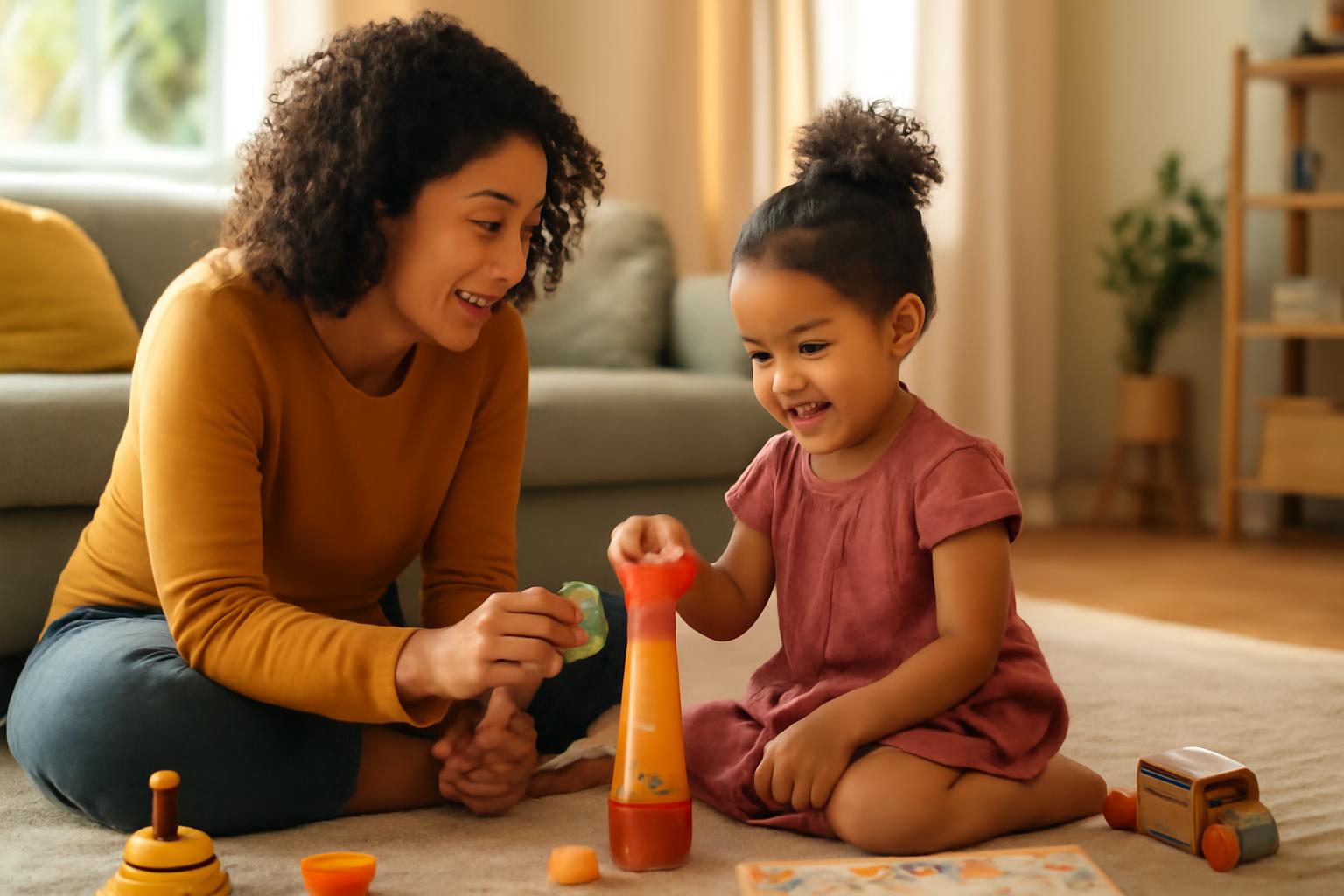
Your child can spend half an hour turning couch cushions into a pirate ship, but if you sit them down with a worksheet, they are suddenly too tired to hold a pencil. That is not laziness. It is a clue. Kids learn best when their brains and bodies are both involved, and play is often the mode that gets them there.
When parents hear “learning through play,” it can sound vague or overly cute, like someone is suggesting that a pile of blocks will magically teach everything from math to patience to problem-solving. Real play is more practical than that. It gives children repeated chances to test ideas, make mistakes, practice language, and build confidence without feeling constantly evaluated.
That matters because many kids shut down when learning feels like pressure. They do not always resist learning itself. They resist the sense that they are about to be corrected, timed, or judged. Play lowers that pressure. It creates room for curiosity, repetition, and experimentation, which is exactly where a lot of real learning happens.
For parents, this is good news. You do not need to turn your house into a classroom or spend every afternoon inventing elaborate activities. You mostly need to notice where learning is already happening and make a few small choices that help it happen more often.
Why This Happens
Children are wired to learn through doing. When a child stacks cups, makes up rules for a pretend store, or figures out how to build a blanket fort that does not collapse, they are not “just playing.” They are practicing planning, attention, language, memory, and flexible thinking all at once.
Play also works because it gives children a reason to care. A worksheet that asks a child to sort shapes may feel boring. A game where they have to sort “treasure” before the pirate ship sails feels different, even if the underlying skill is similar. Interest changes effort. Kids usually stick with hard things longer when the task feels meaningful or fun.
Another big piece is repetition. Children often repeat the same play pattern over and over because repetition is how they master skills. A child who pours water between cups fifteen times is not wasting time. They are learning control, cause and effect, and how different containers work. It can look simple from the outside while their brain is doing a lot inside.
Play also gives children more ownership. When they choose the game, invent the scenario, or solve a problem inside their own activity, they are using their minds more actively than when an adult is directing every move. That independence connects closely with helping kids become independent learners, because children build confidence when they discover they can figure things out for themselves.
What Parents Can Do
Follow the interest that is already there
You do not have to force educational value into every moment. If your child is obsessed with trains, dinosaurs, baking, dolls, bugs, or cardboard boxes, start there. Count toy animals. Write tickets for the train station. Compare leaf sizes. Let dolls “read” menus you make together. Learning lands better when it grows out of a child’s real interest instead of an adult’s idea of what should be educational.
If your child naturally asks a lot of questions, you can support that energy with the same kind of low-pressure curiosity described in building curiosity at home. Curiosity is often the engine; play is what gives it somewhere to go.
Turn ordinary routines into mini learning moments
Some of the best play-based learning does not require special setup. Grocery shopping can become a letter hunt. Bath time can become a sink-or-float experiment. Setting the table can become counting, sorting, and pattern-making. Cooking can become measuring, sequencing, and vocabulary practice.
The goal is not to narrate every second like a children’s show host. It is just to invite participation. “Can you find three red apples?” “Which cup holds more?” “What do you think will happen if we add more water?” Those simple questions keep learning active without making the moment feel like a lesson.
Use open-ended materials more than one-purpose toys
Children often do more thinking with materials that can become many things. Blocks, paper, tape, crayons, dress-up clothes, toy animals, cardboard, measuring cups, and sidewalk chalk usually create more learning than toys that only do one trick.
That is because open-ended materials require children to supply the ideas. A cardboard box can become a spaceship, a puppet theater, a pet clinic, or a mailbox. Every new use asks the child to imagine, plan, and adapt. Those are the same kinds of mental muscles they use later for academic tasks and everyday problem-solving.
If your child enjoys activities that involve experimenting and testing ideas, it can help to pair this approach with building problem-solving skills. The overlap is huge. Play gives kids the space to try, fail, adjust, and try again.
Resist taking over too quickly
Parents are often tempted to improve the game, fix the tower, explain the answer, or show the “right” way to do it. Sometimes that helps. Often it cuts off the learning too early.
If your child is struggling but still engaged, pause before stepping in. You can say, “What do you think would help?” or “Do you want a hint or do you want to keep trying?” That keeps the child in the driver’s seat while still giving support.
This matters especially for children who get frustrated easily. They do not always need us to solve the problem. They often need us to stay calm long enough for them to work through it. That same mindset can help when you are trying to support focus and persistence in other settings too, like in how to help kids focus better.
Protect some screen-free time for deeper play
Not all screens are bad, but play usually gets richer when children have enough time to get bored, start something, abandon it, start over, and sink into their own ideas. That process is messier than passive entertainment, but it is often where the most useful learning shows up.
If your child has gotten used to expecting instant entertainment, start small. Protect one screen-free block each day or a few afternoons each week. You do not need to perform. Just make the materials accessible and the expectation clear. For more ideas, screen-free learning activities is a helpful companion read.
Common Mistakes to Avoid
Turning play into a hidden lesson every time. Kids can tell when adults hijack their game. If every pretend bakery becomes a surprise math quiz, the fun drains out fast. Let some play stay playful.
Thinking learning only counts if it looks academic. Social play, movement games, building, storytelling, pretend play, and messy experiments all teach important skills. Learning is bigger than letters and numbers.
Over-scheduling every minute. Children need enough margin to start something on their own. If every hour is organized for them, there is less room for creativity and self-direction.
Buying too many “educational” products. More stuff does not always create better play. In fact, too many options can make children more scattered. A few flexible materials often go further.
Expecting neat, obvious results right away. Play-based learning can look indirect. Your child may not announce, “Today I improved my spatial reasoning.” The payoff often shows up over time in confidence, language, flexibility, and better problem-solving.
Simple Plan to Try This Week
If you want to use more learning through play without making your life harder, keep it simple this week:
Day 1: Notice one strong interest
Pick one thing your child already loves right now: animals, cars, pretend cooking, building, art, bugs, music, anything.
Day 2: Add one open-ended material
Put out blocks, paper, tape, crayons, cardboard, toy figures, or measuring cups. You do not need a whole activity plan. Just create an opening.
Day 3: Ask better questions
Try questions like “What do you think will happen?” “How could we make it stronger?” or “What else could this be?” Aim for curiosity, not quizzes.
Day 4: Use one routine as play-based learning
Let your child count snacks, sort laundry, compare shoe sizes, or help measure ingredients. Keep it light.
Day 5: Step back once
When your child gets mildly stuck, wait a little longer before helping. See what they do with that space.
Day 6: Protect one screen-free block
Even thirty to forty-five minutes can be enough for deeper play to start.
Day 7: Notice what worked
Did your child stay engaged longer? Ask more questions? Solve a problem with less help? Those small shifts are the real signs that the approach is working.
Helpful Tools
You do not need a cart full of supplies for play-based learning, but a couple of optional tools can be genuinely useful if they fit your child’s age and interests:
- LeapFrog LeapStart can work well for kids who like interactive, hands-on practice and do better when learning feels like an activity instead of a formal lesson.
- National Geographic Kids Books are a solid choice for children whose play naturally leads to lots of questions about animals, science, weather, or space.
FAQ
Is learning through play only for younger kids?
No. Younger children often do it most naturally, but older kids still learn well through games, building challenges, role-play, creative projects, and hands-on problem-solving.
What if my child only wants silly play?
Silly play still has value. Jokes, pretend scenarios, and wild ideas can build language, creativity, and social confidence. You can gently add counting, storytelling, sorting, or problem-solving without taking over the fun.
Does play-based learning mean I should skip academic practice?
No. It means play can support and strengthen learning, especially when a child is resistant or needs more repetition. It is not all-or-nothing.
How do I know if my child is actually learning?
Look for signs like longer attention, better problem-solving, richer language, more confidence, and more willingness to try things independently. Those are meaningful outcomes.
What if I am not naturally creative?
You do not need to be. Follow your child’s interests, ask a few curious questions, and offer simple materials. That is usually enough.
Learning through play works because it meets kids where they already are: active, curious, imaginative, and sometimes allergic to anything that feels too much like a lesson. When you use that energy instead of fighting it, learning tends to feel more natural for everyone. And if you want another easy way to keep that momentum going, learning opportunities during summer has more practical ideas parents can use without turning home into school.