How to Encourage a Love of Reading
Your child can listen to dinosaur facts for twenty straight minutes but suddenly needs a snack, a bathroom break, and a full-body flop the second you open a book together. If that sounds familiar, you are not failing, and it does not mean your child is “just not a reader.” A love of reading usually grows in small, ordinary moments long before a child happily curls up with a chapter book on their own.
Parents often picture reading success as a child who chooses books over screens, reads quietly for long stretches, and never argues about bedtime stories. Real life is messier. Some kids love being read to but resist reading themselves. Some are curious about stories yet get frustrated when the words feel hard. Some are active, noisy, and interested in books only when the topic feels just right.
The good news is that raising a reader does not require a perfect home library or endless patience. It usually comes down to making books feel warm, doable, and connected to your child’s actual interests. When reading feels like closeness, discovery, and success instead of pressure, kids are much more likely to come back to it.
Why This Happens
Many children do not automatically fall in love with reading for one simple reason: early reading often feels harder than adults remember. Listening to a story is very different from sounding out words, tracking lines, and staying focused when your brain is working hard. A child can love stories and still resist the effort of reading.
Interest also plays a huge role. Adults sometimes offer the books we think children should like rather than the ones they actually care about. A child who shrugs at a sweet animal story might light up over joke books, sports magazines, space facts, or a graphic novel with silly dialogue. That does not mean they are avoiding “real reading.” It means they are showing you the doorway in.
Another factor is pressure. Kids notice quickly when reading becomes loaded with correction or worry. If every page turns into “Sound it out,” “Try again,” or “What did that word say?” some children start linking books with performance instead of pleasure. If your child is actively pushing back, this guide on what to do when your child hates reading can help you untangle resistance without making the whole topic heavier.
Environment matters too. Tired kids and overstimulated kids rarely discover a love of reading in the middle of chaos. It is much easier for books to stick when they live in the flow of family life instead of showing up only as homework or correction.
What Parents Can Do
Let interest lead the way
If your child loves trucks, get truck books. If they are obsessed with sharks, magic tricks, jokes, or soccer, start there. You are not trying to impress anyone with literary taste. You are trying to help your child connect reading with something they already enjoy. The fastest way to make books feel alive is to choose topics your child would talk about anyway.
Let kids pull books off the shelf, flip through pages, laugh at weird pictures, and abandon a book that clearly is not landing. If you want more ways to build that spark across everyday learning, building curiosity at home pairs beautifully with reading because both work best when a child feels free to explore.
Read aloud even after your child can read
Do not stop read-aloud time too early. A child may be able to decode simple books long before they can comfortably enjoy the kind of stories that really hook them. Reading aloud lets children access richer language and bigger ideas without carrying all the work themselves.
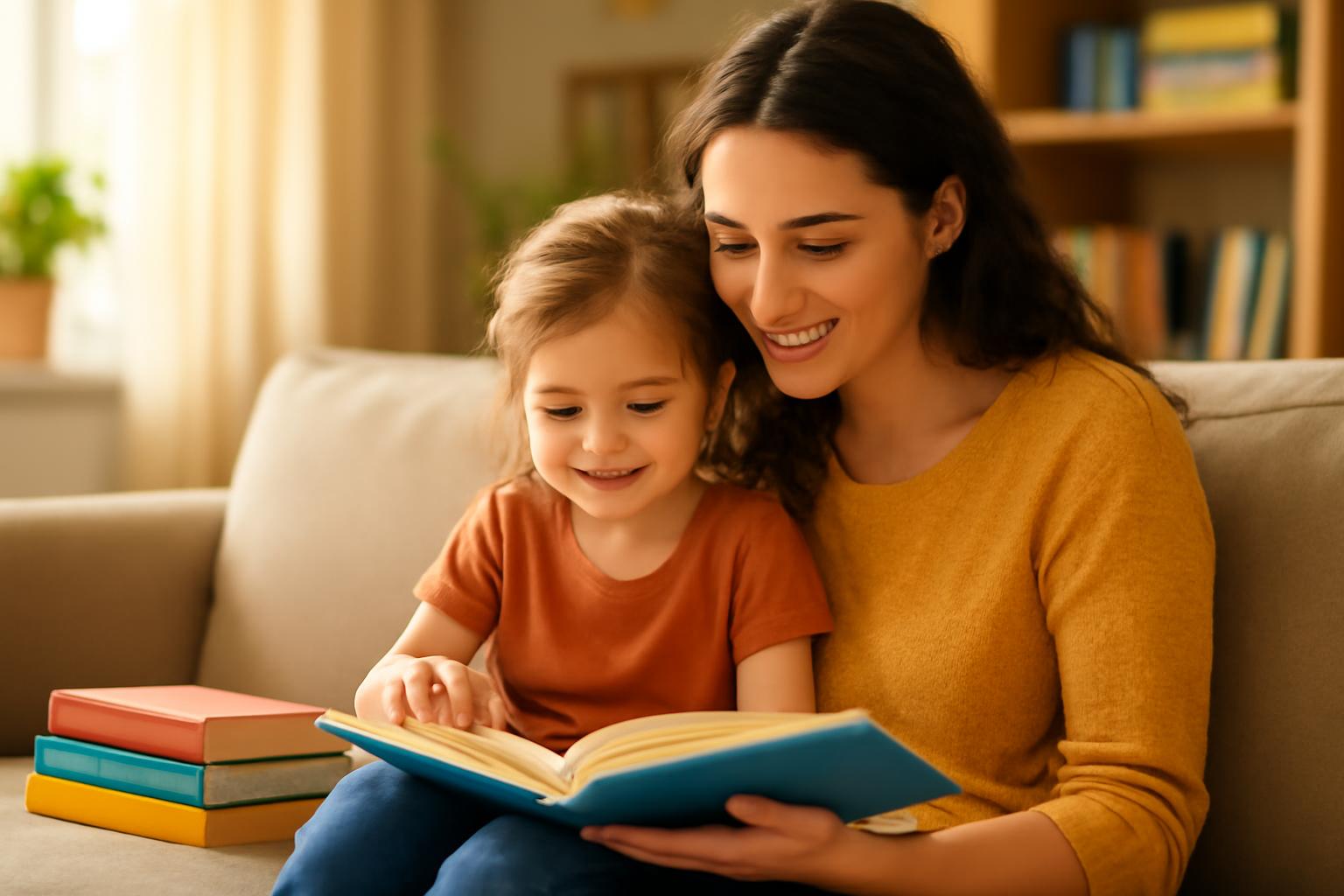
It also keeps reading connected to comfort. Bedtime stories or a quick read on the couch after school can become the part kids look forward to. Ten steady minutes often works better than a big reading plan that never quite happens.
Make success easier to feel
Kids are more likely to enjoy reading when they spend time with books that feel manageable. That does not mean everything should be easy all the time. It does mean a child should regularly get the feeling of, “I can do this.” If every book is a struggle, reading becomes emotionally expensive.
Offer a mix: one comfortable book, one high-interest book, and one book you read together. Early-reader sets like Bob Books Set 1 can be useful optional practice for children who need short wins without too much text on a page. The goal is to build momentum, not race ahead.
Talk about books like they are enjoyable, not a test
After reading, try comments that invite connection instead of checking performance. “That part was funny.” “I liked the dragon picture.” “Do you think she is going to try again?” These kinds of comments keep reading social and low-pressure. You are sharing an experience, not running a quiz.
That same principle helps when a child misses a word. Instead of pouncing on every mistake, choose when to help and when to keep the story moving. Constant interruption can flatten enjoyment fast. If your child is still at the beginning stages, this article on learning to read offers a good companion approach for balancing support with confidence.
Let books live where life happens
Children read more when books are easy to bump into. Keep a few in the car, a basket in the living room, and a short stack near the bed. Casual access makes reading feel normal instead of ceremonial.
You can also build small habits around natural waiting moments: one story before bed, one page while dinner finishes, or one audiobook chapter in the car. Those tiny rhythms add up.
Use different formats without guilt
Not every reading experience has to look like a child alone with a paperback. Audiobooks, graphic novels, joke books, magazines, read-alouds, and nonfiction all count. Some children enter reading through facts, others through humor, and others through illustrations that help them stay engaged. Broadening the definition of reading often lowers resistance.
For kids who love real-world topics, National Geographic Kids Books can be a helpful optional choice because the photos and short fact sections often hook children who are less interested in traditional storybooks.
Common Mistakes to Avoid
One common mistake is turning reading into a constant self-improvement project. If every book comes with correction, rewards, or comparison to a sibling, kids can start treating reading like a place where they are evaluated.
Another mistake is assuming kids should stay with books that are not working. Adults abandon books all the time. Children should be allowed to do that too.
Parents also accidentally shrink reading by treating it as separate from the rest of life. Reading can connect to art, science, pretend play, cooking, and conversation.
Finally, avoid waiting for long, quiet stretches that rarely exist. Five good minutes count. Consistency matters more than perfection.
Simple Plan to Try This Week
If you want reading to feel better in your home without making it one more thing to manage, try this simple plan for the next seven days:
Day 1: Find your child’s doorway
Ask yourself what your child already loves to talk about. Pick two or three books that match that interest, even if they are silly, simple, or not what you originally imagined.
Day 2: Reset the tone
Read together for ten minutes without correcting every word or asking a string of questions. Let the story carry the moment.
Day 3: Leave books out
Put a few books where your child actually hangs out: couch, bedside table, car seat pocket, or kitchen counter.
Day 4: Add one repeatable habit
Choose a small anchor, like one story before bed or one page after snack. Keep it easy enough that you can do it again tomorrow.
Day 5: Celebrate effort, not just skill
Notice something specific: “You stuck with that page.” “You picked a book on your own.” “You laughed at that part.” Small recognition builds identity.
Day 6: Follow the spark
If one topic grabs your child, lean into it. Return to the library, look for a similar book, or connect it to an activity. This is how reading starts to feel personal.
Day 7: Keep what felt light
Do not keep every strategy. Keep the one or two that made reading feel easiest and warmest. Those are the habits most likely to last.
Helpful Tools
You do not need special products to raise a reader, but a couple of optional tools can make books feel more inviting and manageable:
- Bob Books Set 1 can help beginning readers get short, confidence-building practice without overwhelming pages.
- National Geographic Kids Books can be especially useful for children who connect more quickly with photos, facts, animals, or science topics than with traditional storybooks.
FAQ
What if my child likes being read to but refuses to read alone?
That is very common. Independent reading asks for more stamina and skill. Keep reading aloud, offer easier books for solo practice, and let independent reading stay short so it does not feel like a struggle every time.
Do graphic novels and comic-style books count as reading?
Yes. They build vocabulary, comprehension, sequencing, and motivation. For many kids, they are a strong bridge into longer books later.
How long should kids read each day?
There is no magic number that works for every family. A short daily habit done consistently is usually more effective than pushing for long sessions that end in frustration.
What if my child would rather do anything else?
Start smaller and make the experience easier. Choose higher-interest books, read aloud more, reduce pressure, and focus on connection before stamina. Love of reading usually grows before independence does.
Should I reward my child for reading?
Small encouragement can help some kids get started, but try not to make reading feel like a chore that only matters because a prize comes after it. Whenever possible, let the story, the closeness, and the sense of success be part of the reward.
A love of reading rarely appears all at once. It grows when books feel welcoming, when children get to follow what interests them, and when reading becomes part of ordinary family life instead of a constant test. If you keep it warm, flexible, and realistic, you are doing more than teaching a skill. You are helping your child build a relationship with stories that can last a very long time. And if you want to strengthen that foundation even earlier, supporting early literacy at home is a natural next step.