
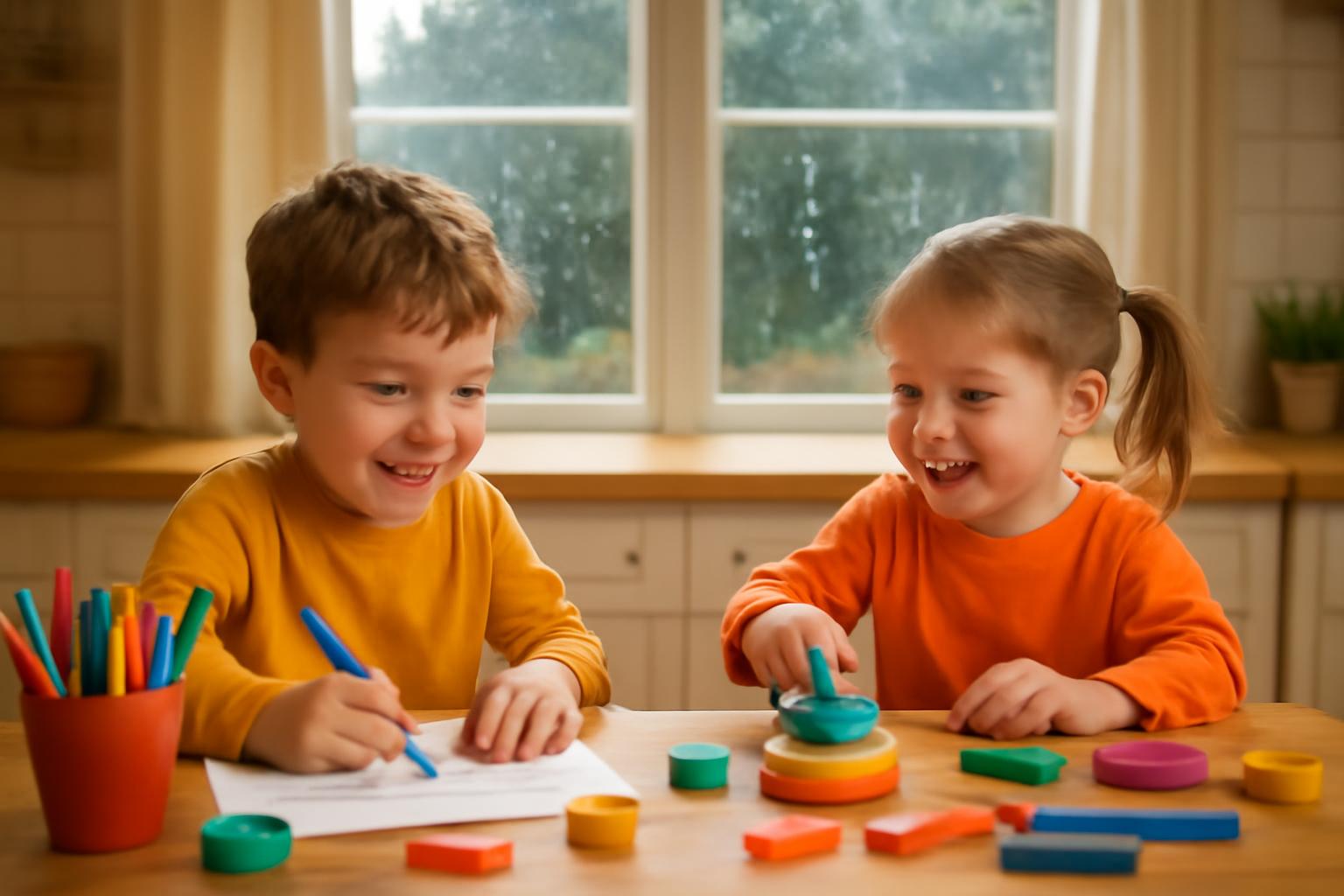
By about 10 a.m., the couch cushions are on the floor, someone has already said “I’m bored” three times, and the rain is still tapping the windows like it plans to stay all day. Rainy days can feel extra long when kids have energy to burn and nowhere obvious to put it. The trick is not filling every hour with something elaborate. It is having a few simple activities ready before boredom turns into sibling arguments and living-room chaos.
Parents often picture rainy day fun as a big craft setup, a perfect baking project, or a full afternoon plan. Real life is usually messier than that. Sometimes you need something that buys you fifteen peaceful minutes while you finish coffee. Sometimes you need an activity that works for siblings with different ages. Sometimes you just need the day to feel less like survival mode.
The good news is that rainy day activities do not need to be Pinterest-level to work. Kids usually remember the feeling more than the setup. A blanket fort, a silly scavenger hunt, or a kitchen-table challenge can turn a gloomy afternoon around if it meets the moment your family is actually having.
Why This Happens
Rainy days are tough because they remove the easiest reset button most families use without thinking: going outside. When the yard is muddy, the playground is soaked, or everyone is trapped indoors, kids lose a natural outlet for movement, noise, and novelty. What looks like “bad behavior” on a rainy day is often just restless energy with nowhere to go.
There is also something strange about an unstructured day at home. Children who can happily play outside for an hour may suddenly drift from room to room when the weather changes. They are not necessarily asking for constant entertainment. Often they are asking for a little help getting started. Once an activity has a clear beginning, many kids settle in much better than parents expect.
Rainy days can also magnify family stress. The house feels smaller. The mess looks bigger. Every snack request somehow arrives five minutes apart. That is why it helps to think less about creating one magical all-day plan and more about rotating between a few kinds of activities: movement, creativity, connection, and quiet play.
What Parents Can Do
Start with a “first activity” before boredom fully lands
The hardest part of a rainy day is often the slow slide into crankiness. If you wait until everyone is already whining, the house is harder to reset. Try picking one easy starter activity early, even if it only lasts ten minutes. It might be building paper airplanes, doing a quick dance challenge, or putting out painter’s tape on the floor for a hop path.
That first activity does not need to be the most impressive one. It just needs to change the mood from “there is nothing to do” to “we are doing something now.” Once kids are moving, laughing, or making, the next part of the day usually goes better.
Rotate between high-energy and calm activities
Parents sometimes accidentally stack the whole day with quiet activities and then wonder why kids start climbing furniture by lunch. A better rhythm is to alternate. Do something active, then something calm. For example: hallway bowling, then drawing. Pillow obstacle course, then reading. Kitchen dance break, then snack and stickers.
If your family likes hands-on projects, these fun science experiments you can do at home pair nicely with rainy afternoons because they give kids something concrete to try without requiring you to leave the house.
Use simple challenges kids can own
Many children engage more when an activity feels like a mission instead of just a suggestion. “Go play” can fall flat. “Build the tallest tower you can with cups,” “Make a treasure map for the hallway,” or “Invent a living-room animal rescue course” often works better. A challenge gives the brain a target.
This is especially helpful with siblings. A shared challenge creates a common goal, even if each child does it differently. One child might build carefully while another adds dramatic storytelling. Both count.
Keep one low-mess station ready
Rainy day frustration gets worse when every idea sounds helpful but secretly creates more work for you. It helps to have one activity bin or shelf kids already understand: markers, paper, tape, stickers, coloring pages, reusable puzzles, or simple building supplies. When that station is easy to pull out, you do not have to reinvent the day every time the weather turns.
A low-mess station also gives kids a place to land after active play. If they need inspiration, educational games that encourage learning through play can work well as a next-step option because they add novelty without needing a big setup.
Build connection into the day, not just distraction
Sometimes kids are not only bored. They want attention. Ten focused minutes together can calm the whole house more than forty minutes of half-listening while you scroll your phone and say, “Try playing with your toys.” A board game, a silly interview game, or a one-song dance party can change the emotional weather indoors even if the real weather stays gray.
When you need an easy together-time option, fun ways to encourage independent play at home can also help you build calmer pockets into the day when everyone needs a little space without feeling disconnected.
Common Mistakes to Avoid
One common mistake is assuming you need to fill every minute. Kids do not need constant parent-led entertainment. They usually need a spark, a little structure, and a chance to take it from there. If every lull makes you panic and launch a new activity, everyone ends up more tired.
Another mistake is choosing activities that are too ambitious for the day you are actually having. If your children are already loud and squirmy, a detailed art project with twelve supplies may not be the win you hoped for. Match the idea to the mood. Fast and simple often beats elaborate and beautiful.
Parents also get stuck when they stay indoors but never change the atmosphere. A rainy day feels different when lights are switched on, music is playing, snacks are ready, and one room is clearly set up for play. Small environmental changes help the house feel less stale.
Finally, try not to save every enjoyable activity as a reward for later. Rainy days are not a test parents have to endure before “real life” resumes. They are still family life. A little intention goes a long way toward making the day feel manageable instead of miserable.
Simple Plan to Try This Week
If rainy days tend to catch your household off guard, try this simple setup before the next one hits:
1. Make a short rainy day list
Write down five activities your family can actually do with what you already have at home. Keep the list visible on the fridge or inside a cabinet. The goal is quick options, not a masterpiece plan.
2. Include one activity from each category
Pick one movement idea, one art idea, one challenge, one quiet activity, and one family-together activity. That gives you variety without decision fatigue.
3. Prep one small bin
Put paper, tape, crayons, scissors, and a couple of easy extras in one container. If supplies live in five different places, rainy day ideas feel harder than they really are.
4. Use the morning well
When you know the weather will keep everyone inside, start with something active before boredom builds. It is much easier to guide the day early than to repair it after two hours of whining.
5. Plan one easy connection ritual
Have one go-to family option like cocoa and stories, a living-room picnic, or a card game after lunch. Repeated rituals make indoor days feel cozy instead of random.
If you want more ideas that turn ordinary time together into something memorable, summer bucket list ideas can be adapted for indoor use too, especially if your family likes keeping a running list of simple adventures.
Helpful Tools
You do not need to buy special supplies to make rainy days easier, but a couple of flexible tools can save you when the weather keeps everyone inside longer than expected.
- Crayola Inspiration Art Case is useful when you want an easy grab-and-go art setup instead of hunting for markers, paper, and crayons in different drawers.
- National Geographic Science Kit can be a fun option for older kids or mixed-age siblings when you need an indoor activity that feels more exciting than plain coloring.
FAQ
What are good rainy day activities for kids when parents are busy?
Independent options usually work best: coloring, building challenges, sticker books, audio stories, simple scavenger hunts, or a prepared art bin. The key is choosing activities kids can begin without needing constant instructions.
How do I handle siblings who want different things on rainy days?
Try rotating between shared activities and separate ones. A joint challenge can bring everyone together for a while, then a quieter activity can let each child branch off in their own way.
What if my child says every idea sounds boring?
That usually means they are stuck in the transition, not that every activity is truly bad. Pick one short activity and start it with them instead of offering ten choices. Once they get moving, resistance often drops.
Are screen-free rainy day activities really worth the effort?
Yes, especially when kids need movement, creativity, or connection. Screens can absolutely have a place, but mixing in off-screen play often helps the day feel more balanced and cuts down on that wired, cranky feeling some kids get after too much indoor screen time.
How many activities should I plan for one rainy day?
Usually fewer than parents think. Three or four solid options plus snacks, meals, and regular downtime is plenty. You are aiming for a manageable rhythm, not a minute-by-minute schedule.
Rainy days do not have to be magical to be good. They just need a little structure, a little flexibility, and one or two ideas that help your family shift out of boredom mode. Keep it simple, let kids help shape the fun, and remember that some of the best indoor memories come from ordinary afternoons that turned out better than expected. If you want one more easy idea bank for your next stuck-inside day, family-friendly exercises to keep everyone active at home can help when the walls start closing in.