
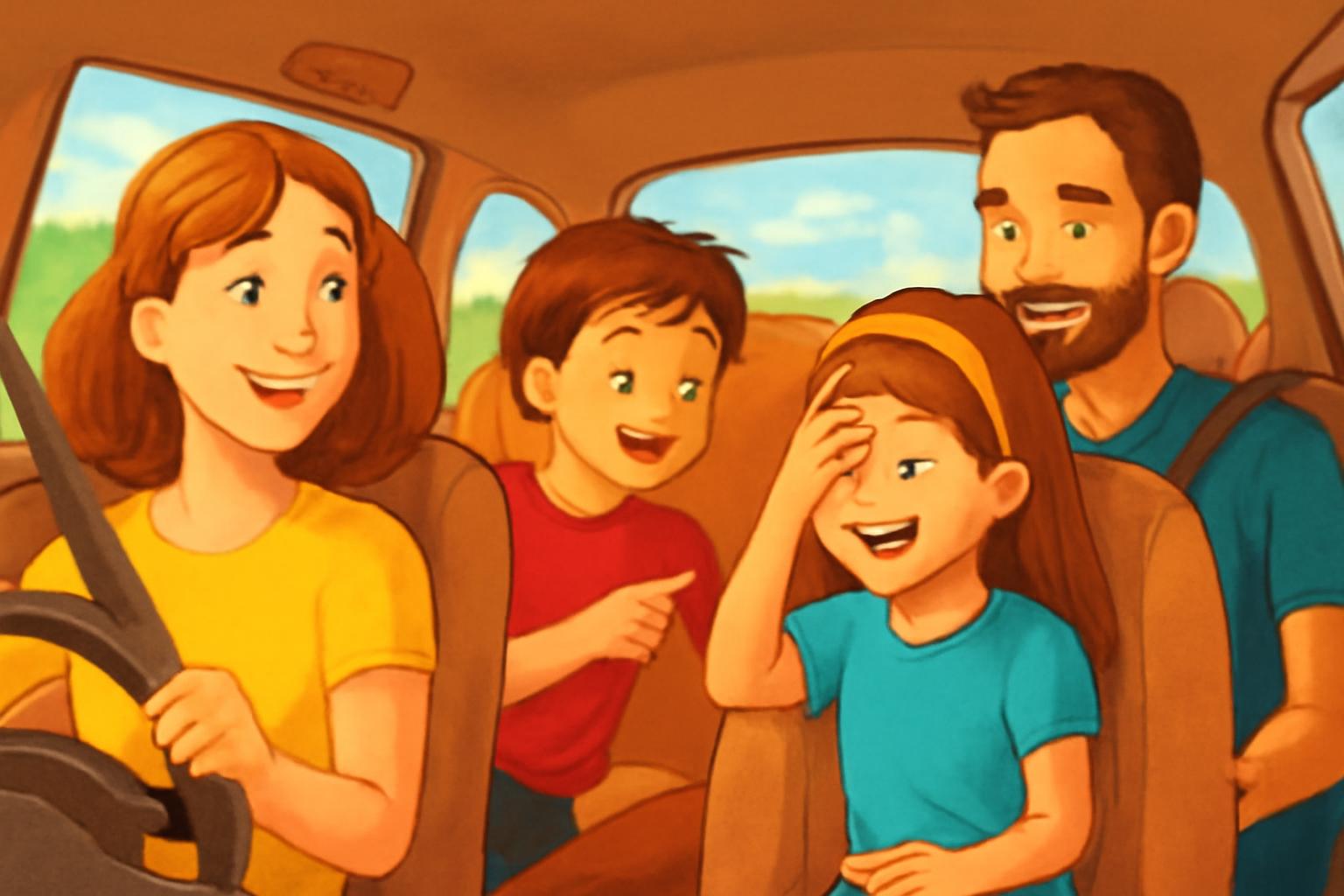
The snacks are gone, the third bathroom stop was twenty minutes ago, and from the back seat you hear the sentence every parent dreads on a long drive: “How much longer?”
Road trips sound fun in theory. In real life, they often start with good moods and end with someone kicking the back of a seat, someone else claiming the charger, and a parent trying to keep the peace while also watching traffic. The hard part is not that kids are doing something wrong. It is that long stretches of sitting still ask a lot from bodies and brains that were built to move, notice, ask questions, and react loudly to boredom.
That is why the best road trip games are not the most impressive ones. They are the ones you can start fast, explain in one breath, and keep going without turning around every two minutes. When a game is simple, flexible, and just competitive enough, it buys you something every traveling parent wants: a calmer car.
If your family is trying to build more easy memory-making time in general, this summer bucket list guide has plenty of low-pressure ideas that work before and after travel days too.
Why This Happens
Most kids do not melt down in the car because they are ungrateful or trying to ruin the trip. They melt down because road trips combine several hard things at once: waiting, sharing space, being told to stay buckled, and having less control over their day than usual. Even kids who usually handle routines well can get touchy when they are tired, cramped, or overstimulated.
Boredom also hits differently in a car than it does at home. At home, a child can wander off, build something, grab a snack, or switch activities. In a car, their choices are limited. That is why games matter so much. A good road trip game gives kids a job for their attention. Instead of noticing every annoying thing their sibling does, they are listening, searching, counting, remembering, or laughing.
It also helps to remember that kids enjoy games when they can actually join in. A seven-year-old and a twelve-year-old may both like guessing games, but they will not enjoy them for the same reason. The sweet spot is choosing games with easy rules and adjustable difficulty so nobody feels lost or babied.
What Parents Can Do
Start with games that need nothing
The easiest wins are verbal games you can launch without digging through a bag. Try “I Spy,” category rounds like “name animals that start with B,” or finish-the-story games where each person adds one sentence. These work because they are fast, familiar, and easy to pause when traffic, directions, or a rest stop interrupts the flow.
You can also play “guess the sound,” where one person describes a sound they might hear on a trip, or “would you rather” with silly family-friendly choices. The goal is not educational perfection. The goal is turning dead time into shared attention.
Rotate between quiet games and high-energy games
Not every game should ramp the car up. Some games calm kids down, and some wake them back up when the mood gets stale. A license plate hunt or color search keeps things quieter. A rapid-fire joke round or “who can name five ice cream flavors fastest?” adds more energy. Alternating between the two helps the whole ride feel more balanced.
If your kids tend to get rowdy together, it helps to use a calmer game before the mood fully tips. Think of games as prevention, not just rescue.
Give each child a turn choosing
A lot of back-seat arguments come from one child feeling steamrolled. A simple fix is to announce that each child gets one game choice in order. That removes some of the bargaining and gives everyone a predictable turn. You can say, “Ava picks this round, then Eli picks the next one after the stop sign game is done.”
That tiny structure matters. Kids handle waiting better when the plan feels clear.
Use the scenery instead of fighting it
Road trips come with built-in material if you use what is outside the windows. Kids can search for red barns, animals, motorcycles, construction vehicles, state signs, bridges, or weird billboards. Older kids can try alphabet hunts using signs and storefronts. Younger kids can count school buses or yellow cars.
This works especially well because it pulls attention outward. Instead of focusing on how long the ride feels, kids start scanning for the next thing to spot. If your family likes turning ordinary moments into playful ones, these ideas for encouraging independent play at home use the same basic principle: kids do better when they have something meaningful to do.
Keep one game in your back pocket for the hard stretch
Every road trip has a rough patch. It might be the last hour before arrival, the slow crawl through traffic, or the stretch right before dinner when everyone is running low. Save one reliable game for that moment instead of using all your best options in the first thirty minutes.
For some families that game is “mystery person,” where one player thinks of a family member or character and others ask yes-or-no questions. For others it is a collaborative story, a travel bingo card, or a scavenger challenge. The point is to keep one proven mood reset ready.
Build in movement at stops
No game can fully replace moving your body. If the trip is long, let kids do something active during breaks: race to a safe landmark, do ten jumping jacks, stretch like animals, or walk one lap around the rest area. That reset can buy you a lot more peace once everyone buckles back in.
Parents sometimes expect games to carry the whole trip, but games work better when they are paired with short breaks and realistic expectations. If you want more simple movement ideas for kids, these family-friendly exercise ideas translate well to travel stops too.
Common Mistakes to Avoid
Starting games too late. If everyone is already cranky, hungry, and loud, even a good game may flop. Start before boredom turns into fighting.
Picking games with complicated rules. A game is not helpful if you have to explain it three times while merging onto the highway. Simple beats clever in the car.
Letting one child dominate every round. If one kid always answers first or changes the rules, the others will stop caring. Turn-taking matters more than parents think.
Using games as a substitute for breaks forever. Sometimes the problem is not boredom. It is that everybody needs to get out of the car.
Making every game competitive. A little competition can be fun, but too much can tip siblings into arguing. Cooperative games often travel better.
Simple Plan to Try This Week
If you have a drive coming up, do not wait until everyone is buckled to figure it out. Try this quick plan before the trip:
1. Pick three no-prep games
Write them down on your phone so you are not trying to invent ideas under pressure. Think one guessing game, one observation game, and one storytelling game.
2. Choose one back-pocket rescue game
Save one game your kids already like for the roughest stretch of the ride.
3. Decide the turn order in advance
Tell the kids each person gets a turn choosing the next game. Clear structure prevents half the arguments before they start.
4. Plan one active stop
Even ten minutes of movement can reset the mood. Treat it as part of the plan, not a failure of the plan.
5. Pack one optional offline activity
A doodle pad, travel journal, or simple prompt list can help if the car needs a quieter stretch. If your kids like hands-on projects once you arrive, these fun science experiments make a nice follow-up activity at your destination.
6. Protect the next day too
If you are leaving early, lighter routines the night before can help everyone start better. A smoother morning routine often makes the whole travel day easier.
Helpful Tools
You do not need to buy anything to make road trip games work, but a couple of optional tools can help if your family travels often.
- Scavenger Hunt Cards can be handy for older kids who like having a clear search challenge during stops or scenic stretches.
- Family Adventure Challenge Book can give you extra prompts and ideas if your family likes turning trips into shared mini-adventures.
FAQ
What are the best road trip games for younger kids?
Simple games work best: I Spy, color hunts, animal spotting, silly sound guessing, and easy “would you rather” questions. Younger kids usually do better with short rounds and fast wins.
How many games should I plan for a long drive?
Plan a small rotation instead of a huge list. Three or four reliable games, one quiet activity, and one movement stop usually work better than twenty random ideas.
What if siblings keep turning every game into a fight?
Shift toward cooperative games like storytelling, shared scavenger hunts, or “let’s solve it together” guessing games. Also use clear turn-taking so one child is not always in charge.
Should I avoid screens completely on road trips?
That depends on your family. Some parents use a mix of games, snacks, audiobooks, and screen time. If screens help, they can be one tool, but having a few interactive games still matters because kids often need connection as much as distraction.
How do I keep kids from asking how much longer every five minutes?
Give them a marker they can understand: “one more game, then we stop,” or “after two more songs, we take a break.” Concrete milestones usually work better than repeating the clock time.
Road trip games do not need to be brilliant to be useful. They just need to meet your kids where they are: a little bored, a little wiggly, and very ready for something to do. Start simple, rotate before the mood tanks, and do not underestimate what one well-timed game can save. A calmer car is not magic. Most of the time, it is preparation plus a little play.