
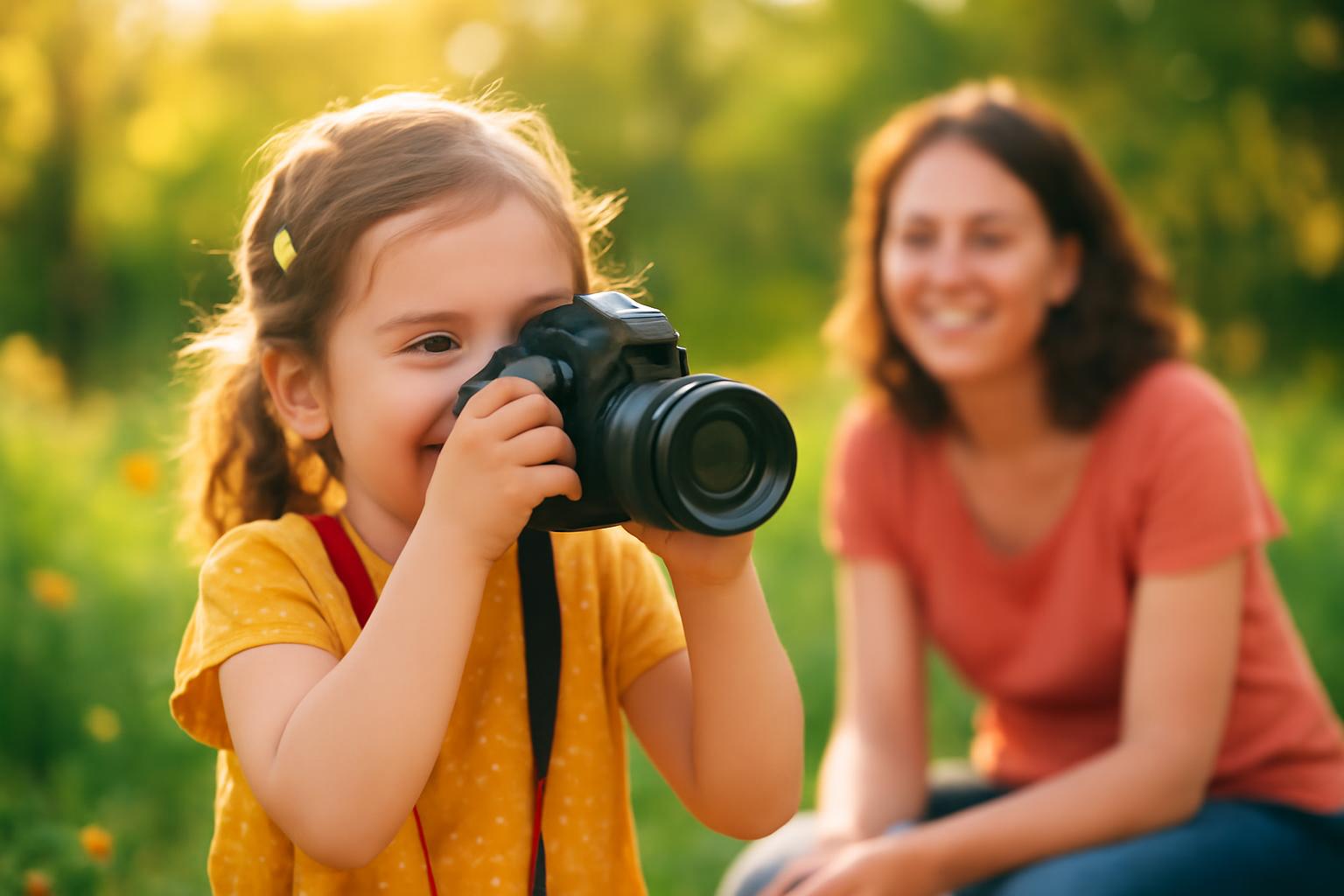
Photography Projects for Kids
Your camera roll is probably full of blurry thumbs, the dog’s nose from two inches away, and twenty-seven versions of the exact same stuffed animal. And honestly? That is not a bad place to start. Kids love taking pictures because it lets them notice the world in a way that feels playful instead of forced.
Photography can be one of those rare activities that works for all kinds of kids. Quiet kids can wander and observe. Busy kids can move and hunt for interesting details. Creative kids can stage tiny scenes, and practical kids can make a mission out of finding shapes, colors, or textures. You do not need fancy equipment or a mini art-school setup. A phone camera, an old digital camera, or even a tablet can be enough to turn an ordinary afternoon into something memorable.
What makes photography especially useful for families is that it slows everybody down just enough to pay attention. A child who usually races through the day might suddenly crouch to photograph an ant trail. A kid who says “I’m bored” can become deeply invested in capturing the perfect puddle reflection. If you have been looking for a screen-light, low-pressure activity that feels creative without becoming one more parent-managed project, this is a good one to keep in your back pocket.
Why This Happens
Kids are naturally drawn to photography because it gives them control. They get to choose what matters, what looks funny, what deserves a close-up, and what story the picture tells. For children who do not always love structured activities, that sense of ownership can be a big reason they stay engaged longer than parents expect.
Photography also works because it turns observation into a game. Instead of saying, “Go look outside,” you can say, “Find three interesting shadows,” and suddenly the whole yard becomes a treasure hunt. That kind of open-ended challenge pulls in curiosity, creativity, and problem-solving all at once. If your child already loves asking questions or noticing odd little details, building curiosity at home pairs beautifully with photography projects.
Another reason this activity lands so well is that the result feels immediate. Kids take a photo, see it right away, and often want to adjust it or try again. That quick feedback loop keeps the momentum going without a big lesson attached to it. It can even become a surprisingly good screen-free-ish bridge for families who want hands-on creativity, much like these screen-free learning activities that make everyday play feel more purposeful.
What Parents Can Do
Start with a simple photo hunt
The easiest way in is to give your child a short mission instead of saying, “Go take pictures.” Try prompts like: find five round things, take three photos of something red, or photograph one thing that looks tiny and one thing that looks huge. Specific prompts help kids get started without making the activity feel school-ish.
You can also match the hunt to your setting. Indoors, try textures, patterns, favorite objects, or “cozy corners.” Outside, try leaves, bugs, shadows, cracks in the sidewalk, or signs of weather. If your child likes wandering and discovering, this can overlap nicely with outdoor activities that cost nothing because it gives a walk or yard time a clear purpose.
Let weird pictures count
Parents sometimes rush to teach “good” photography too soon. Resist that urge a little. Kids often learn more by experimenting than by hearing a list of rules about framing and lighting. Blurry dog ears, dramatic ceiling photos, and accidental selfies are part of the process. If your child is laughing and trying again, the activity is working.
That said, if they want a tiny bit of coaching, keep it light. You can say, “Try stepping back and taking the whole flower,” or “What happens if you get lower?” One small suggestion is plenty. This keeps the project feeling creative instead of corrected.
Turn ordinary life into a project
Photography gets easier to repeat when it does not require a big setup. A child can make a breakfast photo series, document how a Lego build changes over an hour, capture rain on the window, or take one photo every day of something that made them laugh. Small repeatable themes help the hobby stick.
Family life gives you endless material. “Things with wheels,” “our pet’s funniest faces,” “best backyard discoveries,” or “favorite things in the kitchen” can all become mini projects. If your family already enjoys creative afternoons, this can fit naturally alongside creative indoor activities when the weather is bad or everyone needs a lower-key option.
Print or share a few favorites
Kids care more about a project when it feels seen. You do not need to make a scrapbook every time. But choosing three favorite photos at the end, texting one to a grandparent, or printing a few snapshots for the fridge can make the activity feel meaningful. It tells your child, “What you noticed mattered.”
Some families like making tiny rituals out of this. Friday could be “photo pick of the week,” or after a park trip your child chooses the one picture that best tells the story of the day. Those little habits help creativity feel woven into family life, not parked in a special category for rare occasions.
Keep the adult role small
The sweet spot is usually guiding the setup and then getting out of the way. You might hand over the device, give a prompt, and stay nearby without directing every shot. If you hover too much, kids can start photographing for your approval instead of their own curiosity. The goal is not perfect photos. It is attention, creativity, and ownership.
If your child wants more structure, you can offer choices instead of instructions: “Do you want to photograph people, objects, or nature?” “Do you want a color hunt or a silly-face project?” That keeps the activity moving without turning you into the project manager.
Common Mistakes to Avoid
One common mistake is overcomplicating the activity. Kids do not need a long lesson on composition before they are allowed to enjoy taking pictures. Start with fun first. Skills can come later.
Another mistake is correcting too much. If every photo gets a note about lighting, angle, or steadier hands, the project starts to feel like homework in disguise. A better rhythm is to notice what your child is trying: “You got really close on that one,” or “I like how you spotted that reflection.” Encouragement keeps the door open.
Parents also sometimes make the project too big to repeat. If every photography session requires packing snacks, choosing outfits, and driving to a scenic location, it stops being an easy family tool. The most useful version is the one you can do in ten minutes around the house, on a walk, or in the backyard. That same low-pressure approach is part of what makes family challenges for fun work so well too.
Finally, avoid comparing siblings or treating the activity like a talent test. One child may love dramatic close-ups. Another may mostly photograph their own shoes for two weeks. Both are still learning to notice, choose, and experiment.
Simple Plan to Try This Week
If you want to test photography projects without making it a whole thing, try this simple one-week plan:
Day 1: Do a five-photo color hunt
Ask your child to find and photograph five things in one color. Keep it short and playful.
Day 2: Try close-ups
Pick a leaf, toy, snack, or pet tag and let your child see what happens when they move closer and farther away.
Day 3: Tell a tiny story
Have your child take three to five photos that show something in order, like making a sandwich, building a tower, or watering a plant.
Day 4: Go outside with one mission
Choose a prompt like shadows, circles, bugs, or things that look funny. A short walk is enough.
Day 5: Photograph family life
Let your child capture one real everyday moment: setting the table, reading on the couch, the dog sleeping, or muddy shoes by the door.
Day 6: Pick favorites together
Ask, “Which one do you like best, and why?” This helps kids think about their choices without needing a formal critique.
Day 7: Make one tiny tradition
Print one picture, text one to someone they love, or start a small album called “photos we want to remember.”
By the end of the week, you will know whether your child likes the freedom, the challenge, the storytelling, or the hunting part best. Then you can build from there instead of guessing.
FAQ
What kind of camera do kids need?
They usually do not need anything special. A phone camera, tablet, or older digital camera works fine. The project matters more than the gear.
What age can kids start photography projects?
Even young children can start with simple photo hunts and silly close-ups. Older kids may enjoy themed projects, editing, or storytelling with pictures.
How do I keep photography from turning into more screen time?
Use the device with a clear purpose. Give a short mission, set a time limit, and focus on taking photos rather than scrolling, filters, or games.
What if my child loses interest fast?
Keep sessions short and specific. A three-photo challenge is often more successful than an open-ended hour. Kids usually stay engaged longer when they know what they are looking for.
How can I make photography feel meaningful without overdoing it?
Pick a few favorites, ask your child what they noticed, and occasionally print or share one image. A little follow-through goes a long way.
Photography projects work because they meet kids where they already are: curious, visual, funny, distractible, and full of opinions about what matters. You do not need to force a masterpiece. You just need to hand them a camera, offer one simple prompt, and let them start noticing. If you want another easy low-pressure activity for days when everyone needs something fresh, these family bonding activities are a good next stop.