
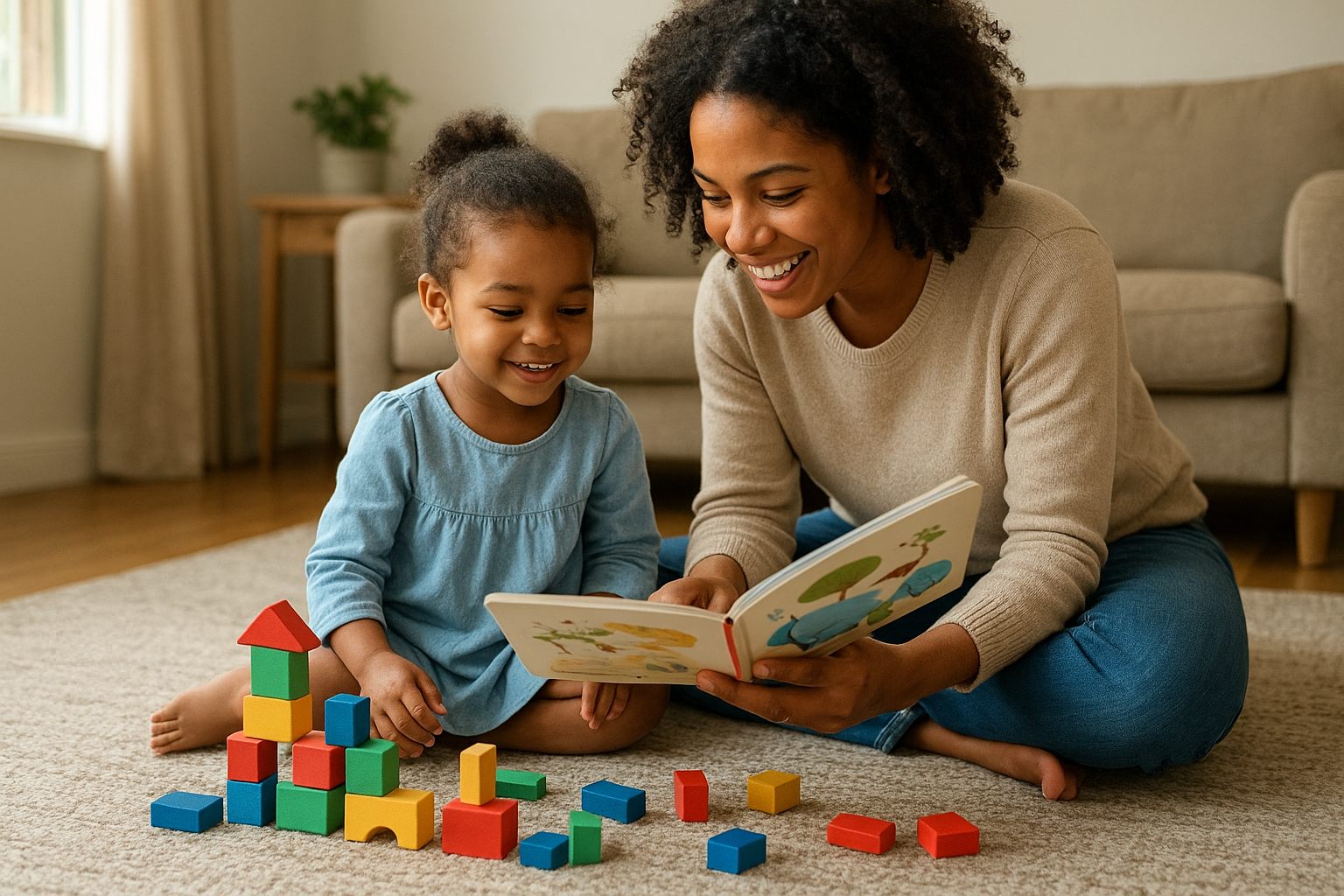
Some kids can spend forty minutes building a pillow fort, running a pretend bakery, or turning measuring cups into a full science lab. Ask the same child to sit down for a worksheet, though, and suddenly they are tired, restless, or on the verge of a meltdown. That contrast is not a character flaw. It is a clue. Children often learn best when their minds, bodies, and emotions are all involved, and play is one of the most natural ways to make that happen.
Parents hear the phrase learning through play all the time, but it can still feel fuzzy. Does it mean every game needs a hidden lesson? Does it mean buying a bunch of educational toys? Does it mean you are supposed to turn your living room into a preschool classroom? Not at all. In real life, play-based learning is usually simpler than that. It means using children’s natural interest in building, pretending, experimenting, moving, and repeating to support the skills they are already trying to grow.
This matters because many children do not resist learning itself. They resist pressure. They resist the feeling of being corrected every two minutes. They resist tasks that feel disconnected from real life. Play lowers that pressure. It gives children room to test ideas, make mistakes, solve small problems, and try again without feeling like every moment is an evaluation.
This guide pulls together the most useful ideas from several related parenting posts and turns them into one practical hub. If you want more depth on specific angles, you will also find focused help on building curiosity at home, using screen-free learning activities, choosing educational games that encourage learning through play, encouraging independent play at home, using everyday activities that boost cognitive development, and strengthening problem-solving skills through daily challenges.
Why Learning Through Play Works So Well
Children are wired to learn by doing. When a child lines up toy animals, invents rules for a treasure hunt, builds a tower that keeps collapsing, or creates a pretend restaurant menu, a lot is happening beneath the surface. They are sorting, planning, remembering, communicating, comparing, adjusting, and practicing self-control. What looks like ordinary play often contains the building blocks of later academic learning.
Play also gives children a reason to care. That piece matters more than many adults realize. A child who groans at counting on paper may happily count pretend coins in a toy store. A child who resists writing practice may eagerly label a dinosaur museum sign they made from cardboard. The skill is not always the problem. Often the delivery is.
Another reason play works is repetition. Adults get bored quickly when a child wants to play the same game over and over. Children usually repeat what they are trying to master. The child pouring water between cups for the fifteenth time is not wasting time. They are learning coordination, volume, cause and effect, and patience. The child replaying the same pretend doctor visit is working through language, sequencing, and social understanding.
Play also supports emotional safety. When learning feels too exposed, some children shut down. In play, they can take risks more easily. They can be silly, try wild ideas, scrap them, and start again. That makes play especially useful for children who are cautious, perfectionistic, or easily frustrated.
What Learning Through Play Actually Looks Like at Home
Play-based learning does not require elaborate setups. Most of the time, it looks like normal family life with a slightly different lens. It can happen while your child builds a fort, stirs muffin batter, sorts socks, makes a map of the backyard, acts out a story with stuffed animals, or races toy cars down homemade ramps.
The key is not to label every moment educational. The key is to notice where learning is already happening and make it easier to return there. For some families, that means leaving out open-ended materials like tape, paper, blocks, toy figures, crayons, recycled boxes, or measuring cups. For others, it means protecting enough unscheduled time for children to actually get absorbed in something.
If you need practical examples, these everyday activities that boost cognitive development show how routines like cooking, storytelling, sorting, and outdoor walks can build thinking skills without becoming formal lessons.
Start With Your Child’s Interests, Not Your Ideal Lesson Plan
One of the easiest mistakes parents make is starting with what seems educational to an adult instead of what feels engaging to the child. If your child is fascinated by bugs, trucks, pretend cooking, dance, cardboard boxes, animals, or water play, that interest is not a distraction from learning. It is the doorway.
A child who loves pretend shops can practice counting, money concepts, early writing, social language, and problem-solving. A child obsessed with dinosaurs can sort by size, create habitats, compare features, and make homemade fact cards. A child who loves movement can learn through scavenger hunts, obstacle courses, hopscotch math, and action songs.
This is one reason building curiosity at home matters so much. Curiosity is often the engine. Play gives that engine somewhere to go. When parents follow the question or obsession that is already alive in the child, learning tends to last longer and feel less forced.
Choose Materials That Invite Thinking
Children often do more real thinking with flexible materials than with one-purpose toys. Blocks, cardboard, toy animals, dress-up clothes, art supplies, flashlights, masking tape, cushions, measuring cups, and simple household objects can all become tools for rich play. A cardboard box can be a spaceship, a cave, a puppet theater, a pet clinic, or a mail truck. That shift from object to idea is powerful. It asks the child to imagine, plan, and adapt.
Try not to overcomplicate this. You do not need an overflowing playroom. In fact, too many options can make some children scattered. A small set of open-ended materials usually goes further than a shelf full of flashy toys that only do one trick.
If your child likes structured play more than open-ended play, it can help to include a few simple, purpose-driven options too. The ideas in top educational games to encourage learning through play are useful because they give children a clear beginning while still building skills like pattern recognition, vocabulary, strategy, and early math.
For younger children who enjoy interactive, hands-on practice, LeapFrog LeapStart can be a reasonable optional tool. It works best as a supplement, not a replacement for open-ended play, but it can help some children engage with letters, numbers, and problem-solving in a lower-pressure way.
Protect Enough Time for Deep Play
Play-based learning usually does not come alive in three rushed minutes between errands. Children often need a little runway. First they wander. Then they complain that they are bored. Then they stack something, test something, or invent something. If adults step in too fast with entertainment or instructions, that deeper layer never gets a chance to form.
This is where screen-free learning activities can help. The point is not to demonize screens. It is to make sure children still have regular stretches of time when they must imagine, observe, build, and persist in the real world. Those are different muscles, and they grow through use.
Many families do well by protecting one dependable screen-free block each day or a few reliable windows each week. It does not need to be huge. Thirty to forty-five minutes can be enough if the environment supports play and the expectation is clear.
Use Everyday Routines as Play-Based Learning Opportunities
Parents often think learning through play requires special activities. Some of the best opportunities are already built into the day. Cooking can become measuring, sequencing, vocabulary, and sensory exploration. Laundry can become sorting, matching, and comparing. A grocery trip can become a color hunt, shape hunt, or counting game. Bath time can become sink-or-float testing, pouring practice, and simple science.
These moments work because they feel useful. Children are more likely to stay engaged when the task has a visible purpose. Instead of thinking, “Why am I doing this worksheet?” they are helping bake muffins, create a store, build a tunnel, or test which object floats first.
If you want a larger menu of simple ideas that already fit into daily life, the post on everyday activities that boost cognitive development in young kids is a strong next step.
Let Play Build Problem-Solving, Not Just Entertainment
One of the biggest strengths of play is that it naturally creates small problems worth solving. The tower falls. The fort sags. The marble does not roll far enough. The pretend zoo needs a ticket booth. The scavenger hunt clue makes no sense. These tiny frustrations are not interruptions to learning. They are the learning.
Instead of rushing to fix every problem, try pausing. Ask, “What do you think would help?” or “Do you want a hint, or do you want to keep trying?” That keeps your child in the thinking role. It also reduces the habit of looking to an adult for every answer.
This is where helping kids develop problem-solving skills through daily challenges fits perfectly into a play-based approach. Children become more resilient when they have repeated chances to try, fail, adjust, and try again inside low-stakes activities.
Independent Play Is Part of Learning Through Play
Parents sometimes assume learning through play has to mean constant togetherness. It does not. Joint play matters, but so does the ability to get absorbed in a child-led activity without an adult directing every move. Independent play helps children practice attention, creativity, confidence, and persistence.
If your child struggles with this, start small. Set up one inviting activity, stay nearby, and give a clear starting point. The goal is not to disappear. The goal is to help your child feel secure enough to keep going without you narrating the entire experience.
The strategies in fun ways to encourage independent play at home are especially helpful here. Independent play is not separate from learning through play. It is one of the ways children become more active, self-directed learners over time.
Play-Based Learning Ideas by Goal
For language and communication
Pretend stores, puppet shows, restaurant menus, story baskets, and acting out favorite books can all build vocabulary and sequencing. Ask your child to explain the rules of their game or tell you what happens next in the story they are inventing.
For math and logic
Sorting toys, matching socks, building patterns with blocks, counting snacks, measuring ingredients, and board games with dice all help. Many of the ideas in educational play-based games support these skills without feeling like drills.
For science and curiosity
Mixing colors, testing what sinks or floats, observing bugs, planting seeds, and asking prediction questions all work well. If your child loves experimenting, follow that interest with curiosity-building habits at home and short, practical, screen-free challenges.
For focus and persistence
Puzzles, building challenges, fort design, scavenger hunts, and pretend play that unfolds over time can all stretch attention. The trick is matching the activity to your child’s current energy and keeping the pressure low enough that they stay with it.
If your child often asks a thousand questions after a play activity, National Geographic Kids Books can be a genuinely useful add-on. They fit nicely after bug hunts, pretend expeditions, or simple science play because they give curious kids something real to explore next.
A Practical Plan for This Week
If you want to use more learning through play without making life harder, keep the first week simple.
Day 1: Notice one strong interest. Pick the thing your child is currently returning to on their own, whether that is cars, dolls, animals, jumping, art, pretend cooking, or collecting random rocks.
Day 2: Put out one open-ended material. Try blocks, tape, cardboard, crayons, toy figures, or measuring cups. Do not over-explain.
Day 3: Ask better questions. Use prompts like “What do you think will happen?” “How could we make it stronger?” or “What else could this become?”
Day 4: Turn one routine into playful learning. Let your child count apples, sort laundry, compare container sizes, or help make a pretend menu for dinner.
Day 5: Hold back once before helping. If your child is still engaged, give them a little more space to solve the problem on their own.
Day 6: Protect one screen-free block. Keep materials visible and expectations calm.
Day 7: Notice what worked. Did your child stick with something longer, ask better questions, or need less help to continue? Those are real signs of learning.
Common Mistakes That Drain the Value Out of Play
Turning every game into a lesson. Children can tell when adults hijack their play. If every pretend game becomes a quiz, the fun disappears and resistance grows.
Stepping in too fast. If parents always fix the tower, explain the answer, or suggest the next move, children lose chances to think for themselves.
Buying too much instead of using what works. More products do not automatically create richer learning. A few well-used materials usually beat a room full of unused ones.
Expecting obvious academic results right away. Play often pays off indirectly. You may notice stronger language, longer focus, better frustration tolerance, and more flexible thinking before you notice anything that looks school-like.
Over-scheduling the day. Children need enough open space to start their own ideas. Constantly moving from one organized activity to another can actually reduce deep play.
When to Step In and When to Get Extra Support
Most play-based learning questions are about routine, attention, and setup, not something medically wrong. Still, if your child seems persistently unable to engage in any kind of play, becomes distressed by ordinary imaginative or social play, or you have broader concerns about development, it is reasonable to talk with your pediatrician, teacher, or another qualified professional. You are not overreacting by asking questions early.
For most families, though, the first step is much simpler: reduce pressure, improve the setup, follow the child, and protect enough time for play to develop.
Conclusion
Learning through play is not about pretending every block tower is a formal curriculum. It is about respecting how children actually learn best. They learn by doing, wondering, repeating, testing, talking, moving, and imagining. When adults work with that reality instead of fighting it, learning becomes more natural and family life usually gets less tense too.
You do not need to be endlessly creative. You do not need a picture-perfect playroom. You do not need to make every moment educational. You mostly need to notice what already draws your child in, create enough room for it to happen, and trust that meaningful learning often looks like play from the outside.
If this helped, read these next:
- Screen-free learning ideas that actually hold kids’ attention
- Simple ways to build curiosity at home
- How to encourage more independent play at home
Explore more parenting advice here: