
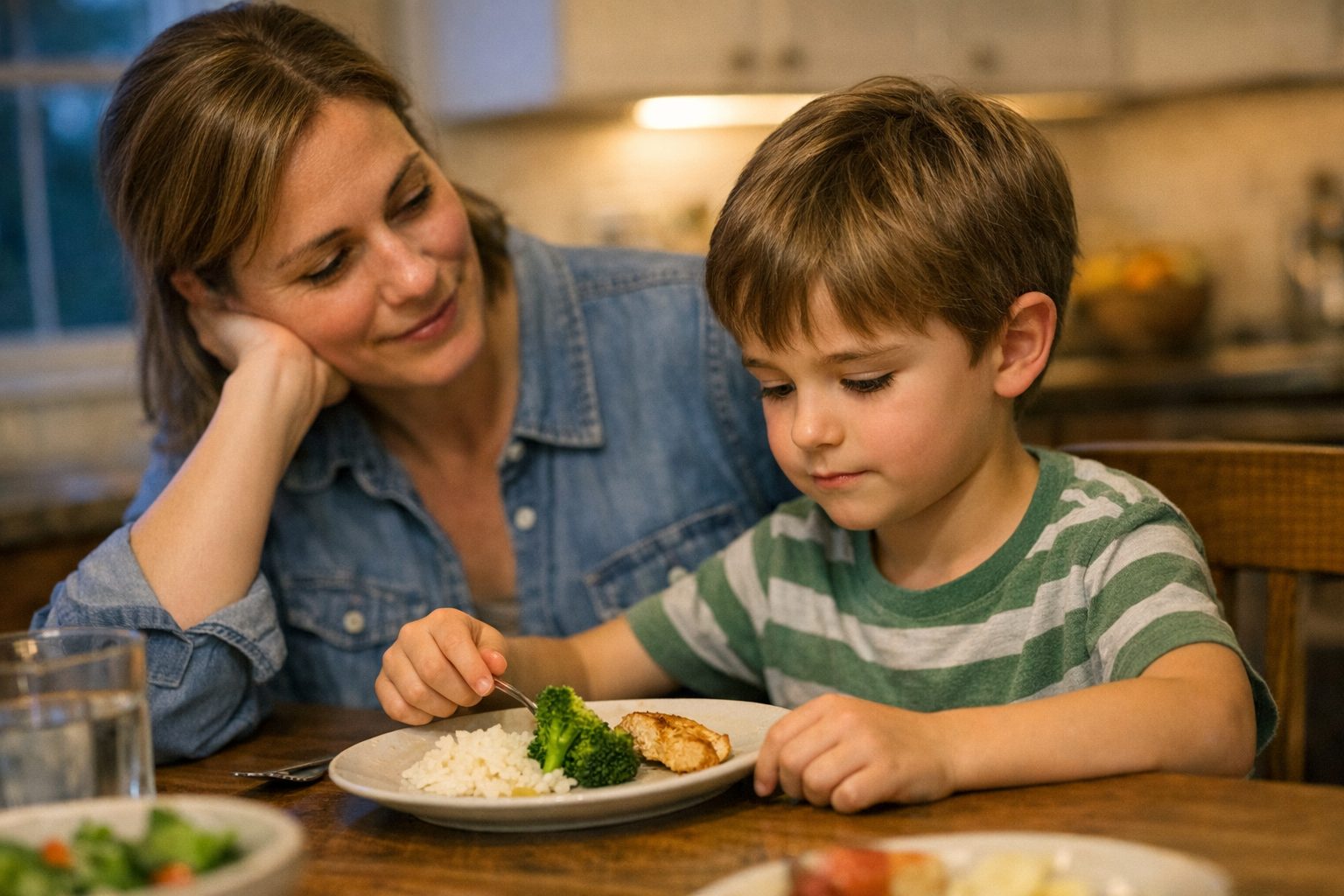
One night your child happily eats strawberries for dinner. The next night those same strawberries are “too wet,” the pasta is touching the peas, and you somehow end up negotiating over three bites of chicken while your own food goes cold.
Picky eating can make parents feel like short-order cooks, detectives, and hostage negotiators all at once. It is especially frustrating when you are trying hard to serve balanced meals and your child seems determined to live on crackers, yogurt, and one specific brand of noodles. If that sounds familiar, you are not doing anything wrong. Many kids go through phases of eating cautiously, refusing familiar foods, or suddenly rejecting meals they used to love.
The good news is that picky eating usually responds better to calm structure than pressure. Instead of trying to win each meal, it helps to zoom out and build habits that make food feel safer, more predictable, and less emotionally loaded. If mealtimes already feel tense, this can pair well with a more general guide on making mealtimes easier.
Why This Happens
Picky eating is not always about stubbornness. Sometimes it is about development, temperament, and control.
Young kids are wired to be cautious. New textures, mixed foods, strong smells, and unfamiliar colors can feel overwhelming. Some children also like predictability. That is why a plain buttered noodle may feel safer than a casserole where everything is combined.
Appetites also change. Toddlers and young children often eat a lot one day and very little the next. A child who was hungry during a growth spurt last week may barely touch dinner this week. That swing can worry parents, but it is common.
Then there is the control piece. Kids have very little say over most of their day. They are told when to get dressed, when to leave, when to clean up, and when to go to bed. Food becomes one of the few areas where they can say no and mean it. The more pressure they feel, the more likely they are to dig in.
Sometimes picky eating also shows up alongside sensory preferences. A child may refuse mushy foods but eat crunchy ones happily, or reject foods that are mixed together but accept the ingredients separately. That does not mean you have to redesign every meal forever. It just means your child may need more gradual exposure.
It can also help to remember that food habits connect to routine. Kids who are overtired, grazing all afternoon, or distracted by screens at dinner are often less willing to try anything new. In that sense, picky eating is partly a food issue and partly a rhythm issue, much like building healthy daily routines in other parts of family life.
What Parents Can Do
Serve one safe food with the meal
A safe food is something your child usually accepts, like rice, bread, fruit, yogurt, or plain pasta. This does not mean making a separate dinner. It means making sure there is at least one part of the meal that does not feel risky.
For example, if dinner is grilled chicken, roasted broccoli, and rice, the rice may be the safe food. Your child can fill up on that if needed, while still seeing the other foods regularly. This lowers stress without turning you into a line cook.
Keep offering foods without forcing them
Kids often need repeated exposure before they accept a new food. Seeing, smelling, touching, licking, and taking a tiny bite all count as progress. A child who says no to carrots ten times may still be learning that carrots belong on the plate and are not a threat.
Instead of saying, “You have to eat three bites,” try: “You do not have to eat it, but it belongs on the plate.” That small shift keeps the door open without making dinner a contest.
Let your child interact with food in low-pressure ways
Some kids try foods more easily when the stakes are low. They may be more willing to help wash grapes, stir pancake batter, snap green beans, or sprinkle cheese on tacos than to take a formal bite at dinner.
You can also invite simple food exploration. “Does the pepper feel crunchy or soft?” “Which apple slice is sweeter?” The goal is curiosity, not performance. This same gentle approach can help with other long-term habits, like using school lunch ideas that feel familiar but varied.
Use small portions for new foods
A giant scoop of something unfamiliar can feel overwhelming. A tiny piece is easier to tolerate. Think one green bean, one teaspoon of soup, or one slice of roasted sweet potato.
Small portions also prevent the plate from looking like a battle zone before the meal even starts. If your child wants more, great. If not, the amount still felt manageable.
Watch the snacks
Some picky eaters are not actually impossible eaters. They are just full of convenient foods by the time dinner arrives. A child who has grazed on crackers, pouches, and milk from 3:00 to 5:30 may have no reason to engage with chicken and vegetables at 6:00.
Try spacing snacks and meals more clearly. If your child needs an afternoon snack, make it count and then give the body time to get hungry again. Offering more balanced options, like ideas from these healthy snack ideas kids will love, can help without turning snacks into another conflict.
Stay neutral when your child says no
This is hard, especially when you are worried. But big reactions can accidentally make picky eating stronger. If every refused pea gets a speech, a bribe, or a showdown, the pea becomes very powerful.
Calm sounds like this:
- “You do not have to eat it.”
- “This is what we are having tonight.”
- “You can choose what goes into your body.”
- “Breakfast is in the morning if you are not hungry now.”
Neutral does not mean cold. It means steady.
Make tiny upgrades to accepted foods
If your child loves one familiar food, use that as a bridge. A child who eats plain quesadillas might accept a little shredded chicken inside later. A child who loves muffins may accept a homemade version with mashed banana or oats. A child who likes pasta might tolerate a little butter, then a little cheese, then sauce on the side.
This is often more effective than jumping straight from beige food to an adult-style plate. If vegetables are the hardest part, this article on adding more fruits and vegetables to your child’s diet can give you a few practical bridge ideas.
Common Mistakes to Avoid
Turning dinner into a performance review. When every meal becomes a measurement of your parenting or your child’s cooperation, everyone tightens up. One rough dinner does not define the week.
Bribing with dessert every time. Saying, “Eat your broccoli and then you get ice cream,” can make broccoli seem even worse and dessert even more powerful. If dessert exists in your home, try not to make it the prize for tolerating dinner.
Pressuring bites. “Just one bite” sounds small, but repeated pressure can make anxious or resistant eaters even more guarded. Encouragement is fine. Pushing rarely helps.
Offering unlimited backup foods. If every refused dinner leads to crackers, toast, or a favorite yogurt tube five minutes later, many kids learn to hold out. A safe food at the meal is different from a second dinner after rejecting the first.
Assuming appetite should look the same every day. Kids are not machines. Look at patterns over time, not one meal in isolation.
Simple Plan to Try This Week
If meals feel chaotic right now, do not overhaul everything at once. Try this for one week.
Day 1: Pick three safe foods
Write down three foods your child usually accepts. Use those as anchors during the week so every dinner includes at least one familiar option.
Day 2: Tighten snack timing
Look at when your child is eating between meals. Aim for a real afternoon snack, then a break before dinner.
Day 3: Add one tiny exposure food
Put one tiny portion of a less familiar food on the plate with no pressure to eat it.
Day 4: Involve your child in prep
Have them rinse berries, stir rice, tear lettuce, or choose between cucumber and carrots. Participation builds ownership.
Day 5: Practice neutral language
When your child refuses food, skip the lecture. Use one calm phrase and move on.
Day 6: Repeat a food they rejected
Do not wait three weeks because yesterday went badly. Offer the same food again in a smaller, calmer way.
Day 7: Look at the week, not one dinner
Ask yourself: Was dinner less tense? Did my child tolerate seeing more foods? Did I stay calmer? That is real progress.
Helpful Tools
Optional tools can make variety easier without forcing it. A divided lunch box like the Bentgo Kids Lunch Box can be useful for serving small portions of familiar and less familiar foods side by side, especially for kids who prefer foods not to touch.
FAQ
Is picky eating normal?
Yes, for many kids it is. Food caution, changing appetites, and strong preferences are common in childhood.
Should I make my child take one bite?
You can invite, but forcing usually backfires. Repeated low-pressure exposure tends to work better than pressured bites.
What if my child only wants the same foods every day?
That is common. Keep those familiar foods in rotation, but pair them with tiny exposures to other foods over time.
Should I worry if my child eats very little at dinner?
One small dinner is not usually the whole story. Look at what your child eats across several days. If you are concerned about growth, energy, or a very limited diet, check with your pediatrician.
How long does it take for picky eating to improve?
Usually longer than parents want. The goal is gradual progress and calmer meals, not a dramatic turnaround by Friday.
Picky eating can make dinner feel personal, but it usually is not. Your child is not trying to ruin the meal, and you do not need a perfect script to handle it. Calm structure, repeated exposure, and lower pressure go a long way. If you want an easier place to start tonight, go back to the basics in this guide on making mealtimes easier and build from there.