
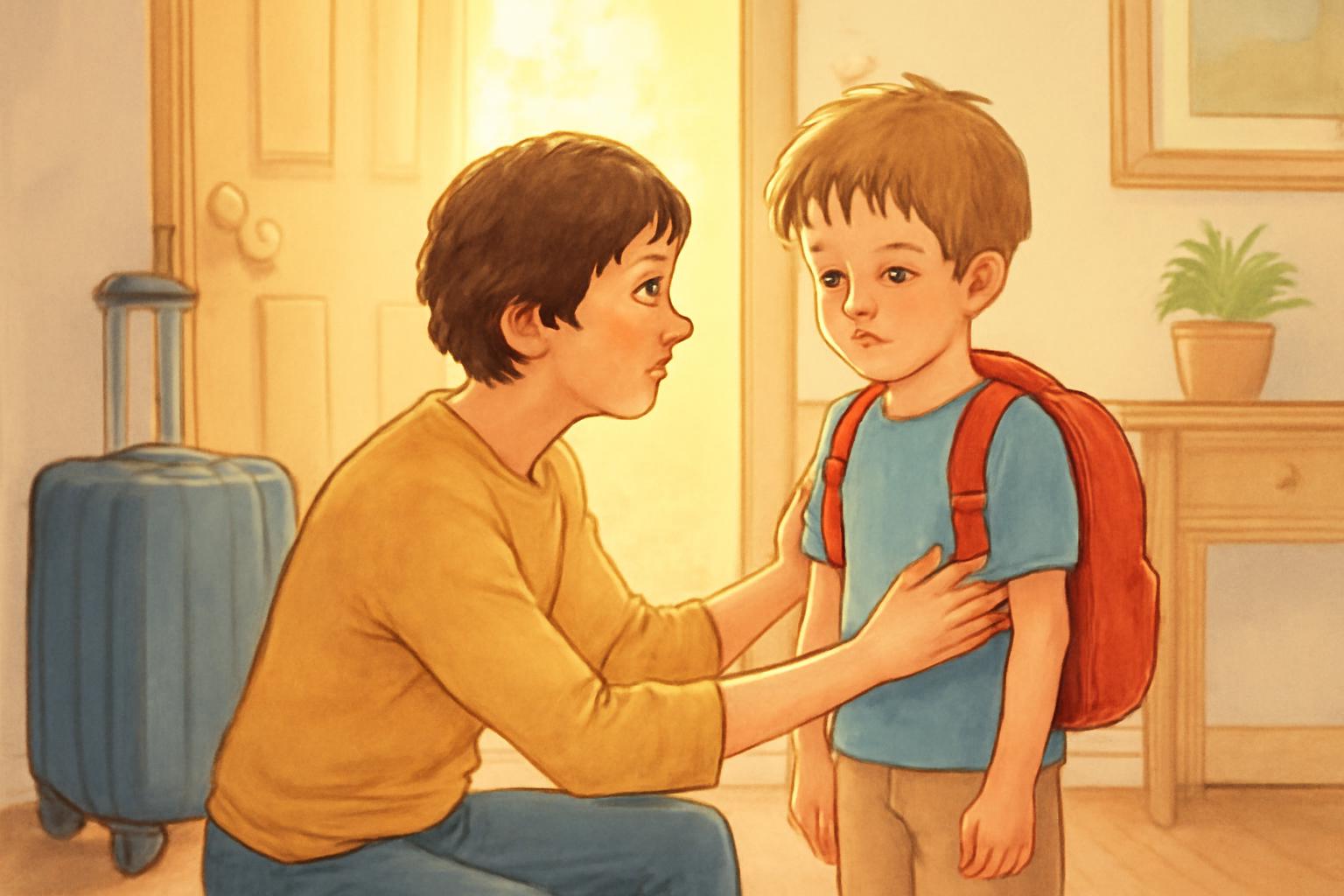
You get home from vacation, everyone is tired, the suitcases are still half-zipped on the floor, and somehow your child is crying because Tuesday feels “too boring.” After a trip, kids can act clingy, cranky, dramatic, or completely thrown off by ordinary life. It is not always about being ungrateful. Often, it is the hard crash from excitement, less structure, later bedtimes, and the strange feeling of going from special days back to regular ones.
Parents feel that whiplash too. One minute you are in vacation mode. The next minute you are back to lunch boxes, chores, work emails, and bedtime. Children do not always know how to make that switch smoothly, especially if the trip changed their sleep or routines.
Rough re-entry after vacation is common, and it usually passes faster when parents expect it. Kids often need a softer landing, not a lecture. A few adjustments can help them settle back into home life without turning the first week back into a battle.
Why This Happens
Vacation changes more than scenery. It changes timing, expectations, stimulation, food, sleep, and how much attention children get from adults. Some kids have been sleeping in the same room as parents, staying up late, eating snacks at odd hours, or bouncing between cousins and activities all day. Even a wonderful trip can overload a child’s nervous system.
That is why the trip home or the first day back can look surprisingly messy. A child who handled the vacation “fine” may fall apart only after it is over. Once the excitement drops, the body starts showing the wear and tear. That can look like whining, tears, argumentativeness, clinginess, or total resistance to normal routines.
There is also an emotional piece. Kids often struggle with transitions because they are leaving one version of life and re-entering another. If your child tends to have a hard time with any kind of shift, this guide on parenting through difficult phases offers a useful bigger-picture framework. Vacation is a fun transition, but it is still a transition.
Some children also feel the letdown more intensely than adults expect. They may miss grandparents, cousins, camp friends, the beach, the hotel pool, or simply having you more available. That mood can come out sideways. It may sound like complaints about unpacking or homework when underneath it is really, “I don’t want this good thing to be over.”
What Parents Can Do
Name the shift out loud
Children often do better when adults say the obvious thing nobody has said yet. Try: “It can feel weird coming home after a trip,” or “Your body might be tired even if your brain still wants vacation.” Naming the transition lowers shame. It tells your child that you see what is happening and that they are not the only one feeling off.
This matters because kids often act first and understand later. If you name the feeling calmly, you give them a safer way to organize the experience than just melting down in the kitchen.
Bring back rhythm before you bring back intensity
If possible, do not make the first day home the day you demand perfect behavior, a spotless room, full homework enthusiasm, and instant emotional flexibility. Start with the basics: food, sleep, shower or bath, fresh clothes, and a predictable order to the day. Rhythm usually helps children settle faster than a lot of reminders.
Think in simple sequences: unpack one bag, eat a familiar meal, take a shower, read, bed. If mornings and evenings tend to go off the rails after any disruption, parenting through difficult phases can help you stay steady while routines are being rebuilt.
Expect some emotional spillover
Kids do not always announce, “I am overstimulated and sad the trip is over.” More often they yell at a sibling, refuse to put shoes on, or dissolve over the wrong color cup. That does not mean you should allow rude behavior. It means you can correct the behavior while still understanding the state behind it.
You might say, “You are allowed to be disappointed that vacation is over. You are not allowed to scream at your brother.” That kind of response holds the boundary without dismissing the feeling. If your child tends to get swamped by transitions and emotions together, supporting your child through big emotions is a helpful companion read.
Make reconnecting part of the return home
Sometimes what helps most is not more talking but a small moment of reconnection. Sit with your child while they look at trip photos. Let them tell the funniest part of the trip at dinner. Make space for one story that starts with “Remember when…?” That small ritual helps children move from loss into memory.
When kids feel rushed to “just get over it,” they often dig in harder. A few minutes of reflection can make it easier to move on because they feel like the trip was honored instead of abruptly shut down.
Use a shorter runway back into responsibilities
If the schedule allows it, ease back in. Maybe the afternoon after vacation is for groceries, laundry, and early bedtime—not a packed social plan. Maybe homework happens after a snack and a little decompression, not the second your child walks in the door. Even one lighter day can help.
This is especially true for children who already get overwhelmed by transitions. If your child becomes more controlling or argumentative when life feels chaotic, some of the strategies in getting through power struggles can help you avoid turning re-entry stress into constant conflict.
Rebuild sleep quickly and kindly
Vacation sleep drift is one of the biggest reasons kids struggle after a trip. Later bedtimes, sharing rooms, sleeping in the car, extra screens, and skipped naps can all catch up with them. You do not need a military reset, but you do need a clear one.
Go earlier than usual if your child is clearly fried. Keep bedtime simple. Avoid turning the first night back into a negotiation marathon. Tired children often look defiant when they are really just running on fumes. If your child’s emotions get sharper when routines change, supporting your child through big emotions may give you a few extra regulation ideas for the transition week.
Common Mistakes to Avoid
Assuming kids should be cheerful because the trip was fun. Children can love a vacation and still have a rough time when it ends.
Overloading the first day back. Too many tasks, errands, and expectations can turn normal re-entry stress into a full family blowup.
Taking every complaint personally. “Home is boring” or “I hate school” may be sloppy language for a child who is tired, sad, and dysregulated—not a serious verdict on family life.
Going from vacation mode to hard-control mode. If the trip was loose and flexible, an abrupt snap back to strictness can trigger more resistance than cooperation.
Ignoring your own transition. Parents who are exhausted, behind, and irritated usually have less patience for the behavior that shows up after a trip. If you can simplify your own load a little, it helps everybody.
Simple Plan to Try This Week
Day 1: Pick three anchors
Choose the three things that matter most for re-entry: regular meals, an early bedtime, and one predictable family check-in or quiet activity. Keep the list short.
Day 2: Let your child tell the story
Invite them to share their favorite part of the trip, draw it, or look at photos together for ten minutes. This helps them process the ending instead of only feeling it.
Day 3: Rebuild one routine fully
Do not try to fix the whole week at once. Just lock in one routine, like the bedtime sequence or the after-school routine.
Day 4: Watch for tired behavior
Notice whether whining, arguing, or tears spike at certain times. Often the pattern is less about attitude and more about exhaustion or overstimulation.
Day 5: Offer one-on-one connection
Ten calm minutes with you can go a long way, especially if your child got lots of group attention on the trip and now feels the drop-off.
Day 6: Keep expectations clear but lighter
Hold the main household rules, but skip extra battles that do not matter this week. Aim for steadiness, not perfection.
Day 7: Notice what is improving
Maybe your child still grumbled, but bedtime was smoother. Maybe they cried after school, but recovered faster. Small signs count because they show the landing is working.
Helpful Tools
You do not need to buy anything to help kids settle after vacation, but a couple of optional resources can help parents think through big transition feelings and smoother communication.
- The Whole-Brain Child is a thoughtful parent resource if you want a clearer picture of why children can seem so reactive during transitions, even after positive experiences.
- How to Talk So Kids Will Listen can be useful if the hardest part of post-vacation re-entry is all the arguing, pushback, and emotional conversations packed into one week.
FAQ
How long does it usually take kids to readjust after vacation?
For many children, the roughest stretch is the first few days. For others, especially after a long trip or major sleep disruption, it may take about a week to feel more like themselves again.
Is it normal for my child to seem more emotional after a fun trip?
Yes. Fun does not cancel out exhaustion, overstimulation, or disappointment that something special ended. Kids can feel all of that at once.
Should I talk about the vacation a lot or move on quickly?
A little intentional reflection usually helps more than pretending the trip never happened. Let your child remember it, then gently guide them back into normal routines.
What if my child refuses school or camp after vacation?
Stay calm, validate that transitions can feel hard, and return to the routine as steadily as you can. If the resistance is intense or keeps happening well beyond the transition week, it may be worth looking at whether school stress, separation anxiety, or exhaustion is also part of the picture.
How do I know whether this is just re-entry stress or something bigger?
If the behavior eases as sleep and routines come back, it is probably normal re-entry stress. If your child stays unusually anxious, withdrawn, or overwhelmed for more than a couple of weeks, it may be worth checking in more closely with their teacher or pediatrician.
Coming home after vacation can feel messy because children are not just unpacking clothes. They are unpacking stimulation, disappointment, excitement, tiredness, and the shift back into ordinary life. If you stay calm, rebuild the basics, and give the transition a little room, most kids do settle. And if your child tends to struggle anytime life changes shape, this guide on parenting through difficult phases is a good next step.