
You say, “Five more minutes,” and your child hears, “Time to become a tiny lawyer.” Suddenly there is bargaining, complaining, one last level, one last video, one last anything, and a simple transition turns into the loudest part of the evening. Screen-time battles are exhausting partly because they usually hit when everyone is already running low on patience.
Most parents are not struggling because they forgot screens exist. They are struggling because devices are designed to be sticky, kids do not love stopping fun things, and real life often depends on screens at the exact moment parents are busiest. The issue is rarely just the tablet. It is the collision between a highly engaging activity and a child who does not yet have great impulse control.
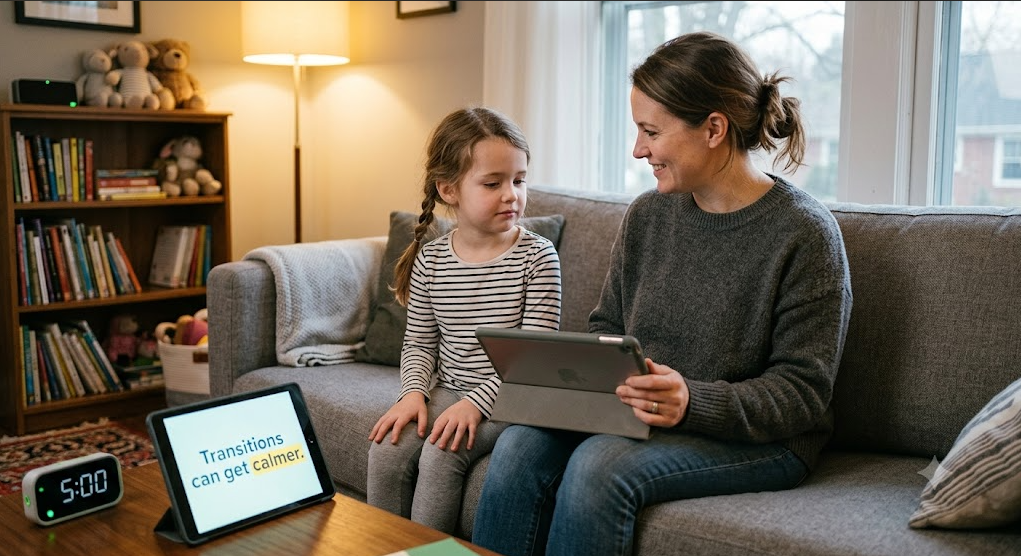
The good news is that screen-time battles can get calmer. Not perfect. Calmer. When parents shift from arguing about every ending to building predictable routines around screens, kids usually fight less and learn what to expect. That matters more than winning one dramatic showdown on a Tuesday night.
Why This Happens
For kids, screens are not just entertainment. They are immediate, colorful, fast-moving, and rewarding. A child who can leave a half-finished sandwich on the table without a second thought may still melt down over pausing a game because the game is giving their brain a lot more stimulation than the sandwich did. That does not make your child spoiled. It makes them human, and still developing.
Transitions are another big reason these battles flare up. Many children do not struggle with screens the whole time they are using them. They struggle with stopping. The hard moment is the switch from “I am doing exactly what I want” to “Now I need to brush teeth, do homework, or get in the car.” If your home tends to hit conflict during transitions in general, this guide on getting through power struggles can help you spot the patterns underneath the argument.
Another reason screen-time fights get so intense is that parents often set limits while multitasking. You are making dinner, answering a question from another child, checking the time, and trying to remember whether you already warned them once. Kids pick up on that inconsistency fast. When the line moves around, they keep testing it.
Emotions matter too. A child who is hungry, tired, bored, anxious, or coming down from a long school day may lean harder on screens because screens feel easy. Then when the device goes away, all those unspent feelings come rushing back. That is one reason screen-time battles can look bigger than the actual issue. Sometimes the tablet is just where the feelings land. If that sounds familiar, supporting your child through big emotions is worth a read too.
What Parents Can Do
Set the rule before the screen turns on
Children handle limits better when the limit is clear up front. Instead of deciding in the middle, try saying, “You can watch one episode while I cook,” or “You can play until the timer rings, then it is bath time.” The goal is to remove the surprise. Kids may still dislike the ending, but they are not also feeling tricked by it.
Be specific. “A little while” is vague. “Until 5:30” or “for twenty minutes” is easier to understand. A lot of battles shrink when expectations stop wobbling.
Use a transition bridge, not a sudden yank
Many kids do better with a runway. Give a five-minute warning, then a one-minute warning, and tell them what comes next. “One more minute, then shoes and car.” “Five more minutes, then we are setting the table.” Predictability lowers panic.
It also helps to connect the ending to something concrete instead of saying “because I said so” every time. You are not negotiating. You are orienting them. For some families, setting healthier screen-time limits gets easier once the whole day has a more predictable rhythm around when screens usually fit.
Keep the rule boring and repeatable
Parents sometimes get pulled into debating whether this particular video counts, whether today should be different, or whether the child has technically been “good enough” to earn more. The more emotional and creative the rule becomes, the more arguments it invites. Boring rules are your friend.
That might look like:
- Screens happen after homework, not before.
- Screens stay in the living room.
- One show after dinner, then off.
- No screens during the fifteen minutes before leaving the house.
Simple rules are easier for kids to remember and easier for tired parents to enforce.
Coach the exit, not just the limit
Some children need help with what to do right after the screen ends. If you turn something off and then leave them standing in the emotional wreckage, the protest often restarts. Give the next step quickly and clearly: “Tablet is done. Now you can help me stir the pasta or build with blocks at the table.”
This is especially helpful for younger kids and for children who spiral when an activity ends abruptly. Think of it as handing them a bridge instead of a cliff.
Talk about screens at calm times
Do not save every screen conversation for the exact second your child is upset. Bring it up when nobody is fighting. “I’ve noticed stopping the tablet feels really hard lately. Let’s make a plan that helps.” That kind of calm conversation invites cooperation instead of defense.
If your child is old enough, ask what makes stopping hardest. Is it losing progress? Not knowing when they will get another turn? Feeling bored afterward? Those answers can help you make smarter rules instead of harsher ones. If you want better language for these talks in general, effective communication with kids can help you keep the conversation firm without turning it into a lecture.
Look for the battles behind the battles
If screens trigger a fight every single day, the problem may not be only screens. Maybe your child always crashes right before dinner. Maybe homework feels overwhelming, so the tablet becomes the hill they die on. Maybe transitions are rough across the board, not just with devices. Maybe the current limit is unclear enough that your child keeps hoping the answer will change.
That is why it helps to zoom out. You are not just trying to reduce minutes on a device. You are trying to build a routine your child can actually live inside.
Common Mistakes to Avoid
Turning every ending into a debate. The more you argue about each case, the more kids expect an opening. Calm, consistent responses work better than long explanations.
Using screens as the only rescue tool. If screens are the only reliable calm-down option, kids can get more rigid when that option disappears.
Making huge promises you cannot maintain. “No screens ever again” usually collapses fast. Small, sustainable limits beat dramatic resets.
Shaming your child for wanting screens. Screens are appealing. That is not a moral failure. The goal is to teach balance and transitions, not to make a child feel bad for liking something fun.
Waiting until you are already angry. Limits set in the middle of your own frustration often come out harsher, fuzzier, or less consistent than you intended.
Simple Plan to Try This Week
If screen-time battles have been hijacking your day, try this realistic reset for one week:
1. Pick one screen window to fix first
Do not overhaul every device habit at once. Start with the hardest spot, like after school or before bed.
2. Write one clear rule
Example: “One show after dinner,” or “Tablet only after homework for twenty minutes.” Keep it short enough that everyone in the house can repeat it.
3. Add a timer and a warning
Give a five-minute warning and a one-minute warning every time. Consistency matters more than creativity here.
4. Plan the next step in advance
Before screen time starts, know what your child will do after it ends: snack, shower, Lego, reading, helping cook, or getting shoes on.
5. Stay calm and brief during the protest
You can say, “I know you’re disappointed. Screen time is done.” Then move to the next step. Calm does not mean permissive. It means you are not feeding the fire.
6. Review after three days
Ask yourself what improved. Did the warning help? Was the time slot wrong? Did the transition work better when there was a snack waiting? Adjust the plan, not just the volume of the argument.
Helpful Tools
You do not need to buy your way out of a screen-time fight, but a couple of optional tools can make limits easier to explain and conversations easier to start.
- The Whole-Brain Child is a helpful parent read if you want a calmer, more developmental lens on why children get stuck and how to respond without escalating.
- Conversation Cards for Kids can be useful for screen-free connection time, especially if your child tends to protest because they are not sure what to do or say after the device is put away.
FAQ
Should kids have screen time every day?
That depends on your child, your schedule, and how screens affect behavior, sleep, and routines. The bigger issue is usually not whether screens happen daily, but whether the pattern is predictable and manageable.
Why does my child act fine during screen time and melt down when it ends?
Because the hard part is often the transition, not the activity itself. Screens are engaging, and many children need help switching gears when something enjoyable stops.
Is it better to use time limits or activity-based limits?
Either can work. Some families do better with “one episode” or “until dinner” because it feels concrete. Others do well with a timer. Use the version you can enforce consistently.
What if my child screams every time I turn the screen off?
Stay calm, keep the limit short and predictable, and focus on the routine around the ending. If the reaction is intense every time, examine hunger, fatigue, and whether the next step is too abrupt or unstructured.
How do I reduce screen battles without being the bad guy all day?
Make the rule clearer, the transition gentler, and your response shorter. You do not have to become a constant enforcer when the routine itself is doing more of the work.
Screen-time battles can make a normal day feel weirdly personal, like your child is fighting you over every limit on purpose. Usually they are not. They are struggling with stopping, with transitions, and with feelings they do not yet manage smoothly. Keep the rule clear, keep the response steady, and aim for repeatable calm instead of dramatic victory. And if you want to zoom out beyond one specific fight, this broader guide to managing screen time can help you build a healthier overall picture.