
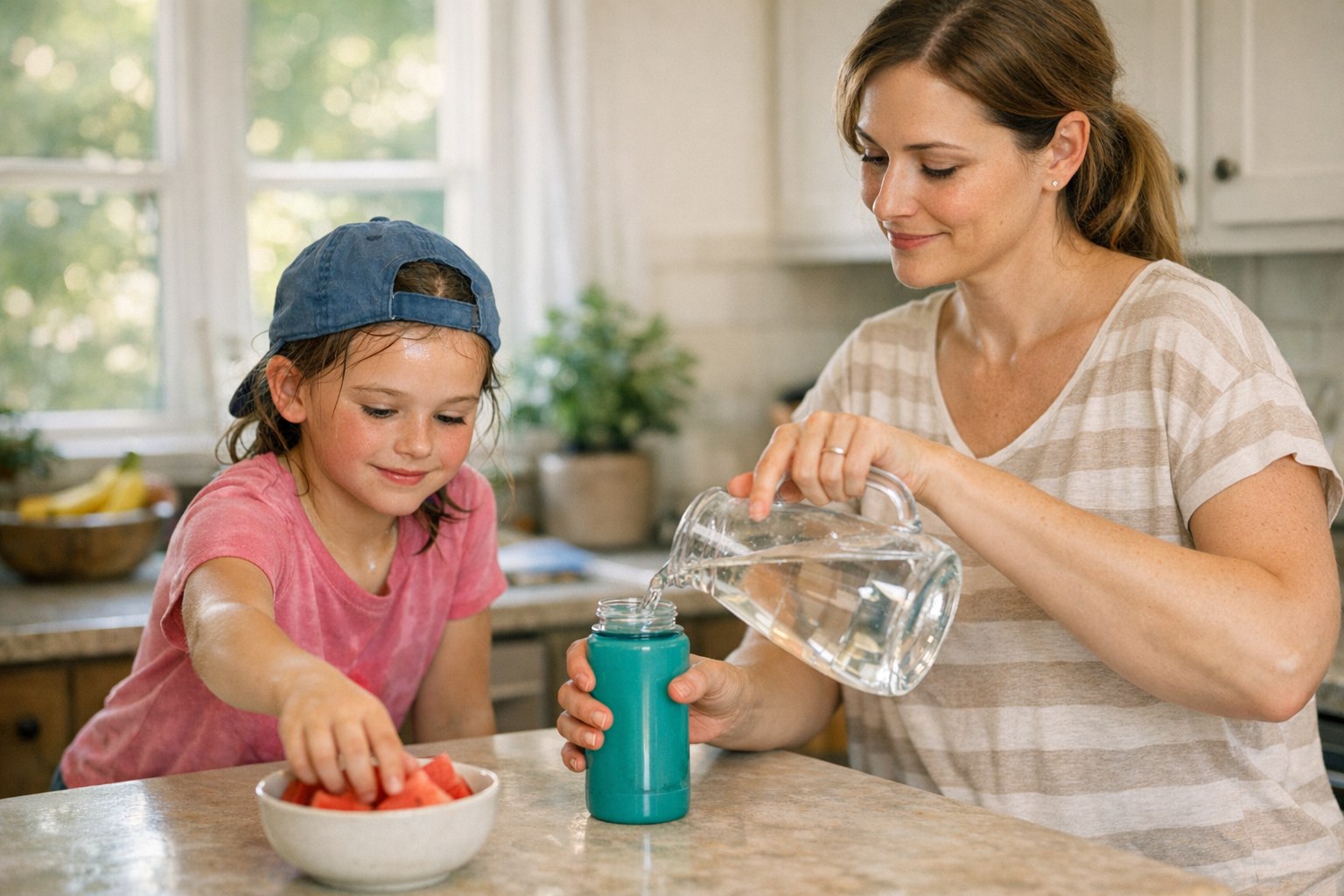
Some kids will run around the park for an hour, come home sweaty and flushed, and still insist they are “not thirsty.” Other kids take two sips at breakfast, forget their water bottle at school, and then hit late afternoon like a wilted houseplant.
If getting your child to drink enough water feels like one more thing you have to track, remind, and negotiate, you are not imagining it. A lot of kids do not notice thirst until they are already tired, cranky, or complaining of a headache. Others simply get too busy to stop. And some children resist plain water because it feels boring compared with everything else around them.
The good news is that helping kids stay hydrated usually does not require a complicated plan. It works better when water becomes part of the rhythm of the day instead of a constant argument. Small cues, easy access, and a few predictable habits often do more than repeated reminders ever will.
If your family is already working on everyday wellness habits, this guide on helping kids build healthy habits fits nicely alongside a hydration routine.
Why This Happens
Kids are often not great at reading their bodies in real time. A preschooler who is building with blocks or a second grader racing through recess is not thinking, “I should pause and drink a few ounces of water.” They are thinking about the tower, the game, or getting back to their friends.
Some children also confuse thirst with something else. They may say they are tired, hungry, hot, or just suddenly out of sorts. Younger kids especially need adults to connect those dots for them.
There is also the convenience factor. If water is in the kitchen and your child is in the backyard, upstairs, or halfway through homework, drinking can feel like an interruption. Kids often choose the easier option, which is doing nothing.
And then there is preference. Some children genuinely do not enjoy plain water very much. That does not mean they need sugary drinks all day. It usually means parents need to make water more visible, more available, and more tied to daily routines.
This is why hydration works best when it is built into predictable moments. Families who already rely on routines may notice the same pattern described in creating healthy daily routines: children do better when the expectation is clear and repeated often enough to feel normal.
What Parents Can Do
Keep water easy to reach
The simplest fix is often physical, not motivational. Put water where your child already is. A filled bottle by the backpack. A cup on the table during homework. A bottle within reach in the car. A small cup near the spot where your child usually eats a snack.
When water is visible, kids are much more likely to drink it without a debate.
You can say:
“Your water is right here if you want a few sips before we start.”
That lands a lot better than:
“How many times do I have to tell you to drink water?”
Tie drinking to normal parts of the day
Children remember habits more easily than random instructions. Instead of reminding all day long, attach hydration to things that already happen.
- After waking up
- With breakfast
- Before leaving for school or camp
- After outdoor play
- At snack time
- When they get home
- With dinner
That creates a pattern your child can learn. If mornings are chaotic, adding hydration to a calmer routine point can help. This article on how to build a morning routine that energizes kids and parents has a lot of overlap with the same kind of cue-based thinking.
Offer hydrating foods too
Water matters, but it is not the only way kids stay hydrated. Fruit, vegetables, soups, yogurt, and smoothies can all help. This is especially useful for kids who are reluctant drinkers.
Easy options include:
- Watermelon
- Strawberries
- Cucumber slices
- Orange wedges
- Bell peppers
- Yogurt with fruit
- Homemade smoothies
If snack time is where your child is most willing to eat and drink, these ideas pair well with simple and healthy snack ideas kids will love.
Make water more appealing without turning it into dessert
Not every child wants plain cold water from a plain cup. Sometimes small changes help:
- Use a straw cup or bottle
- Let your child pick a favorite bottle color
- Add ice if they like cold drinks
- Try fruit-infused water with orange, strawberry, or cucumber
- Serve water in a fun but practical cup at meals
The goal is not to make water exciting every single time. It is to remove little barriers that make your child ignore it.
Notice the patterns behind the resistance
Sometimes a child who “never drinks water” actually drinks fine at home but not at school. Or they do okay in winter and fall apart in the heat. Or they are so busy playing that they do not stop unless an adult pauses the action.
Look for the pattern instead of labeling your child as difficult.
You might notice:
- They avoid drinking because they do not want to use the school bathroom
- They forget their bottle in the classroom
- They need a drink right before soccer but not during free play
- They drink better when everyone else is drinking too
Once you know the pattern, the fix gets easier.
Use calm reminders, not pressure
Most kids do better with brief reminders than lectures. If your child already feels controlled about food, sleep, school, and screen time, they may push back harder when drinking becomes another battle.
Try simple prompts like:
- “Take a few sips before we head out.”
- “Your body worked hard outside. Let’s get some water.”
- “Water break, then we can keep going.”
These are matter-of-fact. They treat hydration like brushing teeth or washing hands: important, normal, and not up for a dramatic showdown.
If you want more practical ideas in the same lane, Hydration Hacks for Kids offers additional ways to make drinking water easier without overcomplicating it.
Common Mistakes to Avoid
Waiting until your child is already worn out
If the first water reminder comes after a long stretch of sun, sports, errands, or camp, you are playing catch-up. Kids usually do better with steady little chances to drink before they feel lousy.
Turning it into a power struggle
The more pressure adults use, the more some kids dig in. That does not mean you stop offering water. It means you keep the tone neutral. Calm consistency beats repeated nagging.
Assuming juice solves the problem
Juice, sports drinks, and flavored beverages can make kids more willing to drink, but they can also crowd out plain water if they become the default. It usually helps to make water the usual option and keep other drinks occasional.
Using one giant reminder instead of many small opportunities
“You need to drink more water today” is too vague for most children. Specific moments work better than broad advice. Breakfast. Car ride. After recess. After bike riding. With snack.
Forgetting that parents model this too
If adults are skipping water all day and then suddenly asking children to hydrate, kids notice the mismatch. Drinking water together works surprisingly well. A lot of kids copy what they see more than what they hear.
Simple Plan to Try This Week
If you want a realistic reset, keep it small for seven days.
Step 1: Pick one bottle or cup your child likes
Do not overthink this. Choose something easy to open, easy to wash, and easy to spot in the house or backpack.
Step 2: Build in four hydration moments
Start with just four:
- After waking up
- Before leaving the house
- After active play
- With dinner
That is enough to create momentum without making the whole day feel managed.
Step 3: Add one hydrating snack daily
Watermelon after camp. Cucumber slices with lunch. Strawberries after school. A smoothie with breakfast. Pick one easy win.
Step 4: Use the same short reminder language
Choose one phrase and repeat it all week:
“Water break first, then back to playing.”
Consistency helps kids recognize the expectation faster than long explanations.
Step 5: Notice what improved
By the end of the week, ask yourself:
- Was my child less cranky after school?
- Did they ask for water on their own at least once?
- Did the routine reduce reminders?
- Did a certain bottle, snack, or time of day help most?
You are looking for progress, not perfection.
Helpful Tools
Optional tools can make hydration easier, especially for kids who forget to drink when they are busy.
- Simple Modern Kids Water Bottle – A dedicated water bottle can help kids keep water within reach at school, in the car, or during outdoor play.
FAQ
How do I know if my child is not drinking enough water?
You may notice they seem unusually tired, complain of a dry mouth, get irritable after active play, or come home with a still-full water bottle every day. Mild dehydration can look like a child who is simply off.
What if my child says they do not like water?
Start by changing the presentation before assuming they never will. Try colder water, a straw bottle, ice, or fruit-infused water. Many kids accept water more easily when it feels familiar and easy to drink.
Should I offer sports drinks?
For most everyday situations, plain water is enough. Sports drinks are usually unnecessary for regular school days and casual play. If your child is very active for long stretches in intense heat, talk with your pediatrician if you are unsure what is appropriate.
Can food really help with hydration?
Yes. Foods with high water content can support hydration, especially for kids who are inconsistent drinkers. Fruit, vegetables, yogurt, soups, and smoothies can all help.
How can I help my child remember to drink water at school?
Pack a bottle they like, remind them when they leave home, and connect drinking to set school moments such as snack time, lunch, and recess. A simple routine is easier to remember than a vague instruction to drink more sometime later.
Conclusion
Helping kids stay hydrated usually works best when it stops being a constant reminder and starts becoming a quiet part of daily life. A bottle within reach, a few dependable moments to drink, and easy hydrating foods can go a long way.
If your child tends to do better with predictable rhythms, this guide on creating healthy daily routines can help you make hydration one more habit that feels simple instead of stressful.