
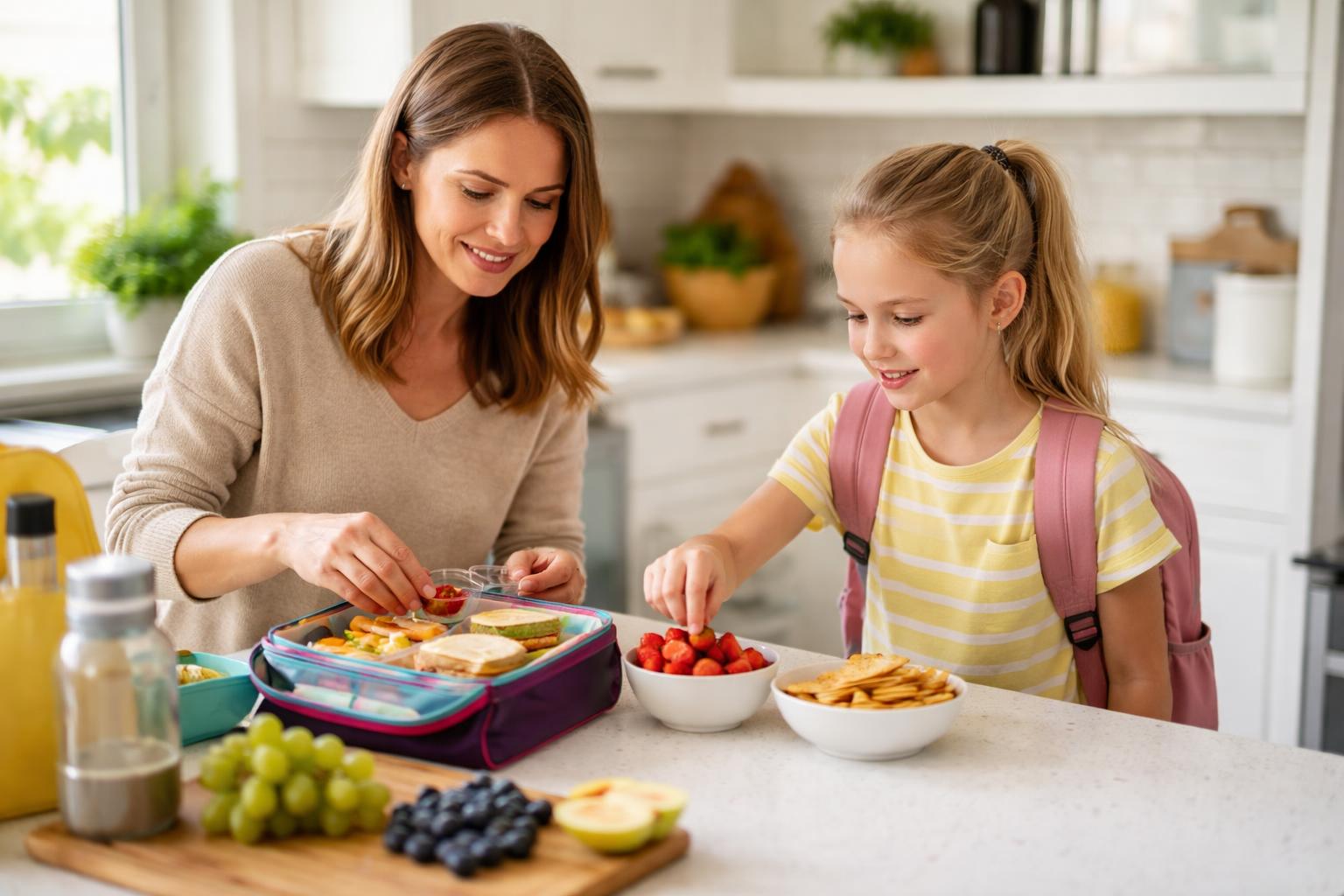
Healthy Lunch Ideas for School
It is 9:42 p.m., the dishwasher is running, and you are staring into the fridge trying to invent one more school lunch that will come home less than 80 percent untouched. One child suddenly hates sandwiches, another says the strawberries got “weird,” and somehow packing lunch starts feeling like a daily referendum on whether you are doing enough.
School lunches can get surprisingly emotional for parents. You want something filling, something your child will actually eat, and something you can pack on a normal Tuesday without turning the kitchen into a meal-prep show. Add a rushed morning, a picky phase, and a lunchbox that came home full yesterday, and it is easy to feel stuck in a loop of the same three options.
The good news is that a healthy school lunch does not have to be fancy, perfectly balanced down to the carrot stick, or made from scratch every single day. Most kids do better with familiar foods, simple combinations, and portions that feel manageable. If your family has also been working on bigger wellness habits, this guide on helping kids build healthy habits pairs well with a lunch routine that is realistic enough to repeat.
Why This Happens
Kids usually do not reject lunch because parents are doing it wrong. They reject it because school is busy, lunch periods are short, and children often eat differently away from home than they do at the kitchen table. A lunch your child likes on Saturday can suddenly feel less appealing when they have ten minutes to open containers, talk to friends, and decide what to start with.
Appetite also shifts more than many adults expect. Some kids are not very hungry early in the day. Some burn through energy and want a larger lunch. Some get overwhelmed by too many choices and end up eating only the easiest item in the box. If mornings already feel rushed, building a morning routine that energizes kids and parents can help because smoother mornings usually lead to more thoughtful lunch packing too.
There is also the pressure factor. When parents are worried a child is not eating enough, lunch can become a mini performance. Kids pick up on that quickly. They may push back harder, request only “safe” foods, or refuse healthy options simply because the whole topic feels loaded. That is why practical, low-drama consistency usually works better than trying to create the perfect lunch every day.
What Parents Can Do
Build lunch around a simple formula
Instead of reinventing the wheel, use a repeatable pattern: one main item, one fruit or vegetable, one crunchy side, and one extra. The main item might be a turkey roll-up, pasta salad, quesadilla wedges, mini bagel with cream cheese, or hummus and pita. The fruit or vegetable might be grapes, cucumbers, strawberries, or snap peas. The crunchy side could be crackers or pretzels. The extra might be cheese cubes, yogurt, or a homemade muffin.
That kind of structure helps because you are not asking yourself, “What should lunch be?” You are just filling four slots. It also makes it easier to notice patterns. If your child always eats the fruit first and ignores the sandwich, you have useful information without turning it into a battle.
Keep portions smaller than you think
Many parents pack lunch the way they wish their child would eat, not the way their child actually eats at school. A giant sandwich, a full cup of vegetables, and three sides can feel overwhelming. Smaller portions look doable. Kids are more likely to eat half a sandwich cut into shapes or sections than one thick stack they have to wrestle with between conversations.
Small portions also let you vary the box without wasting as much food. If lunch keeps coming home untouched, scale down before you assume your child hates everything. A manageable lunch often gets eaten more consistently than an ambitious one.
Use familiar foods in slightly different ways
Healthy lunches do not need to be exciting in the adult sense. Most children appreciate predictability. If your child likes turkey sandwiches, try turkey pinwheels. If they like fruit and yogurt at home, send yogurt with berries and granola on the side. If they eat cheese and crackers after school, that can become lunch with cucumber slices and apple wedges.
This is also where parents can quietly widen variety over time. You do not need a dramatic “eat the rainbow” speech. Just keep putting one familiar item next to one slightly less familiar item. If you need more easy produce ideas, these simple ways to add more fruits and vegetables can make healthy options feel more ordinary and less forced.
Let your child help in one small way
Children do not need full control over lunch to benefit from some ownership. A simple choice works well: “Do you want apple slices or grapes?” “Crackers or pita?” “Turkey roll-up or pasta today?” Too many options can overwhelm kids, but a couple of controlled choices can increase buy-in.
Older kids can help prep a few lunch staples after dinner, such as washing berries, portioning pretzels, or filling small containers. That makes mornings easier and gives children a little connection to what ends up in the lunchbox.
Think practical, not perfect
A healthy lunch only works if your child can open it, recognize it, and eat it in the time they have. Foods that spill, need reheating, or require too much assembly are more likely to come home uneaten. Pack foods in ways that make school eating easier: peeled oranges, halved grapes for younger children, sandwiches cut into smaller pieces, and containers your child can actually manage.
If you are also trying to make snack choices a little better overall, this roundup of healthy snack ideas kids will love can give you more mix-and-match options without making lunch feel like a nutrition project.
Common Mistakes to Avoid
Packing for your ideals instead of your child. A lunch full of worthy foods is not very helpful if your child reliably eats only two bites. Start with what is realistic, then build from there.
Changing everything at once. If your child is in a picky phase, replacing every familiar food with healthier alternatives usually backfires. Keep some dependable foods in the mix while you introduce variety slowly.
Overpacking. A stuffed lunchbox can make children feel rushed or shut down before they begin. Smaller amounts often work better than bigger expectations.
Using guilt as motivation. Comments like “I worked hard on that” or “You have to eat the healthy stuff first” can make lunch feel tense. Information helps more than pressure.
Ignoring the routine around lunch. Kids who leave home frazzled often arrive at school already off-balance. A smoother evening and morning setup matters more than many parents think. If the whole day feels choppy, creating healthy daily routines can support better eating habits without making lunch the only focus.
Simple Plan to Try This Week
If lunch packing has started to feel repetitive or frustrating, try this for the next five school days:
- Pick three main lunch options your child usually accepts, such as roll-ups, mini sandwiches, pasta, or quesadilla wedges.
- Choose two fruits and two vegetables for the week so you are rotating, not reinventing.
- Use the same lunch formula each day: main item, produce, crunchy side, extra.
- Let your child choose one part of the lunch each evening from two parent-approved options.
- Pack slightly smaller portions than usual for three days and see what actually comes home.
- Notice patterns without commentary. Are soft foods coming back? Is fruit always eaten? Is lunch easier on days when breakfast was stronger?
- Adjust one thing at a time next week instead of doing a complete lunchbox overhaul.
This kind of plan works because it lowers decision fatigue for parents and lowers pressure for kids. Over time, consistency usually gives you better information than constantly trying new lunch ideas. And when the routine feels calmer, healthy eating is easier to support in a way that actually lasts.
Helpful Tools
An optional tool that can make school lunches easier is the Bentgo Kids Lunch Box. A compartment-style lunch box can help keep foods separate, which matters to some kids more than parents expect. It can also make portioning simpler when you are trying to offer a balanced lunch without overpacking.
FAQ
What should a healthy school lunch include?
A good everyday lunch usually includes a main food with some staying power, plus produce and one or two simple sides. It does not need to be perfect. Think balance and repeatability, not lunchbox art.
What if my child refuses vegetables at school?
Keep portions tiny and pair them with foods your child already accepts. Vegetables may still take time to catch on, especially in a noisy lunchroom. Repeated low-pressure exposure works better than forcing bigger servings.
Should I pack dessert in the lunchbox?
That depends on your family. Some parents include a small sweet without making it a big deal. Others skip it. The bigger goal is avoiding a setup where lunch becomes all about earning or withholding certain foods.
How can I make lunches faster in the morning?
Prepping a few staples the night before helps a lot. Wash fruit, portion crunchy sides, and decide the main item ahead of time. A short packing routine is usually more sustainable than trying to get creative at 7 a.m.
What if my child comes home hungry every day?
That may mean lunch was too small, too hard to eat quickly, or not filling enough. Ask what they had time to eat and what felt easy or hard. Sometimes a more satisfying main item makes a bigger difference than adding more small sides.
Healthy school lunches do not have to look impressive to do their job. If your child eats a simple, familiar lunch that gives them enough energy to get through the afternoon, that counts. Start with what is practical, repeat what works, and tweak one small thing at a time. For many families, lunch gets easier not when parents become more creative, but when they become more consistent.