
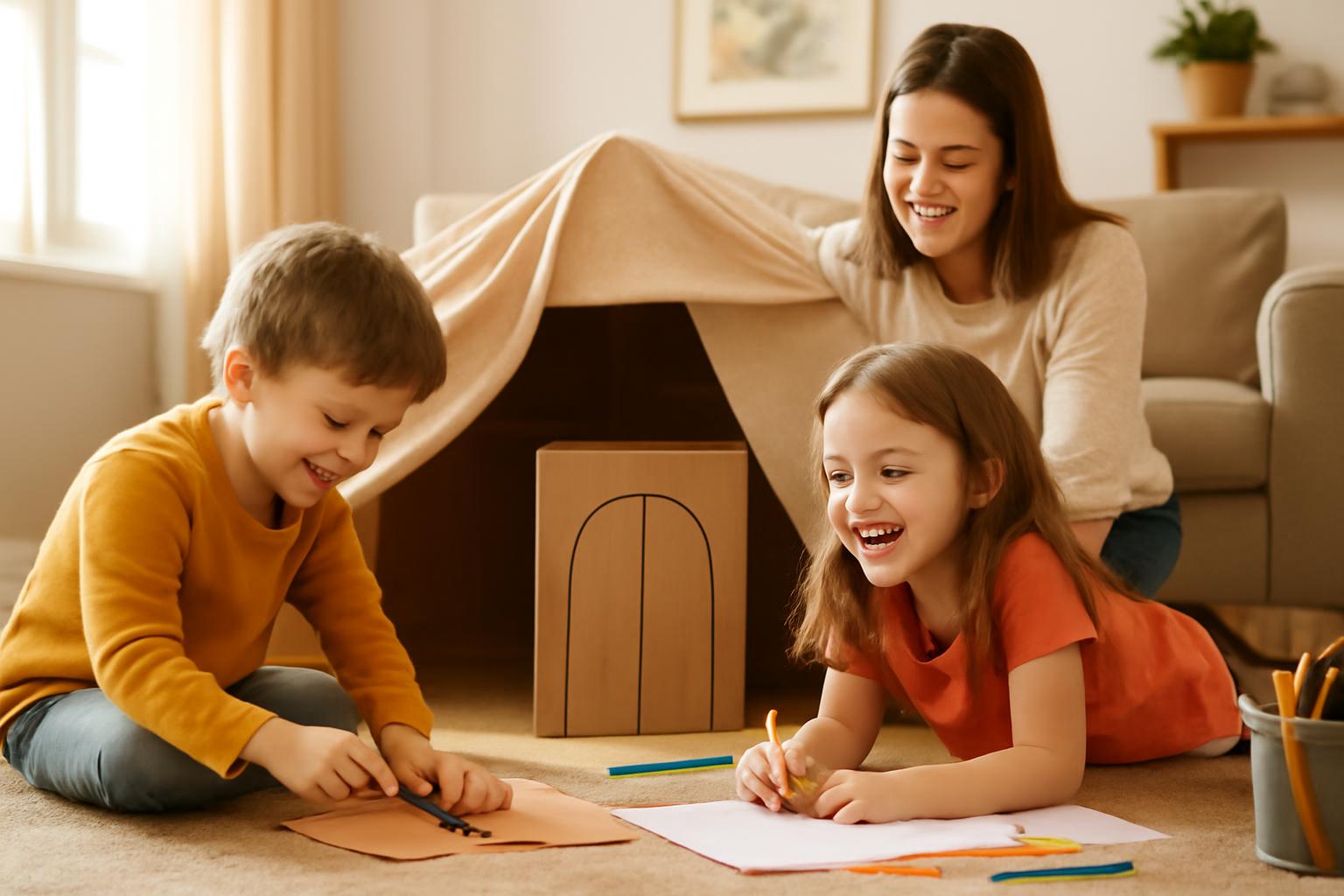
The couch cushions are on the floor, one child is upside down pretending to be a bat, and you have already heard “I’m bored” before lunch. That is usually the moment parents start wondering whether screen time is the only realistic way to survive a long afternoon indoors. It is not. Kids do not always need bigger entertainment. They often just need a better invitation.
Creative indoor activities work best when they are easy to start, flexible enough for different ages, and interesting enough to keep kids engaged for more than four minutes. Parents do not need to turn the house into a preschool classroom or spend the day setting up Pinterest projects that collapse the second glitter touches the table.
The goal is much simpler than that. You want ideas that pull children into making, building, pretending, testing, and moving around in ways that feel fun instead of forced. When an activity leaves room for kids to choose, invent, and change the rules a little, it tends to last longer and create less friction.
Why This Happens
Indoor boredom is not usually about a lack of toys. It is often about energy with nowhere useful to go. Kids can be full of ideas and still seem cranky or aimless when the day feels boxed in. Weather, sick days, school breaks, or plain old cabin fever can make a child restless long before they know how to say, “I need something more interesting to do.”
There is also a big difference between being entertained and being creatively occupied. Passive entertainment fills time quickly, but creative play asks kids to make decisions. They have to choose materials, solve small problems, improvise, and keep going when something does not work the first time. That is good for attention, confidence, and flexibility, but it also means many children need a small push to get started.
Another factor is setup. If an activity looks too complicated, parents avoid it. If it looks too open-ended, some kids freeze and say they do not know what to do. The sweet spot is structure with breathing room. A simple starting point gives children enough direction to begin and enough freedom to make it their own. If your child does better when an activity has a clearer beginning and middle, this guide to encouraging independent play at home can be a helpful companion read.
What Parents Can Do
Start with invitations, not performances
You do not need a grand reveal. A plain tray with tape, paper, cardboard tubes, and markers can be more useful than an elaborate setup. Say something like, “I put out a few things if you want to make a tiny city,” or “Want to build something that can roll?” A low-pressure invitation works better than trying to sell the activity too hard.
Kids often resist when they feel managed. They are more likely to join in when the activity feels like a possibility instead of an assignment.
Use categories that naturally spark imagination
When parents get stuck, it helps to think in categories instead of specific projects. Try rotating through a few reliable types of indoor creativity:
- Build: forts, cardboard houses, marble runs, block towers, or obstacle courses.
- Make: drawing challenges, collages, paper puppets, homemade signs, or simple crafts.
- Pretend: restaurant, doctor’s office, pet rescue, museum, grocery store, or spaceship.
- Experiment: color mixing, sink-or-float bins, baking-soda science, or simple kitchen tests.
- Create movement: hallway bowling, dance freeze games, sock toss, or “cross the lava” paths.
That mix matters because not every child wants to sit and glue things. Some need movement. Some want storytelling. Some want a puzzle to solve. If your child leans toward hands-on discovery, simple science experiments at home can be another good route that still feels playful.
Give one clear challenge
Open-ended play is great, but many kids need a prompt. Try challenges like:
- Build a fort with a doorway and a reading corner.
- Make a creature from recycled materials and give it a name.
- Create a treasure map for the living room.
- Invent a board game using paper, dice, and a toy figure.
- Design a restaurant menu for pretend dinner.
A challenge gives the play some shape without taking over. Once kids are moving, they usually add their own twists.
Let the activity stretch across the day
Parents sometimes kill a good activity by trying to finish it too neatly. A cardboard city does not have to be completed in one sitting. A pretend store can stay open until after snack. A scavenger hunt can turn into map-making and then into storytelling. When possible, let creative play live a little longer. That is often how a ten-minute idea becomes an hour of useful engagement.
If you need more ideas for building easy rituals around shared time, summer bucket list ideas can help you turn occasional play into something more repeatable.
Keep a boredom basket ready
One of the smartest indoor-play tricks is reducing the effort it takes to begin. Keep a basket or bin with a few dependable materials: painter’s tape, index cards, markers, child-safe scissors, paper, stickers, foil, cardboard scraps, and clothespins. You do not need a huge collection. You just need enough variety to make a few combinations possible.
When materials are already together, it becomes easier to say yes before you talk yourself out of the mess.
Use creativity to redirect rough afternoons
Some indoor days go off the rails because everyone is tired and touchy. In those moments, aim lower. Do not introduce a complicated group project that requires patience and sharing. Pick something forgiving: sticker scenes, blanket forts, draw-your-own-comic pages, or a make-believe movie theater with paper tickets. Creative activities are most helpful when they match the mood of the room instead of fighting it.
If the weather is the reason everyone feels trapped, family-friendly exercises to keep everyone active at home can help burn off some of that indoor energy.
Common Mistakes to Avoid
One common mistake is overcomplicating the setup. Parents spend twenty minutes arranging supplies, then feel annoyed when the child loses interest in five. Simpler usually wins. Put out fewer materials, offer one challenge, and let the child take it from there.
Another mistake is correcting too much. If the puppet looks odd, the fort leans, or the drawing does not match the idea in your head, try not to jump in with fixes. Creative play loses steam when kids feel evaluated the whole time. Help if they ask. Otherwise, let the weird dragon have six legs and a mailbox on its tail.
It also helps to avoid using indoor activities as a constant rescue mission. Children do not need parents to produce magic on demand every time boredom appears. A short pause before offering help is fine. Sometimes “I bet you can make something with these three things” is enough to get them going.
Finally, do not assume every successful activity has to be educational in a visible way. Pretend play, building, and experimenting all teach something, even when it just looks like a glorious mess. If you want another angle on playful learning without making it feel school-ish, these learning-through-play game ideas can add a few more options.
Simple Plan to Try This Week
If indoor days have started feeling long, repetitive, or screen-heavy, try this realistic one-week reset:
Day 1: Make one small supply bin
Gather paper, tape, markers, cardboard, and anything else you already have. Do not buy a bunch of extras first.
Day 2: Offer one building challenge
Ask your child to make a fort, bridge, pet house, or parking garage. Keep the goal simple.
Day 3: Offer one pretend-play setup
Restaurant, library, doctor’s office, or ticket booth all work well because kids understand the basic script.
Day 4: Try one creative movement game
Use painter’s tape for hop lines, balance paths, or a maze across the floor.
Day 5: Add one science-style activity
Try color mixing, a floating test, or a baking-soda reaction if you want something with a little wow factor.
Day 6: Let your child choose and combine
Maybe the fort becomes a movie theater. Maybe the pretend store also sells handmade art. Combined play is usually where the best ideas show up.
Day 7: Keep the winner
Notice which type of activity held attention best. That becomes your go-to for the next indoor slump.
Helpful Tools
You do not need special gear for creative indoor play, but one flexible art set can make it easier to say yes when inspiration strikes. The Crayola Inspiration Art Case is a useful option for families who want crayons, markers, and drawing supplies in one place instead of scattered in five different drawers. Think of it as a convenience tool, not a magic fix.
FAQ
What if my child says every activity is boring?
That usually means they need help getting started, not that nothing will work. Offer two choices instead of asking an open question. “Do you want to build a fort or make a map?” is easier to answer than “What do you want to do?”
How do I handle different ages at the same time?
Pick activities with layered roles. A younger child can color tickets while an older child sets up the pretend theater. One can stack boxes while the other makes signs. Shared themes work better than identical tasks.
Do creative indoor activities always have to be messy?
No. Tape paths, paper challenges, storytelling jars, flashlight games, and pillow forts can all be low-mess. Mess level depends more on your choices than on the word creative.
How long should an indoor activity last?
There is no perfect number. Ten focused minutes can be great. Some days it stretches into an hour. The goal is not maximum duration. It is meaningful engagement with less nagging and less boredom.
Is it okay if I use screen time too?
Of course. Indoor creativity does not have to replace every screen. It just gives you another option when you want the day to feel more active, imaginative, or connected.
Creative indoor activities do not need to be fancy to work. A few simple materials, a decent prompt, and enough freedom for kids to take over can completely change the mood of an afternoon. If you want another easy at-home idea after this one, this guide to independent play at home is a good next stop for helping kids stay engaged without needing constant entertainment.