
Easy Family Craft Projects
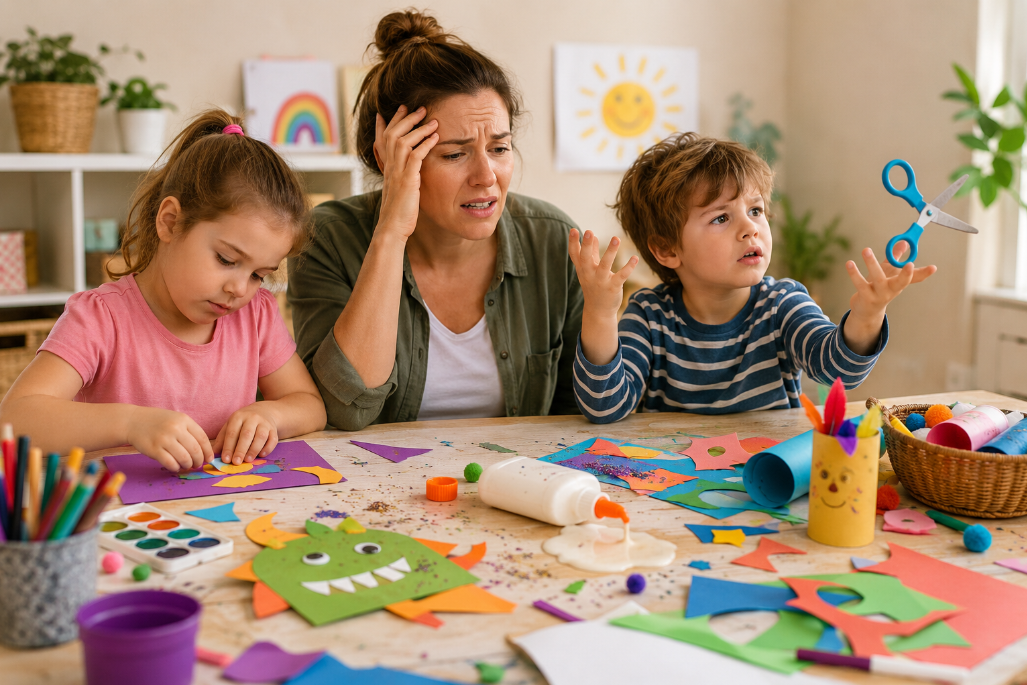
The glue is open, someone cannot find the kid-safe scissors, and your child loses interest right when you finally cleared the table. Family crafts sound wholesome until you are the one wiping paint off a chair. The good news is that craft time gets much easier when the project is simple enough to finish before everyone melts down.
Craft projects are one of those parenting ideas that look easy from the outside. Set out paper, add a cheerful activity, and enjoy the magical family bonding moment. In real life, one child wants a perfect rainbow, another wants to staple everything together, and you are quietly wondering why glitter was ever invented.
The trick is not to plan bigger crafts. It is to plan easier ones. When the project matches your child’s age, attention span, and patience level, craft time becomes a lot more fun and a lot less like crowd control. A good family craft project should be simple to start, forgiving when it gets messy, and satisfying enough that kids feel proud when it is done.
If your family already likes seasonal planning, you can even fold a few of these ideas into your own version of summer bucket list ideas so craft days feel like something to look forward to instead of a last-minute rescue mission.
Why This Happens
Many kids love the idea of crafts more than the actual process. They imagine the finished rocket, puppet, crown, or painted rock, but they do not always enjoy the slow middle. Cutting, waiting for glue to dry, or following multiple steps can feel frustrating fast.
Parents also tend to overestimate how much setup a relaxed craft session can handle. If the project needs ten materials, close supervision, and a long attention span, it may already be too ambitious for a regular weekday afternoon.
Another thing going on is that children often use crafts for different reasons than adults do. We may picture a neat final result. Kids often care more about squeezing the glue, mixing the paint, or taping scraps together into something that only makes sense to them. When parents focus too hard on how it should look, craft time can turn into correction time.
That is why the best family craft projects usually have a loose structure. There is a clear starting idea, but enough room for kids to make it their own. That balance helps children stay engaged and builds confidence at the same time.
What Parents Can Do
Choose projects that finish before interest disappears
A short craft that ends well beats a complicated one that drags on. Think paper plate animals, cardboard tube binoculars, handprint cards, sticker scenes, simple collages, painted rocks, or homemade bookmarks. If you have ever had better luck with short, hands-on learning activities, you may also enjoy these fun science experiments you can do at home because they use the same low-pressure, high-interest energy.
Set out only what you actually need
Too many supplies can overwhelm kids and create chaos fast. If the project only needs paper, crayons, glue, and buttons, keep the rest put away. A smaller setup reduces decision fatigue and helps children focus on making instead of dumping every supply onto the table.
Use a simple beginning instead of a big explanation
Long craft instructions are an easy way to lose young kids. Try opening with one line: “Today we’re making funny paper monsters,” or “Let’s turn this box into a pretend mailbox.” Then show the first step and let the project unfold from there.
Expect uneven help from different ages
A preschooler may need you to peel stickers, squeeze glue, or start a fold. An older child may want total control. A mixed-age family craft goes better when you plan different versions of the same activity instead of forcing everyone into one level of difficulty.
Make cleanup part of the routine, not the punishment
If cleanup only starts after the fun collapses, everyone resists it. Try a two-minute cleanup song, one bin for scraps, and one simple job per child. That keeps the ending calmer and makes it more likely you will say yes to crafts again next week.
Let process matter more than polish
Your child’s paper bird may not look remotely like a bird. That is fine. The real value is planning, problem-solving, using hands, making choices, and sticking with an idea long enough to finish something. Those same skills show up in learning too, especially when children get regular chances for learning through play.
Keep an “easy yes” craft shelf or bin
One of the best ways to make family craft time happen is to remove the friction. Keep a few basics together: paper, washable markers, kid scissors, glue sticks, tape, and recycled items like boxes or paper towel tubes. When supplies are easy to grab, it becomes much simpler to turn 20 free minutes into a good memory.
Use craft time when kids need a reset
Crafts can be helpful on slow afternoons, during rainy weather, or when everyone needs a screen-free reset without going anywhere. If your child tends to do well with open-ended solo play too, these ways to encourage independent play at home pair nicely with simple crafts because both help children learn how to stay busy without constant entertainment.
Common Mistakes to Avoid
One common mistake is choosing projects because they look impressive online. Many beautiful crafts are adult projects with children standing nearby. For everyday family life, easy wins matter more than photo-worthy outcomes.
Another mistake is trying crafts when everyone is already fried. If kids are hungry, tired, or bouncing off the walls, a craft session can unravel quickly. In those moments, movement may work better first. Sometimes a short walk, backyard play break, or even one of these family-friendly exercises at home helps children settle enough to enjoy a quieter activity afterward.
It also helps not to fix every part of the project. When parents keep reaching in to straighten, improve, or redo, kids can lose confidence fast. Support is good. Taking over is not.
Finally, avoid turning crafts into another performance test. Not every child wants to sit for 45 minutes and produce something display-worthy. Some children want ten good minutes of creating and then they are done. That still counts.
Simple Plan to Try This Week
If you want craft time to feel easier right away, try this realistic plan.
Step 1: Pick one low-mess project
Start with something you can finish in under 30 minutes: bookmarks, paper crowns, cardboard animals, painted rocks, or collage art.
Step 2: Prep the supplies before you invite the kids
Put everything on the table first. Even two minutes of prep makes the activity feel calmer once children arrive.
Step 3: Keep the opening line short
Say what you are making, show the first step, and let them begin. Save detailed suggestions for later only if they ask.
Step 4: Build in flexibility
If one child wants to make a dragon instead of a dog, let that count as success. The project is working if they are engaged.
Step 5: End before everyone is done with you
When attention starts fading, help wrap it up while the mood is still decent. A shorter happy ending is better than pushing for one more step and losing the room.
Step 6: Save one or two favorites
Hang up the strongest efforts, take a photo, or keep a little craft folder. Kids are more likely to ask for another project when they can see that their work mattered.
Helpful Tools
You do not need a craft closet worthy of a preschool classroom. Still, a basic all-in-one supply set can make it easier to say yes when your child suddenly wants to make something.
- Crayola Inspiration Art Case is a practical option if you want crayons, markers, and paper-friendly basics in one place instead of hunting through random drawers every time craft time starts.
FAQ
What are the easiest family craft projects for different ages?
For younger kids, think stickers, paper tearing, sponge painting, or simple collages. Older kids often enjoy paper chains, bookmarks, cardboard builds, puppets, painted rocks, or homemade cards. The easiest project is usually the one with few steps and flexible results.
How long should a family craft activity last?
For many families, 15 to 30 minutes is plenty. Some kids will happily go longer, but short sessions are often more successful than stretching the activity until everyone is cranky.
What if my child loses interest halfway through?
That is normal. You can help them simplify, switch to decorating instead of building, or stop and return later. Not every project needs to be completed in one sitting to be worthwhile.
Do crafts really help child development?
Yes, in everyday ways. Crafts can support fine motor skills, planning, creativity, problem-solving, and persistence. They also give children a chance to make choices and see an idea turn into something real.
How do I make craft time less stressful as a parent?
Choose simpler projects, reduce the supplies, protect a short time window, and let the result be imperfect. The goal is connection and creativity, not a museum-quality outcome.
Easy family craft projects work best when they fit real life, not fantasy life. Keep them short, keep them flexible, and keep your expectations human. A child who laughs while taping googly eyes onto a cereal box is still getting the good stuff. And once you find a few low-stress favorites, craft time can become one of those reliable at-home wins you reach for again and again.