Simple Science Activities at Home
Your child wants to mix, pour, fizz, and test everything in sight, but you are not looking to turn the kitchen into a lab disaster. The good news is that simple science at home does not need special equipment or a parent with endless patience. It works best when the activity is short, hands-on, and easy enough to clean up before the fun wears off.
Some kids light up the second they hear, “Want to try an experiment?” Suddenly the same child who drifts away during chores is standing on a chair asking what will happen if the baking soda goes in first. That is the magic of science at home. It feels like play, but it also builds observation, patience, language, and problem-solving without making the afternoon feel like school.
The catch is that many parents imagine science activities have to be complicated to be worthwhile. They do not. The best home science ideas are usually the ones you can set up with a few household items, explain in one minute, and finish before someone starts smearing soap foam across the dog. When the setup is simple, you are much more likely to actually do it again.
Why This Happens
Kids are naturally drawn to cause and effect. They want to know what sinks, what floats, what melts, what grows, and what happens when two things mix together. That curiosity shows up early, long before children can explain the science behind it. They are not only making a mess. They are testing the world.
Hands-on activities also work well because they give children a job to do with their whole body. Instead of sitting still and listening, they are pouring water, dropping ice, stirring color, or making predictions. For kids who need movement and immediate feedback, that makes learning feel easier to enter. If your child likes practical discovery more than worksheets, this is the same reason articles on learning through play tend to resonate so much.
Another reason simple science works is that it invites conversation without pressure. You do not need to lecture. You can ask, “What do you notice?” or “What do you think will happen next?” and let your child take the lead. That same low-pressure style is part of why independent play gets easier when children have open-ended materials and room to explore instead of one exact right answer.
What Parents Can Do
Start with what is already in your house
You do not need a cart full of supplies to make science feel exciting. Ice cubes, food coloring, cups, paper towels, baking soda, vinegar, a flashlight, a magnet, and a bowl of water can carry a lot of fun. When an activity begins with things you already own, you are more likely to say yes on a random Tuesday instead of waiting for the perfect Pinterest setup that never happens.
One easy example is a sink-or-float test. Fill a bowl or container with water and gather a few safe objects from around the house: a spoon, a crayon, a sponge, a toy car, a leaf. Ask your child to predict what each item will do before dropping it in. The prediction part is half the value. You can say, “Pick one that you think will sink right away,” then watch what happens together.
Keep the activity short enough to stay fun
Parents often get more mileage out of fifteen good minutes than forty-five dragged-out minutes. If the activity is too long, children stop noticing details and start using the materials as props for chaos. A short finish line helps you keep the mood positive. Try saying, “We are doing one science test before snack,” or, “We have time for two rounds and then we clean up.”
This also helps siblings of different ages. The younger child gets a turn without waiting forever, and the older child does not feel trapped in a toddler version of science for an hour. If you already use quick structured activities like the ones in easy family craft projects, the rhythm is similar: simple setup, clear task, small win, done before everyone unravels.
Use science language without making it feel like a lesson
You do not need a formal explanation every time. Casual phrases work well: “The ice is melting,” “That one absorbed the water,” “The color is spreading,” or “That magnet only grabbed some of the objects.” Children learn a lot from hearing the words attached to what they can see.
If your child asks why something happened and you are not sure, you do not have to fake expertise. “I am not totally sure. Let’s test it again,” is a perfectly good answer. That response teaches curiosity better than a rushed explanation. It also keeps the tone collaborative instead of turning you into the teacher with all the answers.
Let your child repeat the same activity
Adults often want novelty. Kids often want mastery. If your child wants to do the baking soda and vinegar fizz three days in a row, that is not wasted time. Repetition lets them notice new details, try different containers, change the amount, or simply enjoy the confidence of knowing what comes next.
This is especially useful for children who get overwhelmed by brand-new tasks. A familiar experiment can build confidence the way a favorite bedtime book does. Once your child feels comfortable with the process, you can add one small twist such as using warm water instead of cold, changing the size of the container, or asking them to draw what happened before and after.
Make cleanup part of the plan from the beginning
Simple science stops feeling simple when the cleanup blindsides you. Put down a tray or towel, keep the materials contained, and tell your child upfront what the end looks like. “When we finish, the cups go in the sink and the towel goes on the counter” is clearer than hoping they will somehow infer your standards.
That predictability matters. The more often kids see exploration paired with an easy cleanup routine, the more likely you are to say yes next time. And if you want more ideas that stretch one activity into a whole afternoon, summer bucket list ideas can help you build these moments into family life without overplanning.
Common Mistakes to Avoid
- Making it too complicated. If an activity needs twelve supplies and an hour of setup, it is probably not the best place to start on a normal day.
- Talking too much before the activity begins. Long explanations can drain the energy before children even touch the materials. A quick invitation works better than a mini lecture.
- Correcting every prediction. The point is not to prove your child wrong. It is to help them notice, compare, and think again after seeing the result.
- Choosing the messiest idea first. Start with one that feels manageable so you do not accidentally teach yourself that science time is never worth the cleanup.
- Expecting a perfect educational outcome. If your child mostly remembers that science feels fun and doable, that is already a strong outcome.
It also helps not to compare your home activity to a classroom lab or a polished social media video. Your goal is not to produce a flawless experiment. Your goal is to make curiosity feel welcome in your home. If your child enjoys hands-on discovery, you can always branch out later with more structured ideas like fun science experiments you can do at home.
Simple Plan to Try This Week
If you want to make science time happen without overthinking it, try this plan:
- Pick one day this week when you have fifteen to twenty minutes and do not need the kitchen for something else right away.
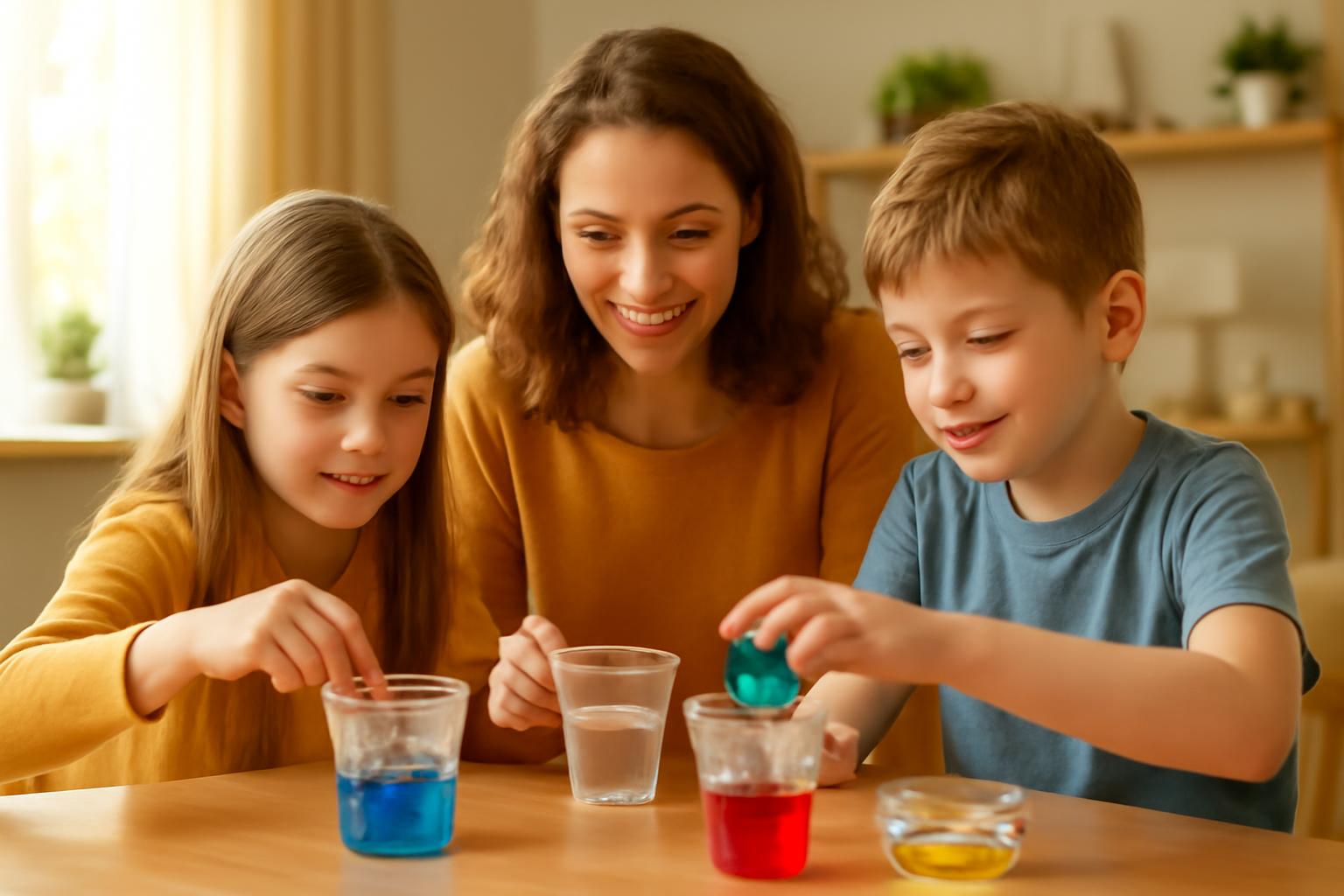
- Choose one very simple activity such as sink or float, melting ice with salt, color-mixing with water, or testing what absorbs water best.
- Set out only the materials you need and place a towel or tray underneath before you call your child over.
- Ask one prediction question before starting: “What do you think will happen?”
- During the activity, focus on what your child notices instead of giving a long explanation.
- End by having your child tell one thing they observed and help with a quick cleanup.
- If it goes well, repeat the same activity later in the week with one small change.
This kind of routine keeps science approachable. You are not waiting for a giant free block of time, and you are not turning every activity into a production. Over time, those small experiments build confidence, attention, and the habit of asking questions about the world.
Helpful Tools
You do not need special products for home science, but if your child loves this kind of activity, the National Geographic Science Kit can be a fun optional tool for families who want a ready-made set of kid-friendly experiments without hunting for supplies piece by piece.
FAQ
What age is best for simple science activities at home?
Even preschoolers can enjoy simple science when the activity is safe and very hands-on. Older kids can stay with it longer and talk more about what they notice, but the basic idea works across a wide range of ages.
Do I need to explain the science in detail?
No. For many home activities, it is enough to ask questions, notice what happened, and use a few simple words. Curiosity matters more than a perfect explanation.
What if my child loses interest halfway through?
That usually means the activity was a little too long, too passive, or the child was done for the day. End it calmly and try a shorter version next time instead of forcing them to finish.
How can I do science with siblings of different ages?
Give each child a small job. One can make predictions, one can pour, one can sort, and one can describe what happened. Keep the tasks simple and rotate turns so no one feels left out.
What are the easiest first science activities to try?
Sink or float, color mixing, melting ice, growing a paper towel rainbow, and magnet hunts are all good starting points because they are visual, quick, and easy to explain.
Simple science at home does not have to be fancy to be memorable. When you keep it short, doable, and a little bit playful, you give your child a chance to explore without the pressure of getting everything right. That is often what keeps curiosity alive. Start small, let your child wonder out loud, and build from there.